


🎧 Greg Johnson’s $1.9M Pay, IBR’s $15B Mess
IBR proposal is two years late and triple the cost for 20 years of construction
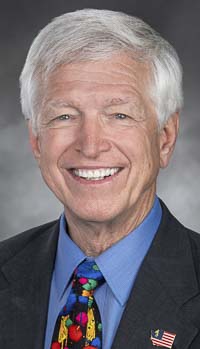
Rep. John Ley
18th Legislative District
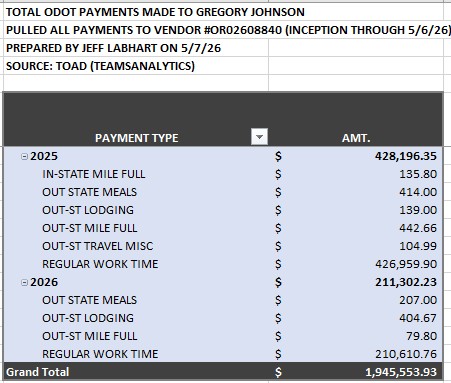
According to reports citing public records on the Interstate Bridge Replacement Program (IBR), outgoing Administrator Greg Johnson is reported to have an annual salary ranging from $245,000 in FY 2022 to $426,000 in 2025. His total compensation and expense reimbursement for 5 and one half years was actually over $1.9 million.
The I-5 Interstate Bridge Replacement Program (IBR) was created in November 2019 with the signing of a joint memorandum by then Governors Jay Inslee (Washington) and Kate Brown (Oregon). In June 2020, it was announced Johnson was hired as program administrator, after serving as senior vice president of WSP USA, beginning work in July.
The IBR website contains a joint Washington and Oregon Department of Transportation (ODOT) letter announcing his hiring. “He is leading the IBR program using a transparent, data driven process that prioritizes equity, inclusion, and two-way communication with the public,” the statement said of Johnson.
A citizen’s public records request from ODOT has revealed that from 2020 through the end of 2025, Johnson received $1,945,553.93 in total compensation and expense reimbursement.
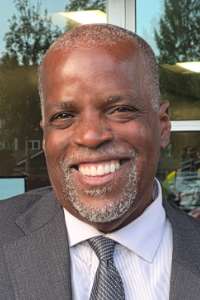
Greg Johnson
Around the same time Johnson was hired to run the program, his former employer WSP was hired as the General Engineering Consultant for the project. Their initial contract was for $44 million and has exploded to $301 million. A copy of the contract reveals what appears to be a guaranteed 32 percent profit for WSP.
Taxpayers watched as costs of the project exploded from a low projection of $3.2 billion to a current high of over $15 billion. At last month’s C-TRAN Board meeting, it was revealed that the transit component has exploded from $2 billion to $3.5 billion for a 1.83-mile extension of the TriMet MAX Yellow Line.
Under Johnson’s leadership, the IBR team failed to use a federally required STOPS model for projecting transit ridership. They sold the need for the light rail extension based on a flawed 26,000 to 33,000 daily boardings on the I-5 corridor. That was later revised down to 4,600 to 5,400 boardings – essentially C-TRAN’s Vine Bus Rapid Transit ridership.
The time frame for construction under Johnson doubled from 10 years to 20 years. The Draft Environmental Impact Statement was submitted to the federal government nearly two years later than planned.
The original finance plan called for borrowing $1.25 billion, paid back by tolls. It was recently revealed that they now plan to borrow $1.5 billion. Carley Francis, interim program administrator, told the Regional Transportation Council Board that the toll amounts should still be in the range publicly discussed – $1.55 to $4.70, at a May meeting. That’s hard to believe if the program is borrowing an additional $250 million.
In March, Washington Governor Bob Ferguson announced the updated cost estimate of $14.4 billion, with a 70 percent probability. Yet due to lack of available funding, the program will be “phased.”
Francis later revealed phase one would stop the light rail at the Vancouver waterfront, 90 feet above the ground with no actual train service. This has caused huge consternation on the Vancouver City Council.
Washington Senators John Braun and Jeff Wilson have asked federal authorities to put the light rail component on hold. “The only way this works is if we put light rail on hold until it makes sense for everyone – most importantly, the people of Clark County who would be taxed for light rail operations, and who have voted against it three straight times,” Braun and Wilson said.
Shortly after Johnson announced his departure, ODOT Secretary Kris Strickler announced his departure, leaving citizens to wonder “who’s in charge.”
The project is now over two years behind schedule and over triple the original cost projection. Portland economist Joe Cortright recently listed “Eight reasons the Interstate Bridge project shouldn’t – and can’t legally – move forward.” They included: “fiscal insolvency, light rail legal fiction, bogus traffic projections, negative benefit-cost ratio, and a violation of climate law.”
All this from a man hired known to prioritize equity, inclusion, and two-way communication with the public. Citizens should wonder what it will cost them if Governors Ferguson and Kotek hire someone who can deliver a project on time and under budget.
Last month, DOT Secretary Sean Duffy and the Maryland Governor fired the General Contractor building the replacement Key Bridge in Baltimore. The main reason for the termination – “the trajectory of cost increases.”
With the IBR out of control, will the federal government step in and pull the plug on funding? Paying Greg Johnson nearly $2 million and his former employer WSP $228 million as of Dec. 2025 has delivered nothing but a mess. The people of Washington and Oregon deserve better.

Also read:
- VIDEO: Federal court hears Puyallup wrestler’s alleged sex assault, Title IX case
 16-year-old Kallie Keeler is seeking a federal injunction after alleging sexual assault during a Dec. 6, 2025 wrestling match against a transgender athlete.
 - Opinion: Workers need their wages more than the state’s paid-leave program does
 Washington’s paid-leave payroll tax stands at 1.13% and is projected to hit its 1.2% cap by 2027, with some lawmakers eyeing a 2% rate.
 - Opinion: ‘It may be time for McCleary 2.0’
 Dick Rylander examines the Battle Ground School District’s proposed $116,830,000 three-year EP&O levy heading to the November 2026 ballot.
 - Washington Policy Center tax expert warns that new income tax will affect everyone
 Ryan Frost argues Washington’s new 9.9% income tax has a $1M deduction that a simple legislative majority could remove.
 - Opinion: Were Republican voters just sleeping during the August primary election?
 CCRP Chairman Matt Bumala says 60% of primary no-shows in the 17th and 18th districts were Republicans.
 wpDiscuz