



Clark County Today Editor Ken Vance says it’s time to ‘get back on the right track to sensible transportation solutions for our region’
Ken Vance, editor
Clark County Today
A strong argument can be made that the last impactful transportation improvement completed in the Southwest Washington/Portland Metropolitan region was the construction of the Glenn Jackson I-205 Bridge, which was opened in 1982. However, that doesn’t mean there haven’t been any good ideas for transportation improvements in the last 43 years. It just means none have been embraced by elected officials and/or executed.

In my view, the most common sense of the many ideas that have been introduced in the last four-plus decades is the proposed East County Bridge, first suggested some 15 years ago and championed by many area leaders and elected officials. It mirrored one of four options the Southwest Washington Regional Transportation Council proposed in its 2008 “Visioning Study.”
The original East County Bridge project was a proposal to build a third toll-free bridge across the Columbia River. It would be situated four miles east of the I-205 Glenn Jackson Bridge at 192nd Avenue and SR-14. For more information, go to EastCountyBridge.com.
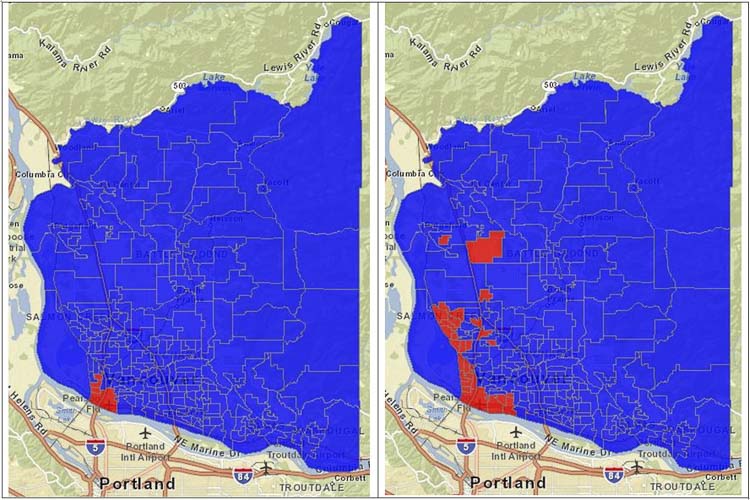
The vision for this bridge was embraced by Clark County citizens in two separate advisory votes, one that voters approved in the November 2013 General Election that asked voters county-wide if the Board of County Commissioners (now Clark County Council) should work to get a real proposal that would include an actual design, a maximum price less than $900 million, flexible financial terms, and an achievable time frame. The majority of voters said yes and directed their Clark County Commissioners to lead that charge. If successful, the plan was that those specifics would be proposed to the voters for their approval in 2014.
A proposal was successfully completed. Bridge builder Figg Engineering stepped up and provided a real design, quoted a price guaranteed to be less than the preferred maximum, offered pre-approved multi-year financing, and guaranteed that everything would be completed – including all design, permits, and construction – within five years of receiving the green light. The builder also promised to cover against any cost overruns.
Those specifics were presented to Clark County voters in the November 2014 General Election. Voters again said yes and directed their county commissioners to provide the local leadership, champion the project, share the vision, and build the support to succeed. However, even though the majority of citizens throughout Clark County and in the city of Vancouver supported the proposal, the Vancouver City Council opposed it, preferring the Columbia River Crossing (CRC) project instead, including light rail and tolling. The interchange at SR-14 and 192nd Avenue, where the proposed East County Bridge would connect, lies within Vancouver city limits, so that connection was effectively dead.
As we now know, the CRC was defeated after more than $200 million was spent on the failed project. The CRC was then resurrected in 2019 when Washington Gov. Jay Inslee and Oregon Gov. Kate Brown signed a Memorandum of Intent to create the I-5 Interstate Bridge replacement project. Since then, another $200 million-plus has been spent by the Interstate Bridge Replacement Program (IBR) on a project with a proposed price tag of $7.5 billion (that price tag is expected to increase with an anticipated announcement promised later this year). Clark County Today has published many stories detailing the many reasons why the I-5 Bridge replacement project is in jeopardy (archived stories available at Clark County Today.com/transportation/).
East County Bridge specifics
In late 2017 and early 2018, then state Reps. Liz Pike and Vicki Kraft hosted the first of three “Transportation Solutions” Legislative Town Halls. Each of the three town halls included presentations for a new East County Bridge. At the last two meetings of the series, the presentation was given by Linda Figg, CEO and president of Figg Bridge Group.
Of all the proposals presented at the three town halls, the idea of a new East County Bridge was overwhelmingly the cheapest of the proposed solutions, at an estimated cost of $860 million.
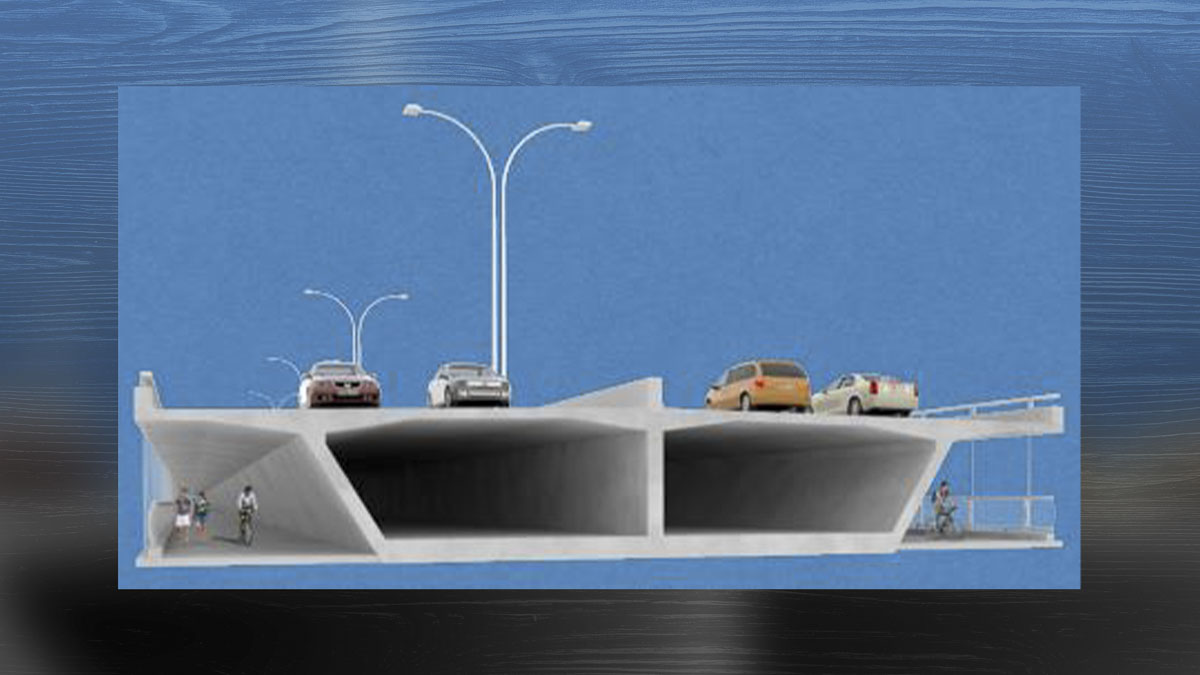
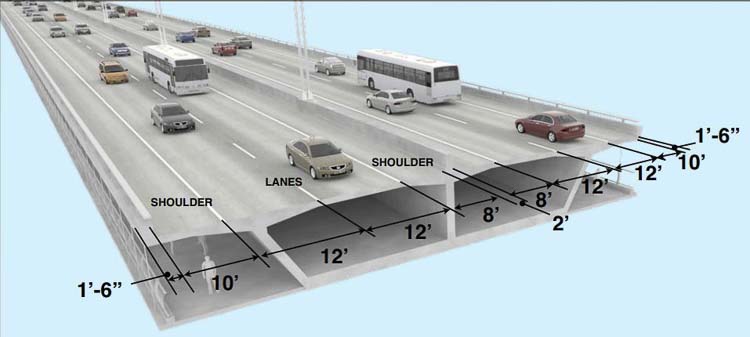
The project, which would be located east of the I-205 Glenn Jackson Bridge near 192nd Ave. in Clark County and extending into Oregon, would provide four new traffic highway 12-foot lanes, two northbound and two southbound. The bridge would have wide safety shoulders — 8-foot inside and 10-foot outside in each direction. There would also be two, 12-foot multi-use protected pathways for pedestrian and bicycle experiences.
The four-lane bridge would provide access to cars, trucks and buses and would not be home to light rail. It would add vehicle capacity to the two state’s transportation system and a needed alternative on the east side of the region. It would be a five-year project, two of which to address environmental issues and three years to construct.
Summary
Would an East County Bridge solve our region’s transportation congestion issues or solve all of our problems? The answer is obviously no. There needs to be several bites out of this apple, but the next bite is long overdue and it shouldn’t be a $7.5-billion I-5 Bridge replacement project that does virtually nothing to address traffic congestion and forces the unwanted light rail down the throats of Southwest Washington residents.
We will also need a new west county corridor, described by the East County Bridge proponents as an I-605 mirror image of I-205. But, that project was defeated by Portland officials in the 1990s and will cost many billions more than the I-5 Bridge replacement and an East County Bridge project combined.
Eventually, we will also need to replace the I-5 Bridge. However, that project shouldn’t be the first. IBR team officials have attempted to convince us that the current I-5 Bridge could fall into the Columbia River at any significant seismic event, but experts disagree, citing only a 15 percent risk of a significant seismic event in the next 50 years.
The obvious conclusion is to take a simpler, more affordable first step to improving our regional transportation issues. Interstate traffic will be greatly improved by adding a new path across the Columbia River (there are 12 crossings over the Willamette River in the Portland area and five bridges over the Lewis River in Cowlitz County). The East County Bridge would also add another critically important marine freight corridor.
It’s been 43 years and counting. Let’s get back on the right track to sensible transportation solutions for our region.
Also read:
- VIDEO: WA diesel hits record $6.53, crushing truckers and school budgets
 With diesel nearing $6.53 per gallon in Washington, trucking businesses and school districts now confront sharply higher fuel expenses affecting budgets and workers.
 - Opinion: In plain sight – yielding to pedestrians
 Drivers often fail to see pedestrians due to inattentional blindness, which highlights the need for more focused awareness at intersections and stronger safety practices.
 - Expect delays on SR 14 in Vancouver for guardrail repairs Wednesday
 State Route 14 travelers in Vancouver should plan for morning delays as WSDOT will close two eastbound lanes for guardrail repairs, affecting mileposts 6.0 to 7.0.
 - Overnight closure planned on westbound SR 14 Camas Slough Bridge Tuesday
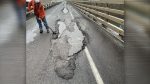 WSDOT crews will close westbound SR 14 at Exit 14 in Camas to collect bridge deck samples and plan future repairs; detours will be in effect.
 - Opinion: Stay in your lane – seriously, it’s the law
 Drivers must choose the nearest lane when turning in Washington, and left turns bring added risk. Even with signals, every driver must help prevent crashes by following law.
 wpDiscuz
