


🎧 IBR’s $320M TriMet Detour: Bridge or Light Rail Bailout?
Rep. John Ley discusses the $320 million expense for an unneeded ‘upgrade’ to Gresham maintenance facility
Rep. John Ley
18th Legislative District
The Interstate Bridge Replacement Program (IBR), already notorious for its skyrocketing price tag, faces fresh scrutiny after public records revealed hundreds of millions potentially being funneled into a TriMet maintenance facility located miles from the actual bridge project.
Rep. John Ley
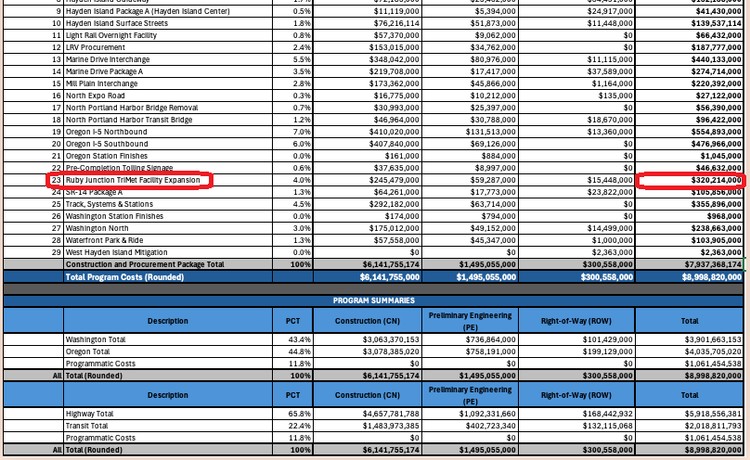
Economist Joe Cortright’s public records request uncovered detailed financial breakdowns for 29 bid packages within the IBR. Among the most striking is the $320 million allocation for TriMet’s Ruby Junction facility in Gresham — roughly 20 miles east of the Interstate Bridge. This massive sum is part of a broader transit component, primarily a 1.83-mile extension of TriMet’s MAX light rail into Vancouver. It is now projected to cost $3.5 billion according to deputy assistant program manager Steve Whitter’s April update to the C-TRAN Board.
The overall IBR price has exploded from an initial $3.2 billion estimate nearly six years ago to potentially exceeding $15 billion today, with roughly one-quarter tied to transit elements. Yet questions swirl around why significant funds are directed to Ruby Junction and other transit components, while TriMet simultaneously downsizes light rail and bus services, lays off employees, and plans further cuts.
Critics see this as a potential shell game to prop up the financially ailing transit agency. TriMet previously informed the Federal Transit Administration it had 40 “surplus” light rail vehicles just a year ago. Yet it is now demanding 19 new ones as part of the IBR — at prices reportedly double or triple recent purchases. In January, the TriMet Board authorized buying 56 new vehicles for $370 million while simultaneously discussing service cuts.
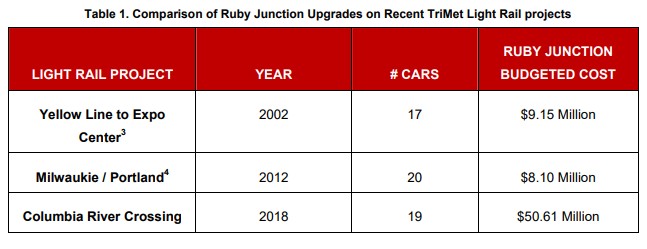
Historical context makes the current figures even harder to justify. When the Yellow Line launched in 2002, 17 new vehicles were added alongside a $9.15 million Ruby Junction expansion. For the Milwaukie Orange Line a decade later, 20 vehicles came with an $8.1 million upgrade. Even the failed Columbia River Crossing (CRC) project planned just $50.6 million for similar work — already viewed as excessive.
Forensic accountant Tiffany Couch previously flagged the CRC’s Ruby Junction allocation as a glaring “irregularity” exceeding prior upgrades by more than 450% (over $40 million). She urged investigation by appropriate authorities and shared her findings with the Washington legislature and then-Congresswoman Jaime Herrera Beutler. The current IBR proposal of $320 million dwarfs even those earlier concerns.
The IBR website currently reflects an earlier $7.5 billion estimate, listed Ruby Junction costs between $45 million and $65 million. The scope included five new maintenance bays, expanded facilities, track reconfiguration, new buildings, and more. Public records from August 15, 2025, obtained by Cortright describe expanding the yard and buildings for 19 new light rail vehicles, including track, electrical, and roadway work. A 2022 Draft Supplemental Environmental Impact Statement noted the expansion would displace six light industrial businesses in Gresham.
The per-vehicle math is equally eyebrow-raising: $190–$290 million for 19 vehicles equates to $10–$15 million each — far above TriMet’s own $4.5 million per vehicle for the “Better Red” project in 2024. The need for roughly 10 vehicles per mile of new track was ignored by program managers, as was the inflated pricing.
Program administrators and officials from WSDOT and ODOT have repeatedly brushed aside citizen concerns about these numbers. Leadership turnover has only compounded the perception of a rudderless project. Former leaders like Greg Johnson, Kris Strickler, and Roger Millar have departed. Carley Francis serves as temporary program administrator with no permanent replacement named six months later. Julie Meredith now leads in Washington.
Some legislative oversight committee members have voiced serious concerns, but they claim to be blocked from meaningful inquiry. Our efforts to prioritize or scale back the project have been ignored. Meanwhile, the program’s General Engineering Consultant, WSP, continues to collect millions.
The IBR increasingly looks like a $15 billion light rail project in search of a bridge — a vessel without clear direction or accountability. Whether Congresswoman Marie Gluesenkamp Perez, the Federal Transit Administration, or Transportation Secretary Sean Duffy will demand a closer look remains to be seen. Governors Bob Ferguson and Tina Kotek appear unconcerned.
Taxpayers footing the bill deserve answers before costs spiral even further out of control.

Also read:
- Opinion: Were Republican voters just sleeping during the August primary election?
 CCRP Chairman Matt Bumala says 60% of primary no-shows in the 17th and 18th districts were Republicans.
 - Opinion: WA Cares’ launch showcased care WA Cares did not provide
 Gov. Ferguson showcased a caregiving arrangement at the WA Cares launch that the program had not paid for a single day of.
 - Auditor, auditor candidate address scrutiny over job title
 Greg Kimsey says roughly 40 county employees hold the deputy county auditor designation Kelly used in his campaign.
 - Opinion: Is Mitchell Kelly misleading voters with his ‘deputy auditor’ claim?
 Clark County HR records show no position called “Deputy County Auditor” has ever existed, Anderson argues.
 - Opinion: Democrats rig the ballot to save their income tax
 Churchill argues the ballot disclosure warning voters of education cuts describes revenue never collected and not yet allocated.
 wpDiscuz