
Rep. John Ley for Clark County Today
Early in the discussion about the Interstate Bridge Replacement Program (IBR), there was a cost comparison for renovating the existing two bridges versus the cost to remove them. Former Administrator Greg Johnson and his team said it cost too much for a seismic upgrade and therefore a new bridge was needed.

Rep. John Ley
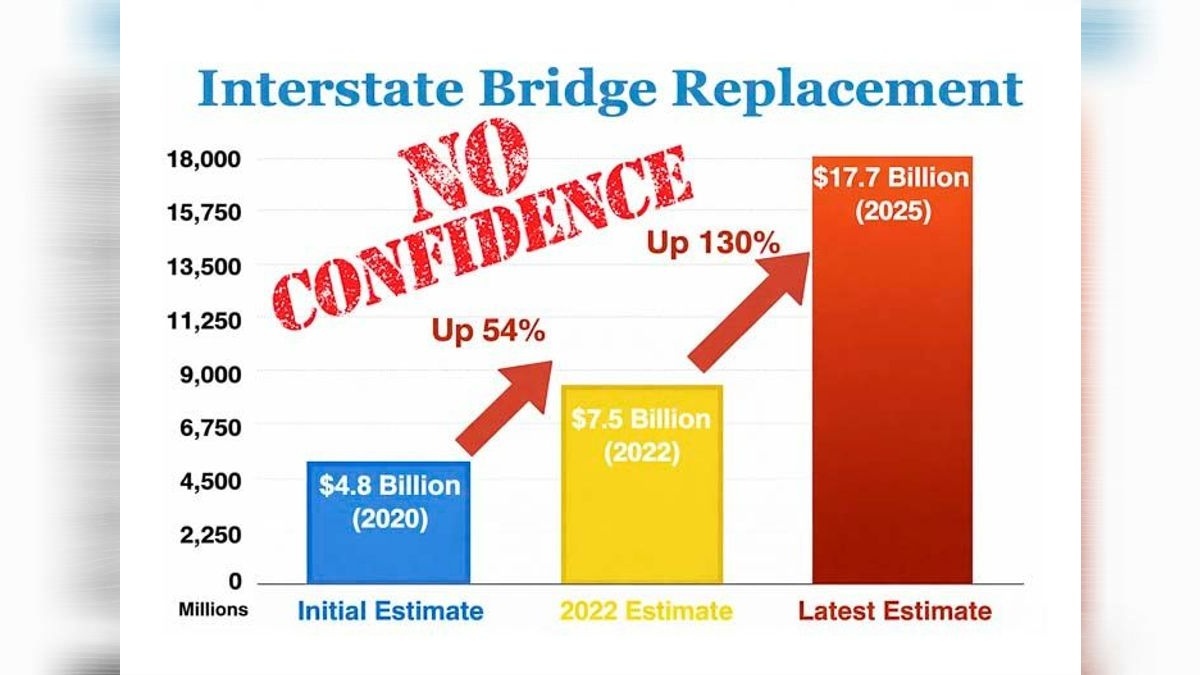
Today, we know replacement costs have exploded – a tripling of the original project cost to potentially $15 billion or more. The cost of removing the current bridges is going up as well.
In a presentation to the Oregon Transportation Commission, new Program Administrator Carley Francis shared a host of information, including an updated cost to remove the current two bridges. She reported the bridge removal costs are $390 million under their new “phased” approach.
Yet the previous 2022 cost report says removing the Columbia River bridges would cost $120 million to $180 million. Why did demolition go up more than double in price? The North Portland Harbor Bridge removal is shown as $32 million to $48 million. If the new plan is doing both, there still is a 70 percent plus increase in just two years for demolition.
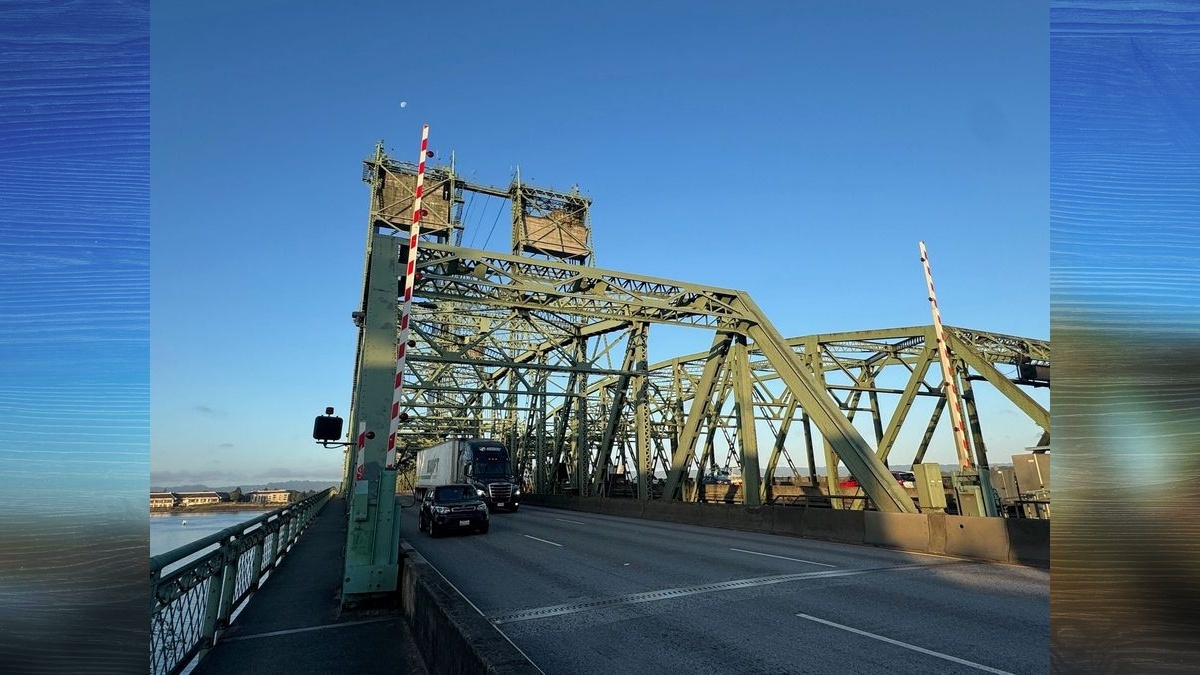
With nearly $400 million to remove two bridges, why not simply repurpose them to act as a local connector for Hayden Island and downtown Vancouver traffic? One imagines you could do a seismic upgrade for that price. Don’t forget, only one of the two Interstate Bridges is over 100 years old, and it got an upgrade in 1958.
The IBR regularly pushes “the current bridge costs $1.2 million per year to operate and maintain, and will require an estimated $270 million in capital maintenance by 2040. This does not include the cost of seismic retrofit.” That made it sound expensive to keep the current structures; but that was before the huge cost explosion that has made the project unaffordable.
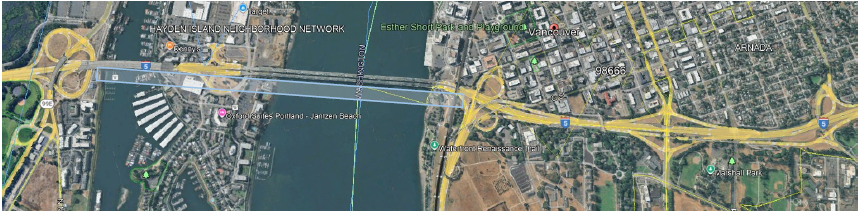
(IBR Bridge Removal $390 M.png)
The Cortright Jan. 2026 spreadsheet shows $295.67 million to remove the main Columbia River Bridges. Add to that another $56.4 million to remove the North Portland Harbor Bridge. The total is $352.1 million. In the original Columbia River Crossing, replacement of the North Portland Harbor Bridge was not part of the plan.
Yet this slide, presented to the Oregon Transportation Commission reports the cost of "Bridge Removal" to be $390.3 million. What else is included in this cost estimate?
Several years ago, Clark County Today reported on seismic risks and the costs to upgrade Oregon and Washington bridges. A 2006 WSDOT report indicates a seismic upgrade to the Interstate Bridge structures was technically feasible.
“The Panel discussed and developed their opinion of estimated raw bridge construction costs to retrofit both bridges. This opinion ranges from $88 million to $190 million. This opinion of cost increases from $125 million to $265 million when design, permitting, right-of-way, construction inspection and management, agency oversight, and contingencies are added.”
The IBR reported: “Based on the most recent ODOT estimate, a conceptional cost of roughly $600 million (in 2014 estimated dollars) was identified as needed for seismic upgrades, though as previously noted it is not possible to retrofit to the same standards as a new bridge.”
Given the reality that Oregon voters just rejected a transportation tax increase by 83 percent, and Washington state has been put “on notice” by Standard and Poor, and Moody’s, doesn’t it make sense the two states look at “affordable” options, including a much lower cost seismic retrofit?
If they are going to spend $390 million to simply destroy and remove the current two structures, why not use that money for a seismic upgrade, and plan for a new simple bridge adjacent to the existing structures. After all, the IBR team says the replacement bridge cost is $1.83 billion according to the Cortright released data. The two states are spending $1.2 billion to remove the Hood River-White Salmon bridge and build a new replacement.
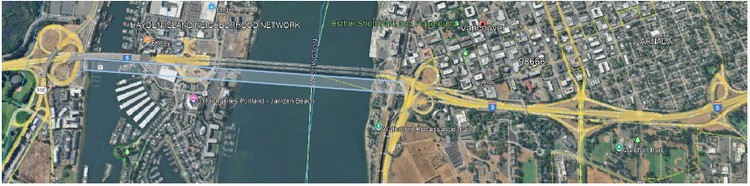
I believe it is possible to spend $2.5 billion to $3 billion, do a seismic upgrade to the current two structures after adding an “express” bridge. That would add hugely needed vehicle capacity over the Columbia River. The lack of additional capacity is the biggest flaw in the current IBR proposal.
(Peterson concept.png)
If the express bridge was built taller than the current proposed 116 feet of clearance for maritime vessels, we could save $141 million in “mitigation” payments to four up river firms. That allows $531 million to go to the cost of a seismic upgrade.
The bonus for taxpayers, is it would save roughly $11 billion for other, much needed transportation projects. We would have additional lanes across the Columbia River, saving cars and freight haulers time and reducing traffic congestion.
In Washington, we need $160 million to replace the Carbon River – Fairfax Bridge on SR-165. Here in Clark County, we need around $135 million to fix the Camas Slough Bridge on SR-14.
In Oregon, economist Joe Cortright documents roughly $3 billion in a funding shortage for ODOT around the state. Those projects include the I-205 Abernethy Bridge, the I-5 Rose Quarter, and others. That does not include the additional $500 million owed on the IBR, before the recent cost explosion.
Its imperative wise decisions are made. With repurposing existing bridges is cost comparative to demolishing them why not consider adaptive reuse. With a new simple four to six lane bridge that minimizes complex interchanges we nearly double capacity. How can leaders justify a more expensive option offering less when we know better alternatives appear to have been overlooked?


Comments
Loading comments…