




Joe Cortright asks: ‘Why does it take five or six years and more than $273 million to create another un-approvable, unaffordable version of the Columbia River Crossing that fails like the last one?’
Joe Cortright
City Observatory
Two years ago, we asked “Why does it take four years and $200 million to serve up a warmed-over version of the Columbia River Crossing?”
We have to update that question. Now we need to ask: Why does it take five or six years and more than $273 million to create another un-approvable, unaffordable version of the Columbia River Crossing that fails like the last one?
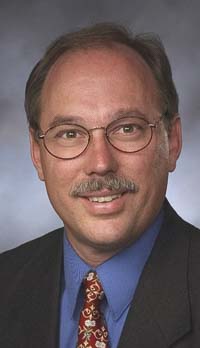
The Interstate Bridge Replacement Project’s (IBR) administrator – who’s just announced his resignation – admitted that IBR is “basically the same” project that failed a decade ago, but in the process, he’s spent $273 million on consultants, with more than 40 percent that money ($116 million) going to his former employer, WSP USA.
And WSP USA has returned the favor, providing Johnson with questionable reports that purport to rule out examining an immersed tunnel option which exaggerate project benefits to qualify for federal funding.
Nearly 10 percent of all of IBR’s consulting largesse — almost $29 million — has gone to public relations firms to help it sell the project.
The total cost of planning for the bridge is even higher, because this $273 million figure doesn’t include salaries of ODOT and WSDOT employees working on the project, or payments the DOTs have made to cities, transit agencies, and regional planning groups to get them to help with this project.
Between the failed CRC (which cost nearly $200 million a decade ago) and its rebranded clone, the IBR, the two states will have spent nearly half a billion dollars, mostly on consultants, and without turning a shovel of dirt.
For the past five years, Greg Johnson has been the administrator of the Interstate Bridge Replacement Project (IBR), a joint effort of the Oregon and Washington State departments of transportation to spend something on the order of $9 billion on a giant freeway project to replace the existing I-5 bridges over the Columbia River connecting Portland and Vancouver. Last month, he announced he is stepping down “for personal reasons.”
It’s a good time to assess his tenure, and what, if anything the project has accomplished. The truth is that IBR is simply a re-branded version of the failed “Columbia River Crossing” — a nearly identical proposal that foundered in 2014, after a decade of planning and scheming and about $200 million spent, mostly on consultants to develop the proposal. In 2019, Governors Jay Inslee and Kate Brown announced a renewed effort to move the project forward under its misleading new name “Interstate Bridge Replacement.”
Since then the Oregon and Washington highway departments have spent the past six years moving the project forward, along the way repeating many of the mistakes of their predecessors. A key issue, whether the bridge’s proposed 116-foot navigation clearance will satisfy the US Coast Guard is still unsettled, as are key environmental questions. The project has fallen more than two years behind schedule. Meanwhile, the project’s budget has ballooned from $4.8 billion to as much as $7.5 billion, and now promises to increase further, to as much as $9-10 billion.
“Basically building the same project”
It is truly astonishing that it has cost the better part of $300 million and taken almost six years to essentially re-create a clone of the old Columbia River Crossing. To anyone who pays close attention, this is very, very similar to the old CRC proposal, a point that even the project’s manager concedes. At a meeting of the Joint Oregon and Washington legislative committees overseeing the project on November 27, 2023 Johnson, pushing back against claims that people needed more time to study and review the project, dropped his guard and conceded that the IBR is simply a very slightly warmed-over version of the old CRC. He told legislators: the price tag was higher now, and that they were just repeating the Columbia River Crossing:
“Here we are $3 billion later, and basically building the same project.”
If it is basically the same project—and indeed, it really is—that raises a critical question: Why has it taken more than five years and nearly $273 million in consultants to get here?
$273 million more for consultants to design “basically the same project”
Neither the IBR’s website nor its lengthy presentations to the Legislature and other public bodies discloses how much the program has spent to date. So we filed a public records request to obtain this information. Through the end of the third quarter of 2025, the Interstate Bridge Project had contracted for nearly $273 million in consulting services. This amount doesn’t include the cost of WSDOT and ODOT staff time, which undoubtedly pushes the total cost for planning — so far — into the $300 million range.
The $273 million obligated for the latest round of consultants for this project comes on top of another nearly $200 million spent between 2004 and 2014 on its failed predecessor, the Columbia River Crossing. The Oregonian reported:
“. . . the Columbia River Crossing was highly lucrative while it lasted for a handful of big engineering and consulting firms. The CRC paid $199.4 million to 171 companies, consultants and others in the last 10 years, according to the latest numbers released to The Oregonian by the Oregon Department of Transportation.
Jeff Manning, “Columbia River Crossing: Tab approaches $200 million after I-5 bridge project shuttered,” The Oregonian, April 19, 2014.’’
The Oregonian published a long list of the CRC consultants. Many of these same firms (or their legal predecessors) cashed in on that work as well, and are being asked to repeat the same scope of work, for as Johnson puts it designing “basically the same project.”
The largest single beneficiary of this consultant spending spree is a firm called “WSP” which is one of the largest planning and engineering consulting firms in the world. It has bought up a number of other consulting firms, including the former Parsons Brinckerhoff—a consultant for the Columbia River Crossing. WSP has gotten more than 40 percent of all of the consulting business for the IBR: $116 million in contracts out of the $273 million total.
And the person responsible for hiring and supervising the IBR contracts with WSP USA has been Greg Johnson, the IBR project’s administrator, who just announced he is stepping down from this job at the end of the year. Johnson, as it turns out is a former vice president of WSP, as disclosed in his biography:
Most recently, he [Johnson] served as a senior vice president at WSP USA, one of the nation’s largest engineering firms, as the National Director for Construction Management & Services . . .
So, in Johnson’s words, he hired his former employer to design “basically the same project” as the old Columbia River Crossing. And, for the record, under Johnson’s leadership, WSP USA has gotten a much bigger slice of the IBR consulting pie than it ever did on the Columbia River Crossing project. From 2004 to 2014, Parsons Brinckerhoff (the WSP predecessor) got just $23 million in contracts to work on the Columbia River Crossing. Over the past six years, WSP USA (which now includes the former Parsons Brinckerhoff firm) has gotten five times as much — $116 million — to design “basically the same project.” With Johnson in charge, WSP/Parsons Brickerhoff has increased its market share of the value of IBR/CRC contracts from a little over 10 percent of the total for the old CRC, to more than 40 percent of the current IBR.
Quid pro quo, WSP?
In return, WSP has delivered to Johnson just the technical work Johnson needed to bury alternatives he didn’t want to pursue. WSP USA, for example, produced an error-riddled report saying that an immersed tube tunnel wasn’t a viable alternative. Engineer Bob Ortblad pointed out that the WSP report, issued in July 2021, lacked a legally required engineer’s stamp, which wasn’t added to the report until April, 2023 — long after the agency had ruled out the immersed tunnel alternative. As Ortblad later found — and IBR ultimately conceded — the WSP USA tunnel report contained a major calculation error. The WSP USA report on the immersed tube tunnel overstated by a factor of two how much material would have to be dredged for the deep bore tunnel. Even though IBR has admitted the error, it is not revisiting its earlier decision to rule out the tunnel option.
In addition, WSP USA provided a questionable report critical to obtaining federal funds. WSP USA was paid by the IBR to prepare a “benefit-cost” analysis of the project, a requirement for qualifying for federal funds. The benefit-cost analysis is replete with errors and questionable assumptions that consistently over-state potential benefits and understate actual costs. The often postponed announcement that the project’s costs are going to go up yet again, just days after getting notice of $600 million in promised federal funding, casts further doubt on this exaggerated benefit cost analysis. And today, with a likely price tag of $9-10 billion, the project’s meager (and overstated) benefits likely no longer qualify it for federal funding.
In addition, neither IBR nor WSP revealed that WSP had a significant material conflict of interest in preparing the benefit-cost report: If the WSP report didn’t generate a favorable benefit-cost ratio, the IBR project would be ineligible for federal funds and WSP would lose out on its lucrative contracts. After being challenged to respond on this issue in December 10, 2023 legislative hearing, Greg Johnson replied:
“Our team does not have a conflict of interest. This is how projects of this type are done across the nation. The DOTs don’t have all of the personnel to do projects of this size so there are consultants who are brought on. There are not conflicts of interest as has been indicated.’’
The issue, of course, is not whether ODOT and WSDOT use consultants, but whether they use a consultant with an obvious and blatant conflict of interest. Johnson claimed there was no conflict of interest but failed to acknowledge or refute the fact that WSP USA then held over $75 million in contracts on the IBR (since increased to $116 million), and that those contracts would be in jeopardy if it turned into an unfavorable benefit-cost analysis. Johnson also did not explain why this task was assigned to WSP USA, rather than an independent, objective consultant with no stake in the outcome of the report. And if, as Johnson describes them, his former employer WSP USA is serving as a member of “our team,” then it’s very clear that the assumptions that power WSP USA’s overstated benefits are shaped by “team” thinking, and not any independent professional judgement.
When Johnson says “this is how projects of this type are done across the nation,” perhaps he means its commonplace to throw tens of millions of dollars of work to a former employer, and then repeatedly ask them for technical reports that provide a pretext to ignore alternatives you don’t like, and make questionable assumptions that help you to qualify for federal funding.
A bonanza for spin merchants
While Johnson’s former employer, WSP USA has gotten the lion’s share of the IBR consulting largesse, another huge chunk of money has gone to a stable of spin merchants to help sell the IBR project. More than ten percent of consultant spending, nearly $29 million of the $273 million in contracts have gone to public relations and communication firms, as shown above.
Even though they routinely flog any favorable press coverage of the IBR project, the IBR team hasn’t made any mention of its mention critical coverage drawing national headlines. For example, the independent US Public Interest Research Group named the IBR to its list of national highway boondoggles — in fact, the IBR is the single most expensive boondoggle on that year’s list.
A copy of the PDF file containing the IBR’s listing of consultant contract amounts provided in response to our public records request is here: 250922_PDR_P018689-091925__1_
Editor’s Note: This commentary updates our January 2024 commentary on project consulting costs.
Also read:
- Letter: British Columbia’s new immersed tunnel can solve Interstate Bridge Replacement Program’s $17.7 billion problem
 Bob Ortblad argues that an immersed tunnel similar to a project underway in British Columbia could significantly reduce costs and impacts associated with the Interstate Bridge Replacement Program.
 - C-TRAN offering free service on Transit Equity Day, Feb. 4
 C-TRAN will offer free service across its entire system on February 4 in observance of Transit Equity Day, honoring the legacy of Rosa Parks.
 - Opinion: The many reminders not to speed
 Doug Dahl examines the many technological and policy-based reminders aimed at reducing speeding and explains why most drivers still choose not to use them voluntarily.
 - Rep. John Ley’s new bill calls for an independent audit of Interstate 5 Bridge Replacement Project
 Rep. John Ley introduced legislation requiring an independent audit of the Interstate 5 Bridge Replacement Project to review costs, management, and oversight.
 - Opinion: IBR’s evasive, misleading and dishonest excuses for higher cost
 Joe Cortright argues the Interstate Bridge Replacement Program has withheld detailed cost estimates while offering contradictory explanations for rising costs tied to the I-5 Bridge project.

Thank you Joe and team, what you do is appreciated. Our money, public money being wasted is a hard thing to understand.
Greg Johnson, like any seasoned GRIFTER could see the handwriting on the wall. The GRIFT was going to unravel for a magnitude of reasons. So he left. Time to get positioned for the next opportunity.
Remember Parsons = WSP = GregJ = more $ for WSP
FRIENDS HELPING FRIENDS
Nobody can agree to the price tag, but they give the design firm a list of the requirements and keep coming back with the same price tag. Even higher over time as inflation makes things more expensive. Either build it or dont. Stop asking for more quotes and redesigns. It is going to cost 10 billion dollars.