
Bob Ortblad shares that British Columbia plans to construct an immersed tunnel in five years while the I-5 Bridge replacement project is projected to take 15 years
Editor’s note: Opinions expressed in this letter to the editor are those of the author alone and may not reflect the editorial position of ClarkCountyToday.com
British Columbia’s “Highway 99 Tunnel Program” is building a new eight-lane immersed tunnel under the Fraser River to replace the 68-year-old four-lane Massey Immersed Tunnel. The B.C. tunnel and approaches is estimated to cost $2.8 billion (US). A similar I-5 immersed tunnel and approaches should cost no more than $2.8 billion. An I-5 Columbia River immersed tunnel would be 600 feet shorter, 35 feet shallower, and about 40% smaller overall.


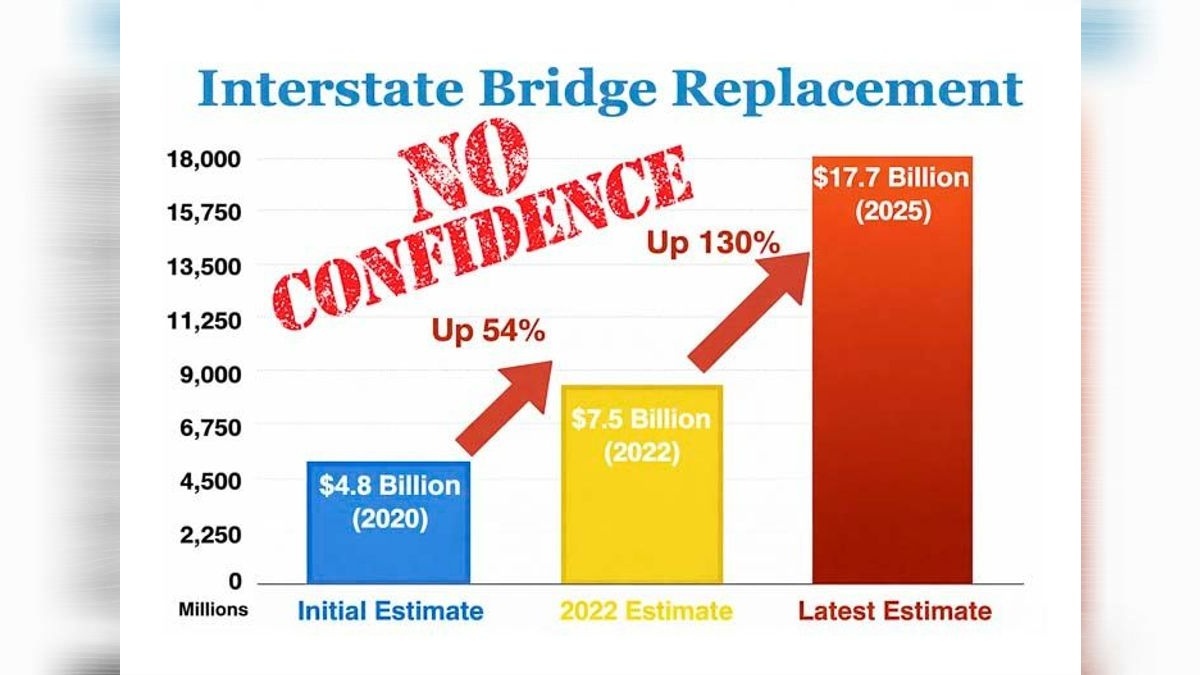
The IBR Program has a costly $17.7 billion design that requires five miles of freeway widening, the demolition of the current bridges and seven interchanges, and then their replacement. WA & OR can save billions and increase traffic capacity by keeping the current bridges and interchanges for local traffic and diverting interstate traffic through a new eight-lane Columbia River I-5 immersed tunnel with dedicated bus lanes. The IBR has lied about the seismic risk to the current bridges.
WSP is IBR’s General Engineering Consultant. WSP prepared the “Tunnel Concept Assessment” (July 14, 2021) that fraudulently disqualified an immerse tunnel by doubling the require dredging and excavation cubic yards (8 million), and ignoring a cost saving sandwich steel-concrete design alternative that can be fabricated in local shipyards. The report listed 13 professional engineers, but none stamped the report as required by state law. WSP should have retracted this report and refunded its $100,000 fee. Public disclosure requests forced two revisions that cut the cubic yards estimate in half (4 million) and added a professional engineer stamp. WSP never evaluated a sandwich steel-concrete design or circulated revised reports. Eight agencies approved IBR’s locally preferred alternative bridge design based on the original incorrect report.
Preserving the current bridges for local traffic and a shared use path, plus the construction of an I-5 immersed tunnel, will protect Fort Vancouver, Vancouver’s downtown and riverfront public market, and Hayden Island from the impacts of IBR’s massive, elevated freeway.
British Columbia plans to construct an immersed tunnel in five years. The IBR Project is projected to take 15 years.
Bob Ortblad MSCE, MBA
Seattle
Comments
Loading comments…