


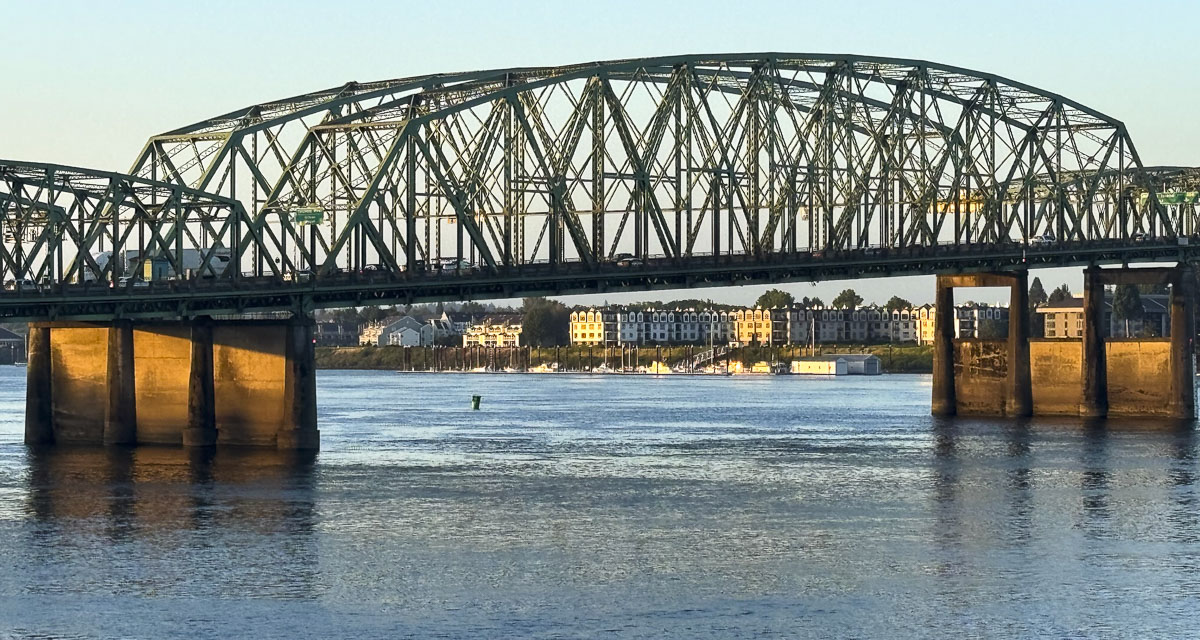
Joe Cortright of the City Observatory offers more perspective on the departure of Administrator Greg Johnson from the Interstate Bridge Replacement Program
Joe Cortright
City Observatory
The departure of project Administrator Greg Johnson comes at a particularly bad time for the Interstate Bridge Replacement Program’s (IBR) I-5 Bridge replacement project. The project has delayed releasing for nearly two years a new cost estimate, likely to be in the $9-$10 billion range, is years behind schedule in getting environmental approvals, and hasn’t gotten needed Coast Guard approval for its 116′ fixed span. These delays may lead to the loss of $2.1 billion in Biden era federal grants. Adverse action by the Coast Guard could add another $400 million to project costs. And IBR hasn’t yet released the bill for the payments it proposes to make to river users if it does build a fixed span, which are likely to exceed $100 million.
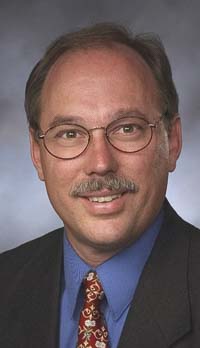
Johnson’s departure as Interstate Bridge Replacement Project administrator isn’t going to fix any of these deep-seated problems with this bloated, delayed and financially troubled project, and potentially threatens to make them even worse.
While Johnson, who has led IBR for the past five years, might seem like a plausible fall guy for the current problems and likely failure of the Interstate Bridge project, his successor, his key deputies and his supervisor all have even longer tenure and were running the show when the CRC failed the first time. The I-5 Bridge replacement project is just a warmed-over version of the previous failed Columbia River Crossing, and it has largely been run by the same people both times.
The IBR has spent more than $200 million on consultants, on top of $200 million spent a decade ago on the CRC, and its problems (long delays, a too low bridge, a flawed financial plan) are a virtual scene-for-scene remake of the flaws that sank its predecessor in 2014.
The failure of the IBR is a team effort, not the sole product of a flawed — and now departing—leader. And Johnson’s departure is just the latest in a series of high profile exits by those who’ve led ODOT’s cost-overrun plagued megaprojects. The three people who led the I-5 Rose Quarter freeway widening – which ballooned from $450 million to $2.1 billion – have all left in the past year.
The news: IBR Administrator Greg Johnson is leaving
Jonathan Maus of Bike Portland reported Friday on social media that IBR project Administrator Greg Johnson is leaving.

The Columbian reports that Greg Johnson says he is stepping down “for personal reasons.” While that may be, the resignation comes at a time when the project is in deep trouble: it is two years behind schedule in completing the environmental review process, and has been delaying for the better part of two years releasing a new cost estimate, which is likely to push the price tag for the project into the $9-10 billion range. Johnson conceded a month ago that the agency is in danger of losing $2.1 billion in Biden Administration-awarded grants if the project doesn’t start by September 30, 2026. And the project has blundered ahead with plans to build a 116-foot clearance fixed span bridge that the Coast Guard has indicated it finds unacceptable, and IBR missed its own deadline to provide a new navigation impact report which is needed to get a bridge permit. As part of that Navigation Impact Report, IBR says it has agreed to cash payments to compensate four river users for problems caused by the lower span – but as of yet, hasn’t revealed how much those payments will cost (for the CRC, they were $86 million). In short, the outlook for the project right now is grim.
Johnson’s departure may tempt some to claim that he is responsible for these problems, and make him the “fall guy,” for the project’s poor performance. But while Johnson is the head of IBR, all of these problems are deep-seated, long-running and involve many others who’ve been running the show for years before Johnson was hired. In effect, the current problems with the IBR (cost overruns, questionable financial plans, no Coast Guard approval) were all things that helped sink the Columbia River Crossing a decade ago. If anything, the “Interstate Bridge Replacement” has been a scene-for-scene remake of the disaster film that was the CRC.
If the IBR is a whodunit, then Johnson is just one of many co-conspirators in the calamity. By itself, his departure isn’t going to change anything.
IBR=CRC “Basically the same project”
By way of context, it is important to keep in mind that despite a 2020 “re-brand” the Interstate Bridge Replacement Project is actually just a slightly warmed-over version of the Columbia River Crossing, a project that has been in the works for more than two decades. During that time, Oregon and Washington have spent more than $400 million on planning, mostly on consultants. And they’ve yet to turn a shovel of dirt to build anything.
As we related at City Observatory, an exasperated Johnson lectured legislators in 2023, saying that they shouldn’t be asking so many questions about the Interstate Bridge Project, because it was essentially the same as the old CRC: He told legislators: the price tag was higher now, and that they were just repeating the Columbia River Crossing:
“Here we are $3 billion later, and basically building the same project.”
It’s the same project, because it’s the same people.
The reason its basically the same project—and headed for basically the same ignominious collapse—is that its being run by basically the same people. The key people leading and working on IBR today ran the Columbia River Crossing, with histories going back a full 20 years. Consider the cast of characters.
First, let’s go down just one level from Johnson, who has served as director of the IBR since 2020. His two trusted lieutenants through his entire tenure were assistant project directors Ray Mabey and Frank Green. Both are long time employees of their respective state transportation departments. Both worked for years in key management positions at the Columbia River Crossing.
Assistant IBR Director Ray Mabey has been with ODOT for more than 30 years, and served as a program Manager on the Columbia River Crossing.
Assistant IBR Director Frank Green has spent most of his career at WSDOT. His biography relates that:
Frank spent almost eight years as the structures engineering manager on the Columbia River Crossing project, ensuring that all of the structural and geotechnical work on the project met the requirements of WSDOT, ODOT, the Federal Highway Administration and the Federal Transit Administration.
Next, there is Johnson’s successor as IBR Director, Carley Francis. According to her biography, Francis worked for six years on the Columbia River Crossing, starting in 2007, and now serves as WSDOT’s Southwest Region Administrator.
Finally, we need to look at Johnson’s boss: Oregon’s Department of Transportation Director, Kris Strickler; he spent a decade leading CRC, serving two stints of duty as a senior manager (Deputy Director, then Director) from 2004 to 2014. In between working for WSDOT and ODOT, Strickler worked as an employee for consulting firm HDR, which billed more than $11 million for its work on the Columbia River Crossing. HDR has since billed ODOT $20 million for its work on another megaproject (the Rose Quarter freeway widening) as well as a further $24 million for sub-consultants it supervised for ODOT. And since 2020, Strickler has essentially been Greg Johnson’s boss, as Director of ODOT.
All of these folks were deeply involved in the Columbia River Crossing for years. For example, three—Green, Mabey and Strickler—were participants in the “Cost Estimate Validation Process” in 2011, which grossly underestimated the cost and risk of the CRC project. The fact that these people were, still are, and will continue to be leading this process, should disabuse anyone of the notion that Greg Johnson should some how be regarded as the scapegoat for the project’s current difficulties. That’s not to say that Johnson wasn’t a key player, just that this was a team effort, and the team hasn’t changed substantially.
These key leaders at WSDOT and ODOT—Strickler, Francis, Green, Mabey, and others—have been pushing this bloated project for two decades. All of this was recited—and current developments foretold—by David Bragdon, former President of Metro, Portland’s regional government. Four years ago, Bragdon recounted at City Observatory his experiences with WSDOT and ODOT in their cynical and flawed efforts to sell the Columbia River Crossing, and predicted the revival would simply be more of the same:
I was an up-close witness to ODOT/WSDOT management’s bad faith for several years. Leadership at ODOT frequently told me things that were not true, bluffed about things they did not know, made all sorts of misleading claims, and routinely broke promises. They continually substituted PR and lobbying gambits in place of sound engineering, planning and financial acumen, treating absolutely everything as merely a challenge of spin rather than matters of dollars or physical reality.
That history is important, because if you’re not honest about the patterns of the past, you are doomed to repeat them. Unfortunately, I understand that’s exactly what’s going on with the rebranded CRC: the same agencies, and even some of the same personalities who failed so spectacularly less than a decade ago – wasting nearly $200 million and building absolutely nothing – have inexplicably been rewarded for their failure by being given license to try the very same task, using the very same techniques of bamboozlement.
ODOT is losing key leaders of its mega projects.
Johnson’s resignation comes close on the heels of several other high profile departures from ODOT mega project management. Most of those responsible for the I-5 Rose Quarter freeway widening project which has ballooned in cost from $450 million to an estimated $2.1 billion have left OregonDOT in the past year. Like the IBR, the primary beneficiaries of the Rose Quarter project have been consultants, who have collectively billed more than $100 million for their work.
Brendan Finn headed the “Urban Mobility Office” from its founding in 2020 until resigning in late last year. In 2023 Finn delivered the bad news to the local community that the I-5 Rose Quarter project was in trouble because of a demise of tolling, when in fact ODOT had diverted funds for the Rose Quarter to another project.
This summer, Megan Channell, who had led the project since 2018 stepped down as director of the I-5 Rose Quarter Freeway widening project.
On October 24, 2025, the same day that Greg Johnson’s departure became public, the Oregonian reported that Tiffany Penson, who served as director of the Urban Mobility Office after Brendan Finn’s departure and was leading the Rose Quarter project, has also resigned.
The Interstate Bridge Project and I-5 Rose Quarter freeway widening have both reached a critical point after years and literally hundreds of millions of dollars spent on planning–largely on consultants. It’s telling that at this crucial time, the staff that led these efforts have decided to leave. It doesn’t bode well for these megaprojects.
 wpDiscuz