


Editor’s note: Opinions expressed in this letter to the editor are those of the author alone and may not reflect the editorial position of ClarkCountyToday.com
The Interstate Bridge Replacement Program (IBR) bridge design overly allocates space to the smallest user groups (public transit, pedestrians, & bicycles), while severely short-changing cars, trucks, freight, and emergency vehicles.
The IBR designs devote approximately half of the bridge to light rail, buses, pedestrians & bicycles (2.3% of person trips in 2019). Vehicle traffic, freight trucks, delivery vans, ambulances, etc (97.7%) are crammed into the other half. The figure shows typical cross-sections of the IBR recommended I-5 Bridge design having One Auxiliary Lane each direction. (The information presented in this letter is from the recently released Final Supplementary Environmental Impact Statement (FSEIS).)

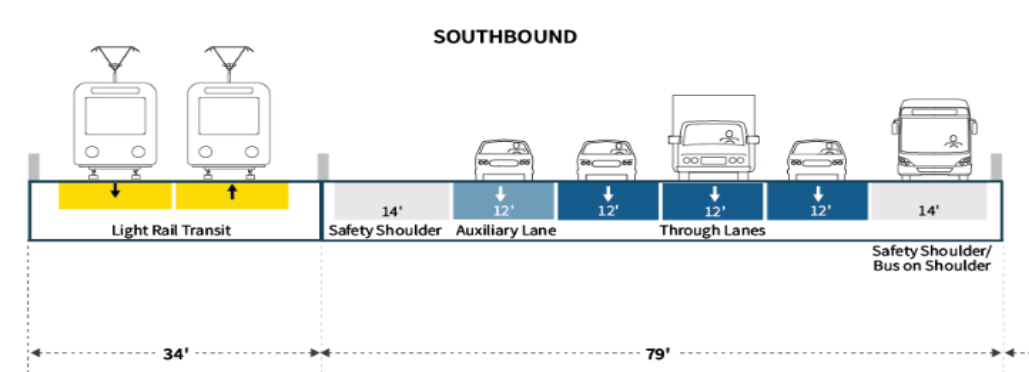
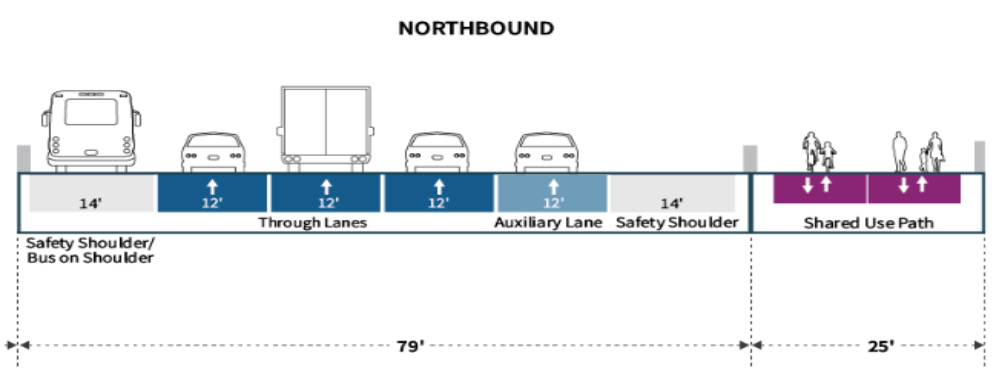
Traffic lanes- 12 ft, Light Rail- 34 ft (~3 lanes), Pedestrians & Bicycles- 25 ft (over 2 lanes), Bus-on-Shoulder- 2x14 ft=28 ft (over 2 lanes). Vehicles 3 thru lanes + 1 Auxiliary lane in both directions.
FSEIS: “Design is not final and subject to change. Widths may vary with final design. Two Auxiliary lane design would add approximately 8 feet to each bridge (i.e., 16 feet to the total width).”
The Two Auxiliary lane option reduces southbound congestion and “substantially” reduces northbound congestion. (Section 3.1 Transportation, page 3.1-49), yet IBR has rejected it.
I-5 Bridge has had 3 thru lanes for decades, and the IBR plan keeps 3 traffic thru lanes.
Space allocation on bridge not proportional to user needs: 2019
The FSEIS Executive Summary, pg S-8, acknowledges the critical nature of freight:
“Freight volumes moved by truck to and from the area are projected to more than double over the next 25 years. Vehicle-hours of delay on truck routes in the Portland/Vancouver area are projected to increase by more than 90% over the next 20 years. Growing demand and congestion will result in increasing delay, costs, and uncertainty for all businesses that rely on this corridor for freight movement.”
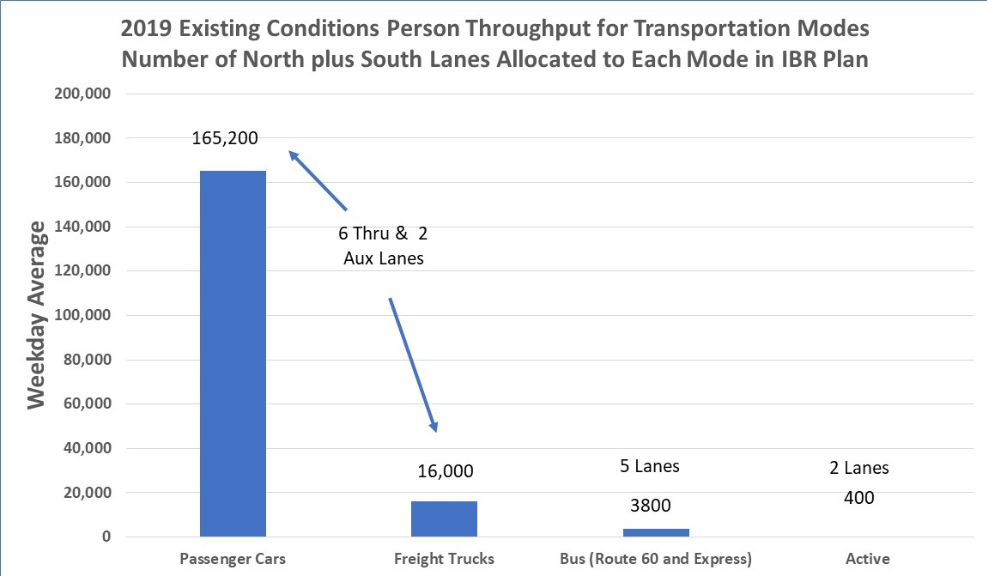
2019 Existing Conditions, various modes of transportation across I-5 Bridge. IBR planned lane space allocations. Data: Table 4-7 from Transportation Technical Report, p 2-26.
Clearly, the IBR plan is unfair to most bridge users. Two Auxiliary lanes would better meet the needs of the largest user group, traffic and freight. Eliminating light rail in favor of far less costly bus service would save substantial space. Reducing the Pedestrian & Bicycle (‘Active’) path for a tiny number of crossings mostly in daytime in good weather in favor of traffic and freight operating 24/7, 365 days per year will better serve more people. The industry standard for shared paths for pedestrians and bikes is 10 ft (page S-9 of Executive Summary).
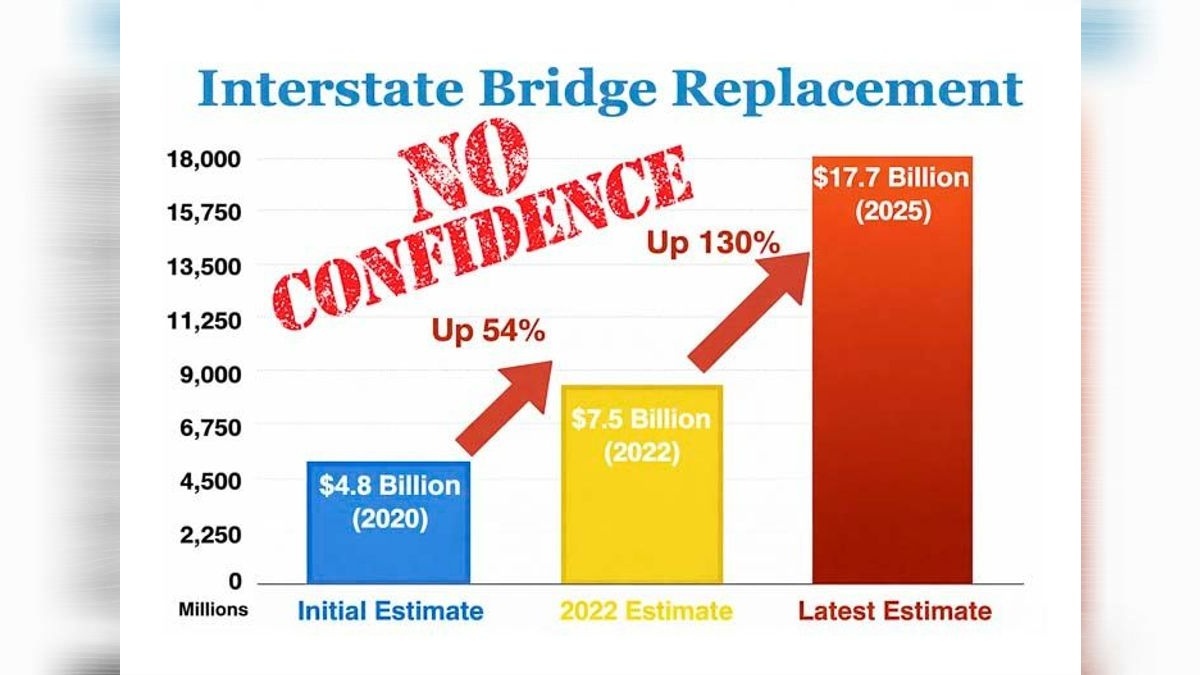
These reductions could save $Billions in construction costs. Light Rail is currently estimated at $3.5 Billion. Updated bridge construction costs were concealed from legislators and the public until public records requested by Portland Economist Joe Cortright were disclosed in January 2026. Costs to build are now estimated up to $17.7 BILLION, up from $7.5 Billion. Further cost increases seem very likely over a 20-year construction timeframe.
Space allocation on bridge not proportional to user needs: 2045
Even assuming IBR’s unrealistic 2045 forecasts, the distribution is still extremely unreasonable. IBR forecasts vehicles and freight make up 88% of users in 2045, yet only 3 Thru lanes each way are planned, the same number of thru lanes as today. One Auxiliary lane in each direction for local traffic is added, while approximately 3.5 lanes each way are allocated to only 12% of users (Transit and Active). A shoulder would be required whether the buses use it or not.
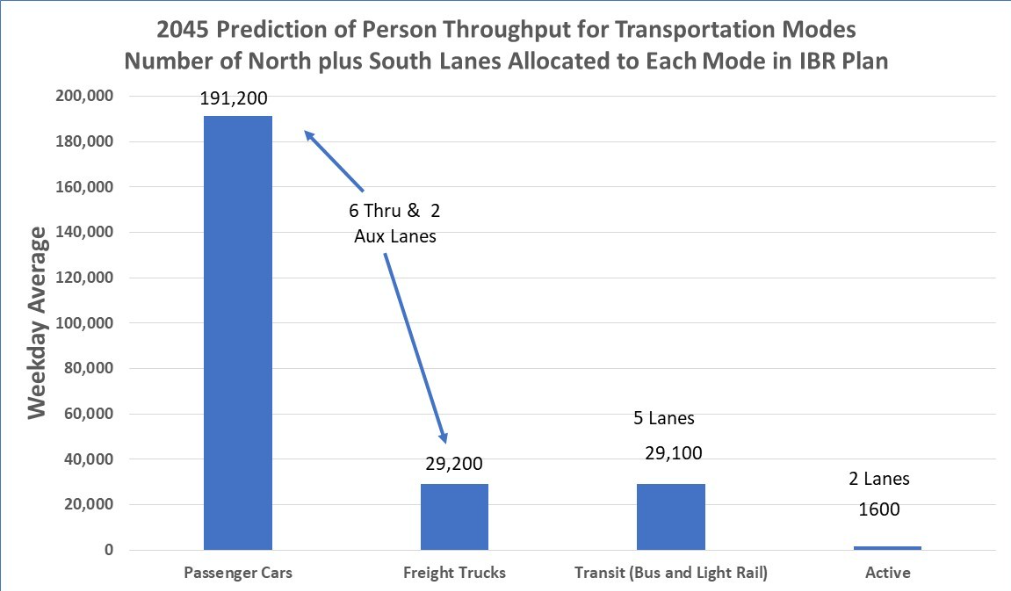
2045 Prediction of person throughput for various modes of transportation across the I-5 bridge, along with IBR planned lane space allocations. Data: Table 4-7 from Transportation Technical Report, p 2-26.
Note that less than 1% of users (Pedestrian & Bicycle = ‘Active’) get 1 lane each way all to themselves. This is extremely unfair to the vast majority of commuters and truck drivers who will be paying tolls both ways. Pre-completion Toll rates won’t be finalized until 8 months prior to tolling. The earliest that tolling is currently anticipated to start on the I-5 Bridge is 2028.
Douglas Tweet
Camas
Comments
Loading comments…