



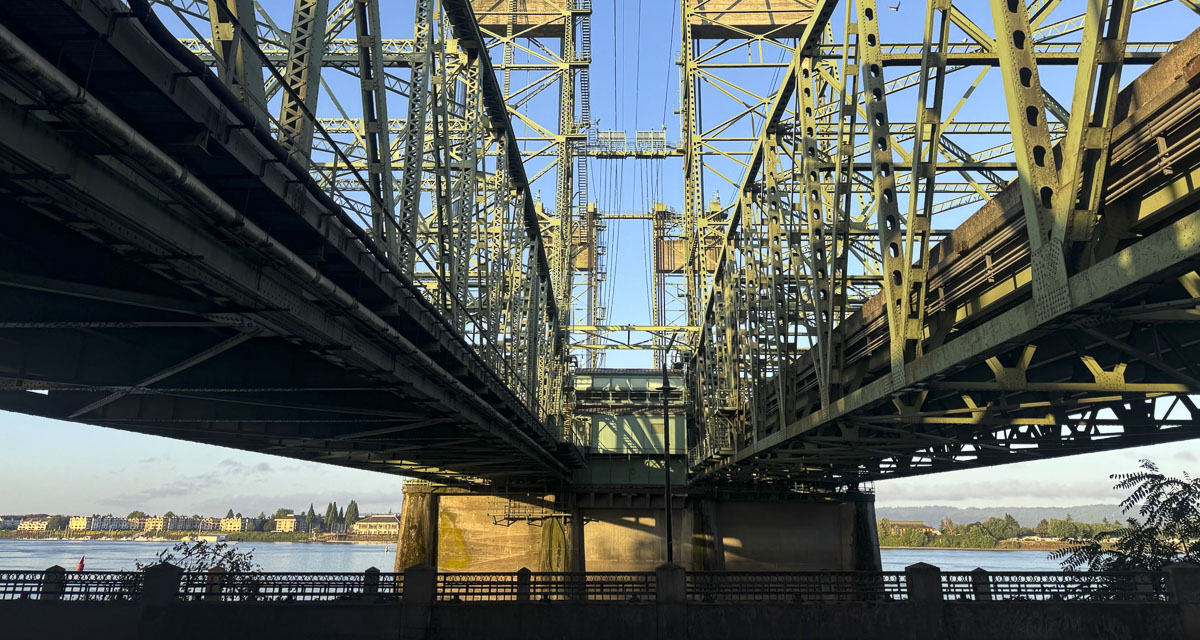
Robert Wallis believes now is the time to set the stage for that evaluation by replacing the IBR team leadership and their lead consultant WSP
Robert Wallis
for Clark County Today
The Interstate Bridge replacement project is unable to move forward to completion without significant funding from the Trump administration. Although the administration is likely to resist funding the project because it allegedly depends upon light rail and tolls to alleviate congestion, they have not yet taken a position on the matter. If they do, their first step will be to evaluate the current design and funding plan to see if changes are needed. Now is the time to set the stage for that evaluation by replacing the IBR team leadership and their lead consultant WSP. There are seven reasons that this makes sense:
1). Doing so would offer the opportunity to find a more affordable option. Many believe that the IBR team ignored less costly options, focusing instead upon selling the 20-year-old design concept and funding strategy (tolls) proposed in the failed Columbia River Crossing (CRC) project. It is time for a fresh look at options.
2) Doing so would provide a “second opinion” on the contentious issue of congestion. Many well-informed project critics disagree with the IBR team’s contention that light rail and tolls, as opposed to additional lanes, would relieve congestion. The Trump administration is very likely to disagree as well. Critics also contend that the IBR team “cooked the books’ on traffic projections. A second opinion on both issues might resolve the disagreements and expedite the ultimate funding decision.
3) Doing so would help put to rest some, if not most, of the project criticisms of elected officials that have escalated in recent months. I think some of that criticism is unfounded given the fact that those elected officials based their opinions upon information furnished by the WSP team “experts.”
4) Trump’s first administration helped bail out the city of Boston after their Big Dig construction fiasco. WSP’s transportation engineering group is largely composed of the staff of the former engineering firm named Parsons Brinkerhoff . They, along with their partner Bechtel, were held responsible for that fiasco and settled a lawsuit for over $400 million. The Canadian international consulting firm WSP purchased them in 2014 for $1.35 billion to establish a transportation engineering practice in the USA. About 12,000 Parsons Brinkerhoff employees became WSP employees. IBR Program Administrator Greg Johnson was a former employee of Parsons Brinkerhoff, and thus may not be an effective spokesman asking for federal funding from the Trump administration.
Although those responsible for the Big Dig project may or may not be part of the IBR team, the fact that Parsons Brinkerhoff was deemed responsible for the Big Dig fiasco could possibly make the Trump administration disinclined to trust that the WSP “experts” will provide credible information on the IBR project. Trump likely knows what the United States Attorney said about them when and they and partner Bechtel agreed to pay the $400 million settlement:
“Today’s settlement with Bechtel/Parsons Brinckerhoff is continuing evidence of our commitment to vigorously investigate and prosecute those who have perpetrated a fraud on American taxpayers”
5) WSP is a Canadian-owned company. Given Trump’s “American First” focus, their continued involvement may be ill advised.
6) WSP has been aggressively selling the project as an opportunity to resolve social and racial injustice. The IBR team has made clear “equity is at the center of what we are advancing with the Interstate Bridge Replacement Program”. The “center” of any infrastructure project should be the delivery of the best possible solution at the least cost, taking into consideration equity amongst other factors. The current IBR team’s approach is unlikely to be viewed favorably by the Trump administration.
7) The IBR team appears to be attempting to spend as much money as possible in order to make it more difficult to change course. Although this is not an uncommon strategy to overcome public opposition on major infrastructure projects, I doubt that it will have success with Trump. Replacing IBR leadership and their lead consultant now would prevent them from wasting tax dollars to advance a plan that the Trump administration may find unacceptable.
Also read:
- Final Supplemental Environmental Impact Statement published for Interstate Bridge Replacement Program
 Federal agencies published the final environmental impact statement for the Interstate Bridge replacement project.
 - Speed cameras designed to bring added safety to work zones
 WSP issued 65,000 infractions in first year, with 59,000 being penalty-free first offenses as program expands statewide.
 - Marie Gluesenkamp Perez seeks federal assistance in combating sea lion predation of salmon & steelhead fishing stock
 Congresswoman pushes for expanded lethal removal authority as sea lions devour Columbia River fish stocks.
 - Opinion: The high cost of hiding – Why IBR’s delayed revenue study is a $15 billion warning sign
 IBR delays critical toll revenue analysis until June 2027, hiding financial details until after project approval.
 - Opinion: The high cost of hiding – Why IBR’s delayed revenue study is a $15 billion warning sign
 IBR delays critical toll revenue analysis until June 2027, hiding financial details until after project approval.
 wpDiscuz
