



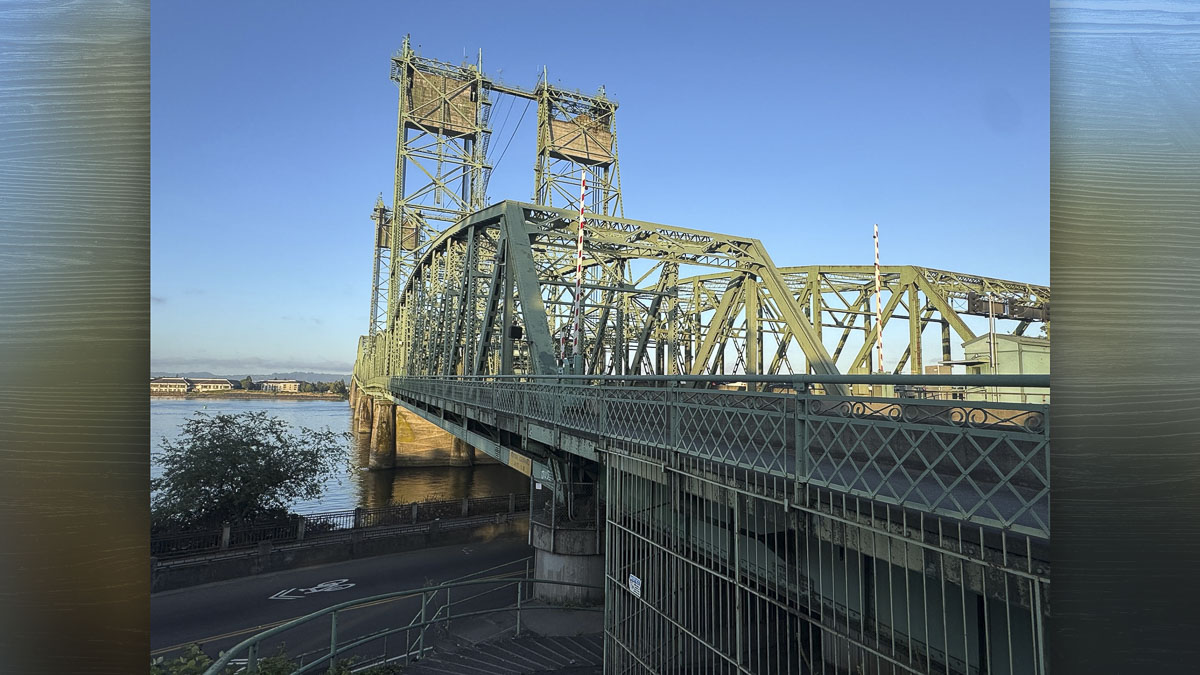
Joe Cortright chronicles the IBR team’s delays in providing an update on the I-5 Bridge replacement project costs
Joe Cortright
City Observatory
Once again, the Interstate Bridge Replacement Program (IBR) has blown through a deadline to report a new, much higher cost for this huge project.

They’ve now delayed for two full years telling lawmakers and the public how much the project will cost, and it seems certain to approach $10 billion.
Not only that, but IBR officials flip-flopped on the need for a delay. In September, they testified to legislators that they could easily produce a new estimate without knowing whether the Coast Guard would require a higher navigation clearance; now they’re saying they have to wait until the Coast Guard renders a decision.
IBR officials remain evasive about when a new cost estimate will be revealed, hinting it may take weeks or as much as two months after the Coast Guard decision is rendered. It seems likely that IBR will delay releasing a new estimate until after both the Oregon and Washington legislatures have adjourned their 2026 sessions in early March.
In truth, the IBR team actually knows within a reasonable range how much the project will cost: it has had a well-financed group of staff and consultants working on project cost estimating for the past five years. It’s using the Coast Guard process as an excuse to avoid delivering bad – and likely very bad – news about the exploding cost of this mega-project.
The Oregon and Washington highway departments have a huge problem – a $10 billion dollar problem. They’ve been working for years on a new cost estimate for the gargantuan Interstate Bridge Replacement Project. In 2022, state officials said the project would cost $5 to $7.5 billion. For the past 24 months, they’ve acknowledged that estimate is too low, and they’ve repeatedly said they would release a new cost estimate “real soon.” They were scheduled to release a new cost estimate on December 15, but are now saying we’ll all have to wait until sometime in 2026.
Their excuse for not releasing the cost estimate now is that they say they now need to wait for a Coast Guard decision on bridge height due early next year. But just 90 days ago, IBR officials told legislators that they could provide an estimate, without waiting for that same Coast Guard decision. IBR has already costed out both versions of the bridge, and according to their own testimony, almost every other element of the bridge remains the same. The real reason they’re holding back is that the new estimate is going to push the cost of the bridge up by billions – to between $9 and $10 billion – and they don’t want legislators or the public to know.
IBR officials have given flatly contradictory testimony to the same legislative oversight committee, clearly inventing an excuse to continue to keep legislators (and the public in the dark).
IBR Testimony September 15: “we have enough information . . . that we can update and do an estimate now, rather than waiting [for the Coast Guard decision].”
IBR Testimony December 15: “. . .information [about the Coast Guard decision] is really critical to develop an accurate and comprehensive cost estimate . . . “
A history of repeated delays for a new cost estimate
For the past two years, the Oregon and Washington highway departments have been stringing along apparently gullible state legislators, failing to reveal the growing cost of the Interstate Bridge Project. IBR Administrator Greg Johnson disclosed in January of 2024, that the project’s cost estimate was too low, and needed to be revised, promising a new estimate in about six months. Since then they’ve offered up several new deadlines, and missed every one of them. A new estimate has always been about 90 to 180 days away.
Three months ago, at a tense hearing with legislators from Oregon and Washington, state transportation officials promised they’d produce a long-delayed new (and higher) cost estimate by December 15. As KGW reported in September, legislators are getting impatient to see an updated cost estimate. At a September 15, 2025 meeting of the Oregon and Washington joint legislative committee overseeing the project, legislators made it clear that they wanted to see a new estimate at their December 15, 2025 meeting.
As the environmental process has dragged on, so has the wait for the cost estimate — but lawmakers on the bi-state committee indicated they’re running out of patience and don’t want to see the cost estimate slip into 2026. Washington Rep. Ed Orcutt requested that the team be ready to provide the new estimate at the committee’s next meeting in December. KGW followed up with [IBR project director Greg] Johnson, who appeared to indicate that the team could meet that deadline, writing in an email that “the Program is currently planning to provide more information on an updated cost estimate and financial plan in the Bi-state Legislative Committee meeting on Dec. 15.”
Washington State Representative Ed Orcutt spoke out at the September meeting:
So on slide 61 you show on the horizon, late 2025 early 2026 is a cost estimate.
We’ve been waiting a long time for an updated cost estimate, and we do have a meeting if I’m correct, on December 15, which is pretty late in 2025, and I believe, about a year since we were promised one. I would really request that we actually have an updated cost estimate for that December 15 meeting, please. Thank you.
Oregon State Senator Khan Pham recited the long history of delays in releasing a new cost estimate, and the critical need for the legislators to know how much this would cost:
“. . . we have been eagerly awaiting the cost estimate. You know, we were told in 2024 we would get it. . . . you told us in 2024 that it wouldn’t be until June of 2025 when we would get the updated cost estimate, I remember because I specifically said it would be really helpful if we could get it before the transportation session the legislative session ends, so that way we can actually incorporate that into our understanding of what the transportation funding needs are for the state moving forward. But, you know, I was told June 2025, and then, then recently, we were told no, it looks like it’ll be September of 2025, and now we’re looking at December of 2025 if not early 2026 and so I just want to raise that because, . . . we’re looking at cost increases for ODOT projects of 30, 40, to 50 percent changes, even 40 to 60 percent changes from 2022 and if the IBR project increase is similar, at that similar rate, we’re looking at $8 to $10 billion. It would be helpful if we could get that updated cost estimate as soon as possible, so that way we can incorporate that into our understanding of what our respective legislatures we need to budget for and find funding for.
Contradictory claims about the Coast Guard
It’s now apparent that Oregon and Washington legislators will have to wait until some time next year to find out how much more the Interstate Bridge replacement project will cost – and what they will be expected to pay. At the Monday morning December 15 meeting, IBR officials made it clear they weren’t going to provide a new cost estimate until some unspecified time next year (2026). In a slide presented at the committee meeting, IBR disclosed they are not going to provide a cost estimate, saying they are waiting for a decision from the Coast Guard which is “necessary to complete and accurate comprehensive cost estimate.”
The IBR’s new interim project director Carley Francis testified on December 15 that IBR was anticipating the Coast Guard’s final navigation decision in early 2026, and that they now found it “critical” to know that decision before publishing a new cost estimate – exactly the opposite of what IBR staff told the same committee three months earlier on September 15: that knew enough about the fixed and movable spans to develop a cost estimate and that there was no need to wait.
We are, as you’ve heard earlier, anticipating a decision from the Coast Guard in early 2026 regarding bridge height, and that will help confirm which direction we go: fixed or removable span. And also will help us understand final details with respect to getting to the amended record decision, which is that federal approval to move into construction. When we last met, when you folks last met without me, that timing for that decision from the US Coast Guard was not known, and so given that it is now very in the near term for the program, we are trying to make sure that we’re reflecting that outcome in our planning and the cost estimate body of work. And that information is really critical to develop an accurate and comprehensive cost estimate. I know Ray, deputy program administrator, Ray Mabey already noted that we are ready to build whatever bridge that is permitted.
Francis claims that in December they didn’t know the timing for the Coast Guard decision, but in fact, as IBR associate director Frank Green testified in September, they were projecting exactly the same time frame for the release of the Coast Guard decision as they do now: “early 2026.” In December, Ms. Francis said “anticipating a decision from the Coast Guard in early 2026 regarding bridge height” which is almost exactly the same as what Mr. Green said in September, “Submittal of that Navigation Impact Report will likely lead to a revised preliminary clearance navigation determination early next year.”
IBR officials have thus made directly contradictory statements about whether they needed the Coast Guard decision to produce the cost estimate. In September, Frank Green, associate director of the IBR project, testified to the Joint Oregon-Washington legislative oversight committee that they were planning to release a new cost estimate prior to the Coast Guard issuing a new navigation determination:
We are looking to do an updated cost estimate, as Greg had mentioned earlier, for both a fixed span bridge and a movable span bridge, recognizing that the program wanted to update our estimate and update our financial plan, prior to when we’ll have that kind of bridge decision determined. Currently we’re working with the Coast Guard and working with both headquarters. Submittal of that Navigation Impact Report will likely lead to a revised preliminary clearance navigation determination early next year, but we recognize we have enough information on the fixed span and conceptual understanding of what the movable bridge would be so that we can update and do an estimate now, rather than waiting for that PNCD, and having that that cost estimate take a little bit longer.
As KGW TV, noted in its report on the December 15, 2025 meeting, Green’s earlier testimony made it clear that there was no need to delay the release of an estimate because of the timing of the Coast Guard decision.
But Green also indicated at the time [September 15] that preparing two estimates wouldn’t be a problem, and that the team was planning to do so before it received a decision from the Coast Guard.
Blaming the Coast Guard not only directly contradicts what they told legislators in September, it represents a new and different excuse for delaying release of a new cost estimate. In August, Administrator Greg Johnson claimed that the preparation of the cost estimate was delayed by the project’s extended NEPA review – even though the cost estimate process is independent of NEPA.
A chronology of repeated delays
That means that it will now have been more than two years since IBR first publicly acknowledged that a new and higher cost estimate for the IBR was in the works. In January, 2024, Administrator Johnson told Oregon Public Broadcasting that they’d have a new estimate in about six months. Since then, as we’ve chronicled at City Observatory, IBR officials have repeatedly delayed revealing a new cost estimate. A brief chronology of promised (and missed) deadlines for new cost estimates are as follows:
- Jan 2024: IBR cost update will be out in six months
- June 2024: announces it’ll be June 2025 (another year)
- April 2025: not until September 2025 (five more months)
- September 2025: not until December 2025 (three more months).
- And now, in December 2025, we’re told, it will be “early 2026.” (another three to five months)
No matter what date it is, it always seems like we are three months, six months or a year away from finding out the real cost of the IBR. It has been apparent through all this time that the cost will go up significantly, almost certainly into the $9 billion–$10 billion range. The truth is not that IBR staff can’t generate a cost estimate; it’s that they can’t handle the blowback that will come when they finally ‘fess up to the project’s vastly inflated costs.
A politically inconvenient cost overrun
The repeated delays of the embarrassing cost increase correspond closely to major political developments. Throughout the 2025 Oregon Legislative session, as legislators were debating a multi-billion dollar transportation package, ODOT buried and refused to talk about the growing cost of the IBR. The big transportation bill, HB 2025, failed to move forward in the regular legislative session, and the governor called legislators back to a September special session, which belatedly passed a much smaller stopgap funding measure, HB 3991. Now, major portions of that bill, including key tax increases, are likely to be referred to Oregon voters for a referendum in 2026. In addition, both Oregon and Washington face significant fiscal challenges in the year ahead, something both legislatures will be dealing with in just a few weeks. The Oregon Legislature will convene for its even-year “short” session on February 2 and adjourn no later than March 9, 2026. Washington’s Legislature convenes on January 12 and should adjourn on March 12. Anybody want to lay odds that the new cost estimate won’t come out until mid-March, or later?
The truth is that IBR project officials have a very, very good idea of the range of probable costs of both the fixed span and movable span options. The IBR has had a team of staff and consultants working on cost issues for years: this is an ongoing part of project planning, and not an episodic effort that only happens after one or two external bureaucratic hurdles are crossed. IBR, as their outgoing project director has said, is building “basically the same project” as the old Columbia River Crossing, and virtually none of the major features of the project have changed in the past three years. It’s also important to keep in mind that the cost estimate is not a single precise dollar amount; rather it is a wide range: the current estimate (produced three years ago) has a mid-point of $6 billion, with a range of costs running from $5 billion to $7.5 billion). It beggars belief that a project that has spent $273 million on consultants over the past seven years doesn’t have a pretty good idea within a billion dollars or so of what the current estimated cost of this project is (with an allowance for the added cost of a movable span option). The reality here is not that IBR doesn’t know about how much this will cost, it is that they really don’t want anybody else to know how much it will cost.
Coast Guard is unlikely to have a decision any time soon
Portland television station KGW-TV has closely followed the IBR permitting plans. It has interviewed Johnson, and noted that while Johnson hopes that they will have a Coast Guard decision in just 90 days, by mid-February 2026, that could be the “best case” scenario.
As KGW noted, last time IBR sought a Coast Guard determination it took nearly six months, which would put a determination into May, 2026 – and presumably, the release of a final cost estimate would be some time after that. (And either way, the Coast Guard decision and the new cost estimate won’t be made until after Greg Johnson’s final day as IBR director – already set for January 2026).
And even though they say they are waiting for a new Coast Guard preliminary navigation decision, it will likely be weeks or months after that decision before IBR actually releases a new cost estimate. Like her predecessor, Francis was utterly opaque about the timing of the next estimate. As KGW TV reported, IBR “did not offer any kind of definitive timeline this time around, quoting Francis as saying:
“I would say we are trying to get things done certainly early next year to be able to fit into all of the necessary time frames. So I think that is sort of in that scale of a month or two space to be able to finalize that stuff but that’s sort of a loose range is what I can say to you today because we don’t have it mapped out completely and because of the differences in schedule in the delivery of a fixed and a moveable span.
Also read:
- Opinion: The unpreferred and unaffordable Interstate Bridge replacement proposal
 Rep. John Ley argues that the Interstate Bridge Replacement proposal is unpreferred, unaffordable, and failing to address congestion, cost transparency, and community concerns.
 - Opinion: IBR still holding and lying about coming billions in cost overruns
 Joe Cortright argues that Interstate Bridge Replacement officials are deliberately delaying the release of an updated cost estimate that he says could push the project toward $10 billion.
 - Letter: A call for competent Interstate Bridge project management
 Rick Vermeers argues that unchecked scope, rising costs, and missed timelines threaten the survival of the Interstate Bridge Replacement project unless light rail is removed.
 - Rep. John Ley introduces bill to balance representation on Washington transportation boards
 Legislation introduced by Rep. John Ley seeks to change how transportation board seats are allocated and prevent funding penalties tied to population-based representation rules.
 - Opinion: IBR administrator receives generous Christmas gift on his way out the door
 Ken Vance argues that IBR leadership avoided accountability on rising project costs as Administrator Greg Johnson announced his departure without providing updated estimates.
 wpDiscuz
