



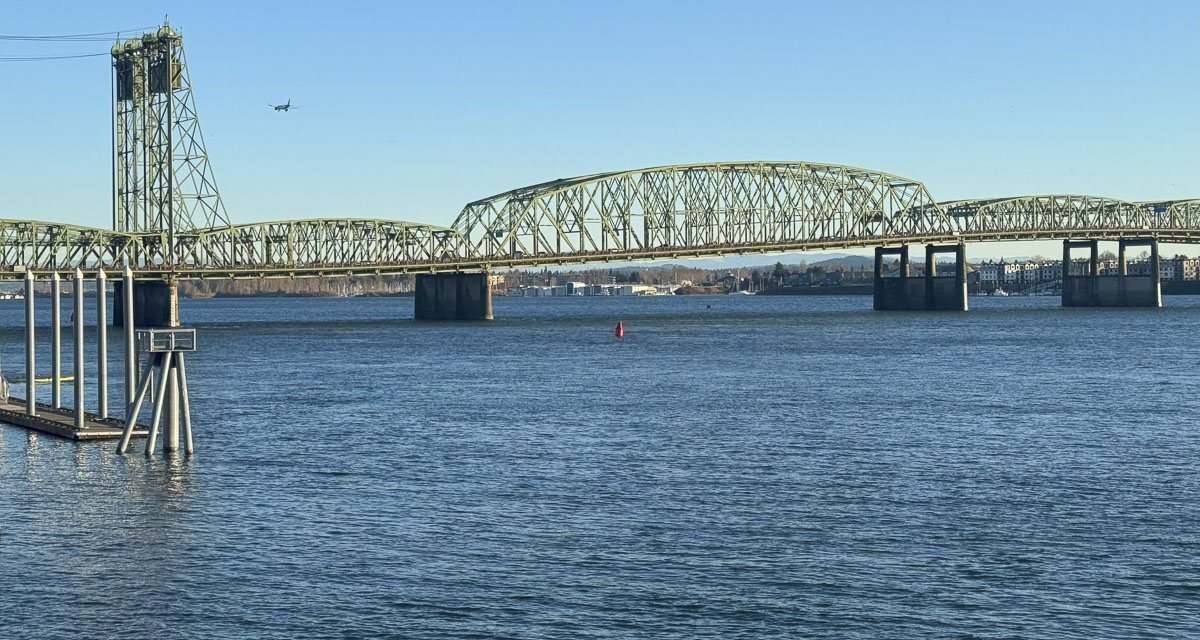
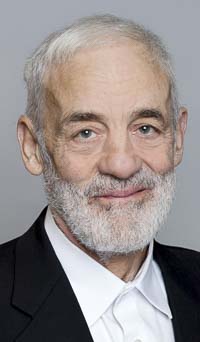
Robert Wallis says ‘it is not just because of the elected officials but also the self-serving bureaucrats and their profit-driven consultants who they rely upon for advice and information’
Robert Wallis
for Clark County Today
Clark County Today Editor Ken Vance closed his recent opinion article on the IBR with a quote from John Ley – “It’s just sad, how the politics are overriding common sense.’’
Sadder yet is the fact that the politicians responsible for selecting the preferred IBR technical option and method of financing have been deceived by the WSDOT bureaucrats who provided them with false engineering and financial information to influence the decision-making process.
Deceit by WSDOT bureaucrats and their consultants for the explicit purpose of selling their preferred technical option and financing method has defined the IBR process from day one. They have lost sight of the fact that their job is to provide the public with sound technical options and factual information to allow the public’s elected officials to decide what option gets built and how it is funded.
Ten years ago, the WSDOT bureaucrats failed to get their decades-old design concept approved after spending over $200 million on it. When they chose to try again 10 years later, that led them to hire as lead consultant a giant international consulting firm to sell the same project.
In this second effort, instead of hiring a lead consultant to engineer the project, as they did the first time around when they hired Portland-based David Evans and Associates whose staff of 500 was owned and led by engineers, they hired a firm to sell the project – Canadian-based WSP whose staff of 50,000 is led by profit-driven corporate businessmen with highly sophisticated marketing skills.
WSP had three primary marketing strategies for the IBR. The first was to emphasize the false claim that the bridge would collapse during an earthquake. Doing so was intended to ensure that the one option that offered the most significant cost savings – retaining the existing bridge – would be rejected. The second was to funnel money through subconsultants such as PointNorth, whose staff had close personal connections with key decision makers. The third was to present the project as essentially an opportunity to achieve racial equity and social justice, hoping the fervor over Black Lives Matter would mask the fact that they were selling an antiquated design concept and a seriously flawed method of financing.
To date, WSP’s sales strategy has been very effective, despite a handful of well-meaning citizens who have devoted considerable time to investigate and illuminate the very real deficiencies of WSDOT’s antiquated design concept.
State Representative John Ley has investigated the false claims about financing and the viability of light rail. Seattle engineer Bob Ortblad has investigated the false claims about the immersed tube tunnel option’s feasibility and the seismic vulnerability of the existing bridge. Portland economist Joe Cortright has investigated the bogus assumptions regarding traffic projections and financing. All three have clearly illuminated the reality of the IBR team’s deceit, yet the superb sales job by WSP has deceived almost everyone, even those who put common sense ahead of politics.
The IBR project is a perfect example of why less than 25 percent of Americans trust government. It is not just because of the elected officials but also the self-serving bureaucrats and their profit-driven consultants who they rely upon for advice and information.
Also read:
- VIDEO: WA diesel hits record $6.53, crushing truckers and school budgets
 With diesel nearing $6.53 per gallon in Washington, trucking businesses and school districts now confront sharply higher fuel expenses affecting budgets and workers.
 - Opinion: In plain sight – yielding to pedestrians
 Drivers often fail to see pedestrians due to inattentional blindness, which highlights the need for more focused awareness at intersections and stronger safety practices.
 - Expect delays on SR 14 in Vancouver for guardrail repairs Wednesday
 State Route 14 travelers in Vancouver should plan for morning delays as WSDOT will close two eastbound lanes for guardrail repairs, affecting mileposts 6.0 to 7.0.
 - Overnight closure planned on westbound SR 14 Camas Slough Bridge Tuesday
 WSDOT crews will close westbound SR 14 at Exit 14 in Camas to collect bridge deck samples and plan future repairs; detours will be in effect.
 - Opinion: Stay in your lane – seriously, it’s the law
 Drivers must choose the nearest lane when turning in Washington, and left turns bring added risk. Even with signals, every driver must help prevent crashes by following law.
 wpDiscuz
