



There was no cost update provided on Monday, much to the chagrin of the legislators
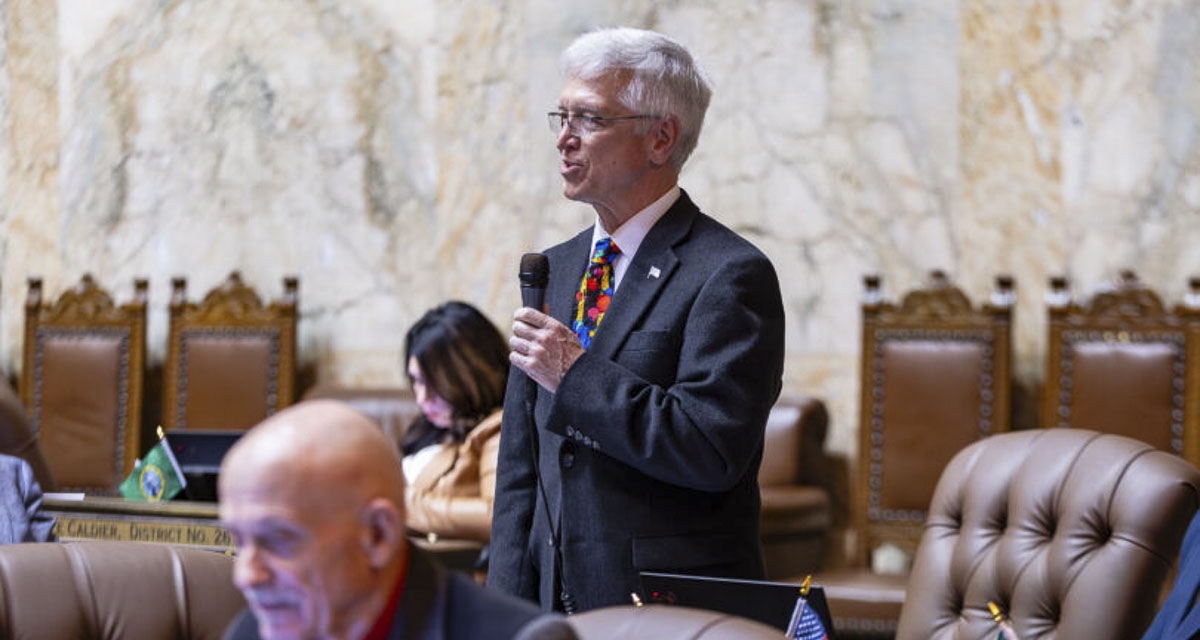
On Monday (Sept. 15), the 16-member joint Washington and Oregon committee overseeing the I-5 Bridge replacement project met for nearly three hours for an update from Interstate Bridge Replacement Program (IBR) Administrator Greg Johnson and his team. This was the first meeting in 10 months and one of only two scheduled for this year.
The IBR was already the most expensive public works project in the region’s history with a top price tag of $7.5 billion, according to the program administrator. However, nearly two years ago, legislators were told the price was going up. There was no cost update provided on Monday, much to the chagrin of the legislators. Comments from citizens put the expected cost in the $8 to $10 billion range.
Johnson is advancing two options: a single-deck bridge with 116 feet of clearance for marine traffic and a movable span option to provide the Coast Guard’s requested clearance of 178 feet.
Rep. John Ley, R-Vancouver, issued the following statement after attending the meeting.
“There were lots of questions and very few complete answers given. A cost update may be provided at the December meeting-the IBR ‘hopes’ to get approval from the Coast Guard, perhaps next April. The Record of Decision from the federal government might be coming in the summer of 2026, which would allow for construction to begin.
“The Federal Transit Administration requires the program to estimate transit ridership with current, more realistic projections. Apparently, the IBR team doesn’t have those projections yet. The Modified Locally Preferred Alternative (mLPA) is projected to be 26,000 to 33,000 daily transit riders on I-5, which none of the legislators in the past believed was accurate.
“There was only a brief mention of the IBR team working with the upriver firms that will be negatively impacted, but no mention of ‘how much’ they are seeking as ‘mitigation.’ In the failed Columbia River Crossing, three firms were going to be given $86 million. Today, there are four firms seeking mitigation.
“With costs of transportation projects in both Washington and Oregon exploding, one would think there would have been a discussion on how to pare back the cost of the project. Sadly, that didn’t happen. I will be working with legislators in both states to have this put on the agenda for our December meeting.
“Citizen comments criticized the shared-use path at the Vancouver waterfront light rail station, saying it was too long and unacceptable. It has been reported to be 2,500 feet long to get down from the expected 90 feet above the ground MAX station. Another citizen called this an ‘enormously reckless project.’
“One slide highlighted federal requirements to be awarded $1 billion for the transit component. It included ‘mobility improvement, cost effectiveness, congestion relief, environmental benefits, and current financial condition” of the transit agency. The current IBR proposal and TriMet fail all of these conditions, and I asked the committee to review them in more depth.
“The $2 billion transit component is presently over one quarter of the total project cost. With transportation dollars in such short supply in both states, we should focus on cost-efficient projects that deliver actual value to taxpayers.
“Legislators also expressed concerns about tolling. Senator Jeff Wilson asked: ‘How much would tolls be if $2.5 billion were borrowed?’ No answer was provided. The level three toll study won’t be completed until next year.
“The current proposal does nothing to improve traffic congestion and freight mobility. It fails to save people time, which is the overwhelming top priority of citizens on both sides of the Columbia River. We can and must do better.”
Rep. Ley represents the 18th Legislative District.
Information provided by the Washington State House Republicans, houserepublicans.wa.gov
Also read:
- Opinion: Half the road, full stop – Understanding pedestrian right-of-way
 Doug Dahl explains how Washington’s law requires drivers to stop when a pedestrian is within one lane of their half of the road, not just when directly in front.
 - Opinion: What is the cost of a bridge?
 John Ley argues the I-5 Bridge replacement’s soaring cost stems from costly extras like light rail, noting other states deliver larger, toll-free bridges for much less.
 - Letter: Vancouver Mayor Anne McEnerny-Ogle makes several serious and incorrect engineering statements
 Bob Ortblad critiques engineering claims by Vancouver Mayor Anne McEnerny-Ogle, highlighting cost and safety advantages of an immersed tunnel for the I-5 crossing.
 - Washington’s studded tire deadline is March 31
 Drivers must remove studded tires by March 31 or face a $137 fine, with WSDOT urging early action due to busy service centers and no planned deadline extension.
 - VIDEO: WA diesel hits record $6.53, crushing truckers and school budgets
 With diesel nearing $6.53 per gallon in Washington, trucking businesses and school districts now confront sharply higher fuel expenses affecting budgets and workers.
 wpDiscuz
