


Target Zero Manager Doug Dahl provides context to an exception to the “Keep Right” Law
Doug Dahl
The Wise Drive
Q: Could you define this exception to the “Keep right” law: “Upon a roadway divided into three marked lanes and providing for two-way movement traffic?” There’s a road I drive where some sections have two-way turn lanes, and some have a cable separation where no cross traffic can happen. Do both of these areas require “keeping right”?
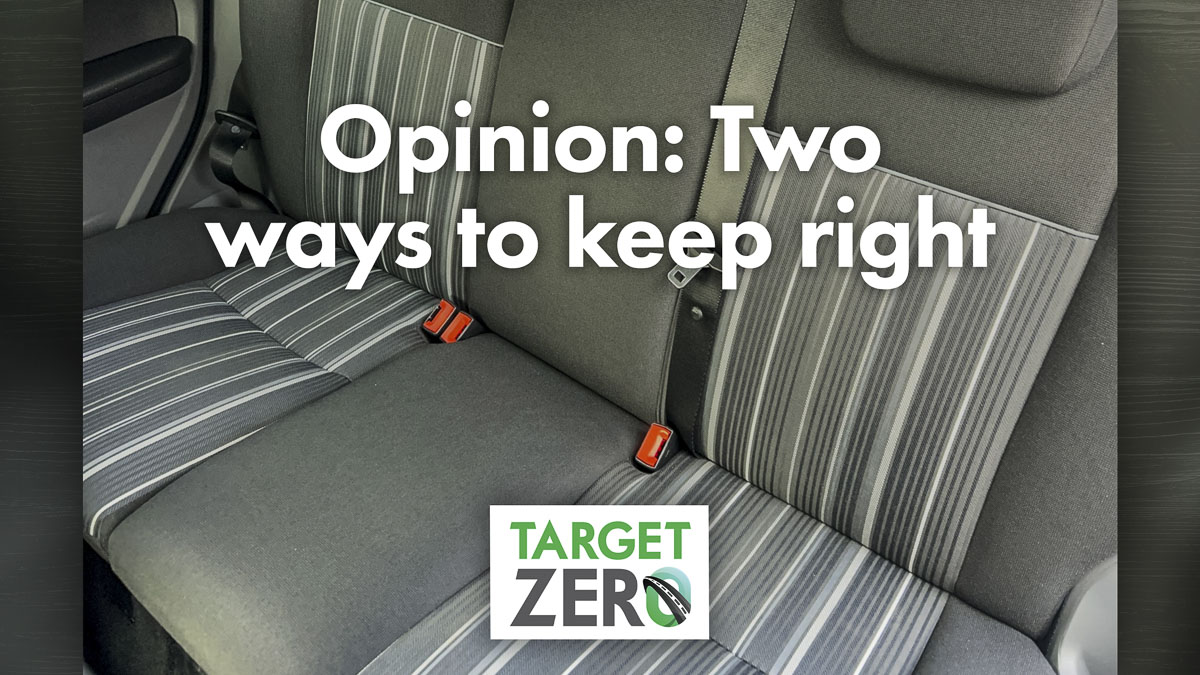
A: When I was a kid, the back seat of our car had three zones, defined by changes in the upholstery – my side, my brother’s side, and no-man’s land. We had to stay out of each other’s zones, but the middle area was open to both of us until it became a battle ground. Then we had to retreat to our own sides. And I promise, this does relate to the question.

I can see why there could be some confusion. It’ll probably help to point out that there are two ways to “keep right” in Washington’s law. The first way is staying on the right half of the roadway. Whether there’s one lane in each direction or four, you’re required to stay on the half of the road that’s going the same direction you are. After establishing that, the law lists five exceptions: passing a vehicle going the same direction (with some limits), going around an obstruction, one-way roads, when approaching an emergency vehicle, and the one you mentioned; two-way left turn lanes.
That middle lane is sort of like the no man’s land in the back seat of our 1976 Mercury Comet. It’s available to drivers traveling in both directions, but with limitations. It can’t be used for passing another vehicle going in the same direction. You’re not supposed to drive more than three hundred feet in the lane. It’s only for drivers turning left, and it’s obvious but I’ll still say it for the small percentage of drivers who haven’t figured it out yet, you need to use your turn signal. And like our back seat, if opposing drivers both want to use the two-way left turn lane, they have to find a way to do it without creating a conflict.
The other kind of “keep right” is when there are two or more lanes moving in the same direction. We tend to think of this as the slow people driving in the left lane on the freeway, but the law doesn’t limit this to freeways. It applies any time there are two or more lanes going the same direction. Does that mean on a freeway with four lanes in one direction, we’re all supposed to cram into the far-right lane? No, the law doesn’t insist that you drive in the farthest-right lane, but in the “right-hand lane then available for traffic.”
And again, there are exceptions: when passing another vehicle, when traveling at a speed greater than the flow of traffic (no, that’s not permission to speed), when moving over to allow traffic to merge, and when preparing to make a left turn.
The short answer to your question, then, is yes, both areas require drivers to keep right, but in different ways. In roads with traffic going in opposing directions we stay on the right half (with some exceptions), and on roads with multiple lanes in one direction we stay in the rightmost lane available (with some exceptions.)
And if you have two boys in the back seat of your car that can’t keep their hands to themselves, you tell them the lines in the upholstery are actual boundaries with real consequences, in hopes that you’ll get a few minutes of peace while you drive.
Also read:
- Opinion: Portland’s War on Cars Part 4 – A smarter automobile strategy to end gridlock
 O’Toole argues fuel wasted in Portland-area congestion has sextupled since 1982, generating 250,000 tons of extra greenhouse gases annually.
 - Opinion: Transit ridership trends are dismal but regional plans are oblivious
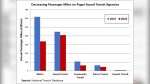 Puget Sound transit passenger-miles fell 31% from 2015 to 2024 despite a half-million-resident population increase.
 - Interstate Bridge Replacement Program seeks qualified firms for bridge replacement contract
 The CRBR project is backed by $5.7 billion from state funds, federal grants, and future tolling.
 - Opinion: Bankrupt – A $3.5 billion Rose Quarter Freeway widening project
 Joe Cortright argues ODOT’s Rose Quarter project has grown from a $450M approval to a $3.5B estimate, with a $2B funding gap.
 - Opinion: Portland’s War on Cars 3 – Ending the war on automobiles
 O’Toole argues Portland should add toll lanes, fix safety hazards, and redesign TriMet routes to end its anti-auto policies.