



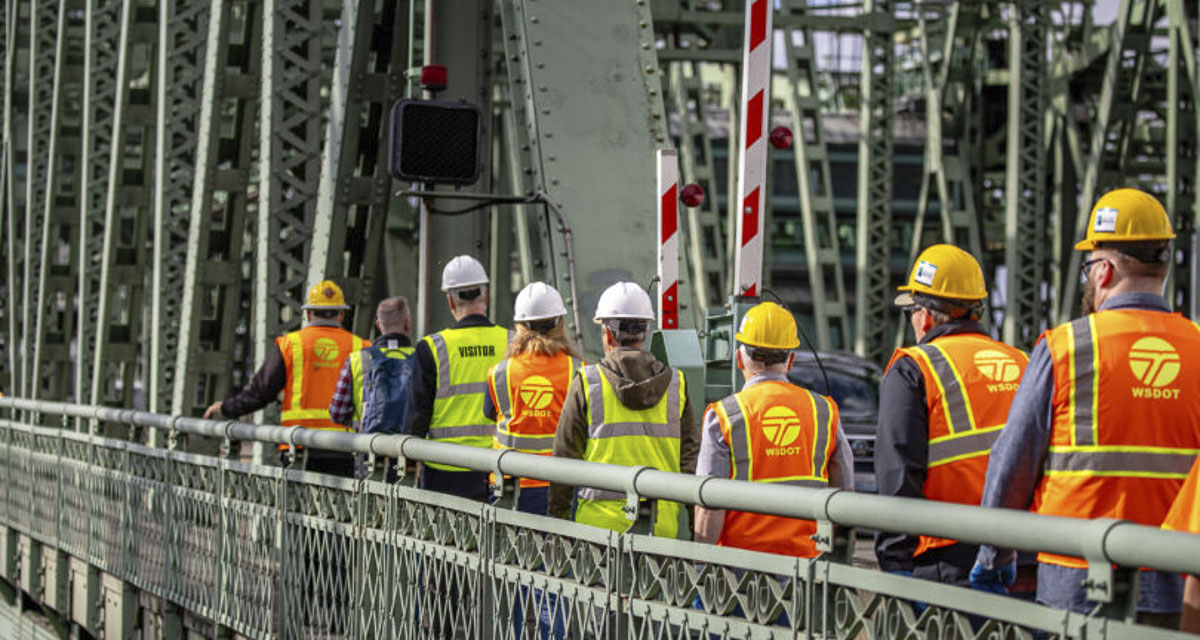
The I-5 Bridge replacement proposal fails to address people’s biggest concerns, reducing traffic congestion and saving time
Last Friday, U.S. Congresswoman Marie Gluesenkamp Perez and U.S. Congressman Dan Newhouse invited new U.S. Department of Transportation Secretary Sean Duffy to come to the Portland-Vancouver metro area to view the Interstate Bridge Replacement (IBR) project and learn about its importance to the region. Washington state Rep. John Ley, R-Vancouver, who serves the 18th Legislative District, issued the following statement:
“This is nothing more than an overpriced light rail project in search of a bridge. The $2 billion transit component is over one-quarter of the entire cost. The people do not prefer the current ‘locally preferred alternative’ as residents on both sides of the river oppose the project.
The proposal fails to address people’s biggest concerns, reducing traffic congestion and saving time. Portland has the nation’s seventh-worst traffic congestion, and the project administrators admit that morning travel times will double by 2045. The southbound commute from Salmon Creek to the Fremont Bridge will take at least 60 minutes, up from 29 minutes today. That’s unacceptable to the citizens of Southwest Washington.
The U.S. Coast Guard finds the project to be a bridge too low. They want the bridge to have unlimited clearance for marine traffic, which would be offered by either a tunnel or a bascule bridge. However, they will consider one with the current 178 feet of clearance for maritime vessels.
Additionally, the current proposal allocates 54 percent of the bridge surface to transit, bikes, and pedestrians, and only 46 percent to freight haulers and general-purpose traffic. I’m not aware of any interstate freeway in the nation that focuses more on ‘active transportation and transit’ instead of cars and trucks.
Last November, I sent a 20-page letter to outgoing USDOT Secretary Pete Buttigieg outlining the project’s significant problems. A copy of that letter was hand-delivered to Congresswoman Perez’s office in Vancouver. I have not received a response to the people’s significant concerns.
Today, I sent Secretary Duffy my own letter, signed by some of my colleagues from Southwest Washington—Rep. Ed Orcutt of the 20th District and Rep. Jim Walsh of the 19th District—seeking a meeting to highlight the people’s concerns with the project.
I hope the Secretary will give Washington and Oregon elected officials an opportunity to share their concerns about the current proposal. I believe the Department of Government Efficiency, led by Elon Musk, should scrutinize the project.
I welcome the opportunity to meet with Secretary Duffy and share the significant concerns we and many citizens have about the $7.5 billion project.”
The 2025 legislative session began on Jan. 13 and will last 105 consecutive days.
Information provided by the Washington State House Republicans, houserepublicans.wa.gov
Also read:
- Washington’s studded tire deadline is March 31
 Drivers must remove studded tires by March 31 or face a $137 fine, with WSDOT urging early action due to busy service centers and no planned deadline extension.
 - VIDEO: WA diesel hits record $6.53, crushing truckers and school budgets
 With diesel nearing $6.53 per gallon in Washington, trucking businesses and school districts now confront sharply higher fuel expenses affecting budgets and workers.
 - Opinion: In plain sight – yielding to pedestrians
 Drivers often fail to see pedestrians due to inattentional blindness, which highlights the need for more focused awareness at intersections and stronger safety practices.
 - Expect delays on SR 14 in Vancouver for guardrail repairs Wednesday
 State Route 14 travelers in Vancouver should plan for morning delays as WSDOT will close two eastbound lanes for guardrail repairs, affecting mileposts 6.0 to 7.0.
 - Overnight closure planned on westbound SR 14 Camas Slough Bridge Tuesday
 WSDOT crews will close westbound SR 14 at Exit 14 in Camas to collect bridge deck samples and plan future repairs; detours will be in effect.
 wpDiscuz
