



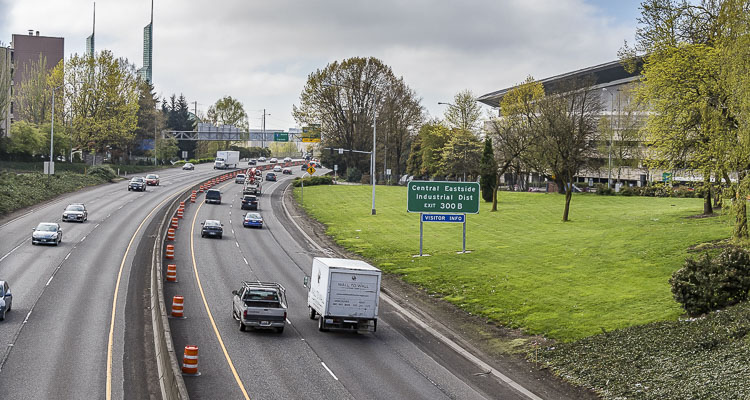
Public comment period is open until Jan. 6, 2023
PORTLAND, Ore. – The Oregon Department of Transportation (ODOT) invites the public to comment on an upcoming study about tolling I-5 and I-205 to reduce traffic congestion and make travel times more predictable through the Portland metro area.
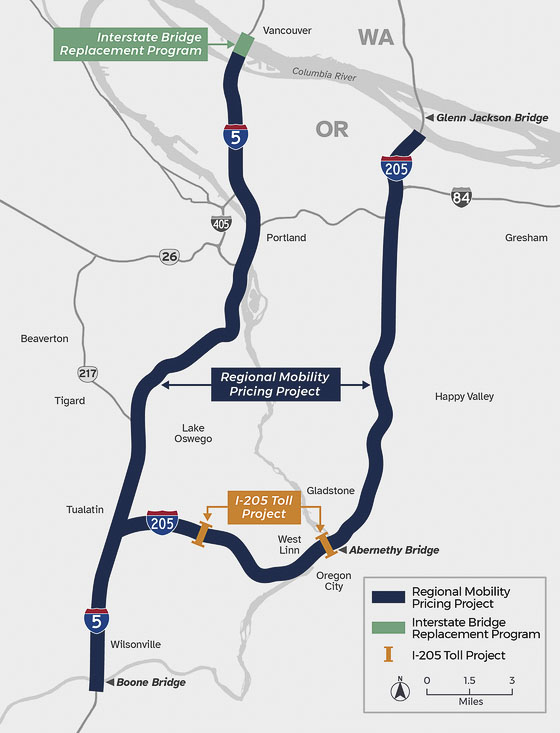
This effort, known as the Regional Mobility Pricing Project, will study variable rate tolls as part of ODOT’s urban mobility strategy to reduce traffic jams and provide safer trips for travelers.
The 50-day public comment period is now open.
Variable rate tolls are a type of congestion pricing, which improves mobility and provides more predictable travel times by charging a higher price during peak traffic periods and congested locations. In addition to these benefits, this type of tolling will:
- Increase safety as traffic jams shrink
- Improve the flow of goods to and from market
- Raise sustainable revenue to preserve and improve the transportation system
- Reduce carbon emissions to support reaching the state’s climate goals
This month, ODOT begins the federal National Environmental Policy Act (NEPA) process by identifying the project’s potential benefits and negative impacts. The start of the process is called “scoping,” a comment period to solicit input on the range or scope of community and environmental issues to study.
Our work to date has been informed by thousands of public comments from dozens of community conversations through briefings, workshops and discussion groups. In late 2023, ODOT will publish the Draft Environmental Assessment for public review and comment. Completing and publishing the results of the analysis in the Environmental Assessment is an important step to meet federal requirements and obtain a federal decision about tolling on I-5 and I-205. The earliest tolling could begin for the Regional Mobility Pricing Project is late 2025.
Other proposed tolls in the Portland area include the Abernethy and Tualatin River bridges on I-205 and the Interstate Bridge Replacement on the Columbia River. Each of these projects will have its own public comment period as well.
Join a webinar
We will share information and answer questions about the proposed concept for tolling I-5 and I-205. We will introduce considerations that will be studied, how to comment and next steps at two webinars.
- Webinar 1 – Tue., Nov. 29, 11 a.m.-12 p.m. Click this link to join the Zoom Webinar. Telephone dial in by phone: +1 346 248 7799 Webinar ID: 824 4095 7204
- Webinar 2 – Wed., Nov. 30, 4-5 p.m. Click this link to join the Zoom Webinar. Telephone dial in by phone: +1 719 359 4580 Webinar ID: 861 6446 4157
The webinars will take place on Zoom, and you can join online or by phone. Each webinar will present the same information. No RSVP is needed. These meetings will also be livestreamed on ODOT’s YouTube Channel.
Also read:
- VIDEO: WA and OR lawmakers irked as update on I-5 Bridge costs still missing
 Washington and Oregon lawmakers expressed frustration after planners failed to provide updated cost estimates for the I-5 Bridge replacement during a recent legislative oversight meeting.
 - Opinion: Atmospheric River events mean even less clearance for vessels crossing under the proposed Interstate Bridge Plan
 Neighbors for a Better Crossing argues that high river levels from atmospheric river events further reduce vessel clearance under the proposed Interstate Bridge design, creating long-term navigation risks on the Columbia River.
 - Letter: Worried about a replacement bridge?
 Sharon Nasset raises concerns about congestion, bridge capacity, and unanswered questions surrounding inspections and decisions tied to the I-5 bridge replacement effort.
 - Opinion: IBR promotes ‘giving away’ historic interstate bridges while withholding cost estimate for replacement
 Neighbors for a Better Crossing argues the IBR program is promoting demolition of the historic Interstate Bridges without releasing updated cost estimates or current seismic data to justify replacement.
 - Opinion: Bikes in crosswalks
 Doug Dahl explains how Washington law treats bicycles as both vehicles and pedestrians, depending on where and how they are being ridden.
 wpDiscuz
