



Rep. John Ley says current budget cuts won’t stop the financial bleeding at Portland’s transit agency
Rep. John Ley
for Clark County Today
Eight months ago, Portland’s TriMet was demanding a 5-fold increase in a statewide jobs tax. At the same time, Vancouver Mayor Anne McEnerny-Ogle and Clark County Councilor Sue Marshall appear to have colluded to remove Councilor Michelle Belkot from the C-TRAN Board of Directors for wanting to protect county taxpayers from subsidizing TriMet. Shortly thereafter the TriMet Board approved a $1.96 billion budget, its largest in history.

Today, Oregon voters are collecting signatures on the NoTaxOR.com referendum to reverse $4.3 billion in transportation taxes, with “well over 150,000 signatures” collected in under two weeks, according to Rep. Ed Diehl. The C-TRAN Board just reaffirmed that no taxes will be paid by small city residents for TriMet operations without a vote of the people. TriMet is finally discussing cutting service in order to save $300 million annually in operations costs.
In the background, chaos. Interstate Bridge Replacement (IBR) Program Administrator Greg Johnson has unexpectedly resigned. ODOT’s director is stepping down. Oregon is billions short of the necessary funds to complete projects promised when HB2017 was passed eight years ago. Portland economist Joe Cortright labels it a “Train Wreck: Will transit sink the Interstate Bridge Project?”
“TriMet is going bankrupt,” said Clark County Councilor Michelle Belkot at the Nov. 18 C-TRAN Board Composition Committee meeting. “Why would we want to entangle our Clark County taxpayers with a bankrupt company? They are disintegrating. Even their own legislative body would not bail them out.”
Clark County Councilor Michelle Belkot reminds the C-TRAN Board Composition Committee that TriMet is bankrupt and they should avoid any financial entanglements with them. Video courtesy CVTV
The emergency Oregon legislative session gave TriMet a temporary two-year doubling of the statewide jobs tax. That will provide $45-$48 million per year according to CEO Sam Desue. The transit agency recently announced small numbers of layoffs and bus service cuts beginning Nov. 30 and March 2026. But larger cuts must come to save the agency from depleting cash reserves by 2030 according to the CEO.
One might wonder why TriMet didn’t cut their current proposed budget last spring? The requested 5-fold tax increase was a “Hail Mary” that had little chance of becoming reality. Why should taxpayers all over the state bail out a decade or more of poor financial decisions of Portland’s transit system?
When the NoTaxOR.com referendum signatures are validated, the new transportation taxes will be paused, including TriMet’s $45 million from the statewide jobs tax. Now they’ll need close to $350 million in cuts.
But the problem runs deeper. TriMet’s $1.96 billion budget has $918 million allocated for day to day operations and maintenance. The TriMet Board approved spending $1 billion on capital projects, including $350 million on a lane reduction project on 82nd Ave. The $300-350 million in annual operational service cuts is well over one third of their entire operational costs.
The math makes no sense
One wonders if anyone on the TriMet Board can do math. The agency lost $850 million last year, but only wants to cut $300 to $350 million in annual operating costs? Passenger fares only cover 8 percent of those costs in 2024.
Why not raise fares in addition to cost cutting? In 2019, passenger fares and operating revenues raised $135.8 million. Last year they were $50 million less at $80.9 million.
“TriMet cites rising costs as the primary driver of these changes,” according to one news report. The transportation organization said the cost per service hour jumped about 53 percent from 2019 to 2024, with prices skyrocketing for items such as tires, fuel, and electricity. Unmentioned were generous employee pay raises of 13.6 percent agreed to just 14 months ago.
Here are TriMet’s financial realities, according to the Cascade Policy Institute’s John Charles.
TriMet had an operating loss of $850 million last year. Passenger fare revenue — down 52 percent. Also down, originating rides by 28 percent; while system farebox recovery is just 8 percent of operating costs, down from a previous 34 percent.
The only thing going up however, are taxes and bureaucracy. TriMet’s tax revenue is up 75 percent, labor cost up 86 percent, and full-time employees up 19 percent. Administrative and “other” employees are up 88 percent.
The current plan appears to be to slow the bleeding but not stop it. The patient will bleed to death a little slower apparently. The slow pace of announced cuts ($17 million) could mean they lose “just” $800 million in the current fiscal year, ending June 30, 2026.
A 2024 contract with Amalgamated Transit Union Local 757 agreed to increase workers’ salaries by 4 percent last December and by 3 percent every year in 2025, 2026 and 2027. The previous two-year contract also included raises. TriMet agreed in 2022 to provide its employees with 7.5 percent salary increases in December 2022 and a 4 percent bump in 2023.

TriMet demanded Clark County and Oregon taxpayers pony up about $22 million in funds to cover operations of the 1.83-mile MAX light rail extension as part of the IBR’s transit component. While IBR Administrator Johnson slashed projected ridership by 84 percent last month, reducing the O&M funding demand to about $10 million annually, the C-TRAN Board Composition Committee demanded that voters be allowed to approve the expenditure of any funds for light rail.
I have been asking for our Regional Transportation Council (RTC) Board to receive an in-depth briefing on TriMet’s finances for the past six months. So far, Executive Director Matt Ransom and Chair McEnerny-Ogle have refused. This is in spite of the RTC Board having a legal, fiduciary obligation to understand the finances of TriMet because of their endorsement of the IBR’s Locally Approved Alternative, including light rail transit.
TriMet appears to be circling the drain. Ridership remains well below prepandemic levels. It’s a national trend that the RTC said was permanent. Clark County residents should avoid any and all financial entanglements with TriMet for the foreseeable future.
Also read:
- Opinion: Everything about TriMet screams ‘poor management’
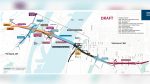 Rep. John Ley examines TriMet’s $850 million operating loss and 75% cost increase for MAX light rail service.
 - Vancouver City Council approves resolution asking IBR to extend light rail to Library Square
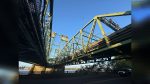 Council wants light rail extended beyond waterfront to connect with C-TRAN at Library Square station.
 - 49th Legislative District Democrats share their reasons for backing state income tax at Town Hall
 Three Democrat legislators defended the new income tax affecting only those earning over $1 million annually.
 - Letter: Freeze the scope and build the bridge
 Vancouver resident calls for project discipline after 22 years of planning and nearly half a billion in costs.
 - Opinion: ‘When are we going to get the full and complete details of the Interstate Bridge Replacement Program’s I-5 Bridge replacement project?’
 IBR team buried key details about light rail ending at waterfront with massive elevator system required.
 wpDiscuz
