



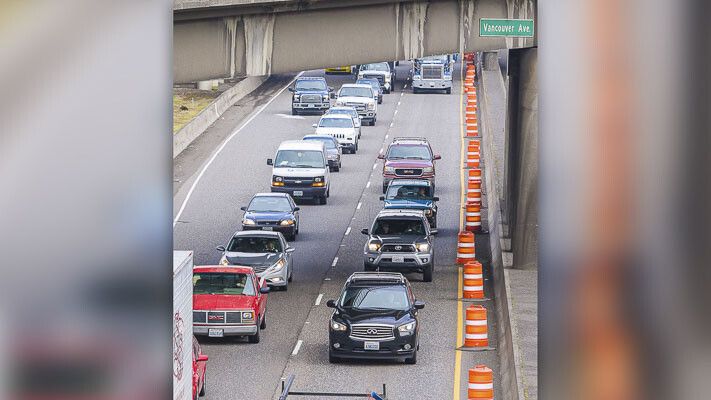
Dr. Eric Fruits of the Cascade Policy Institute says it’s not too late to stop this ‘tolling disaster,’ which will have a direct impact on Washington commuters
Dr. Eric Fruits, Ph.D
Cascade Policy Center
If the Oregon Department of Transportation has its way, Portland-area freeways won’t be free for much longer. Tolling is coming to Oregon, and it’s coming in about two years.
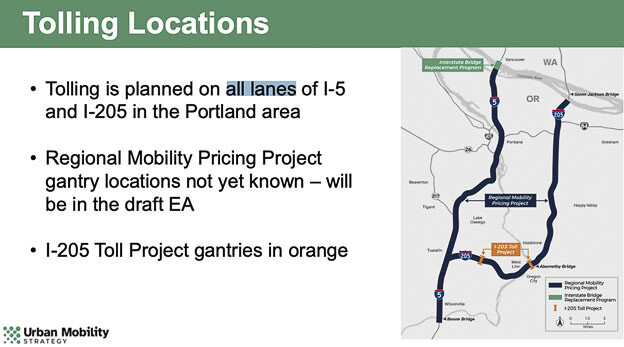
ODOT’s current plan is to toll all lanes of I-5 and I-205 from just south of Wilsonville to all the way across the Columbia River. If you’re catching a flight at PDX, shopping at Bridgeport Village, or just trying to get to work, tolling is going to drain your bank account.
At a hearing last week, a legislator noted that by serving in the legislature, she would rack up $2,000 a year in tolls. TriMet complains it doesn’t have enough buses to handle all the people it expects will be forced onto public transit. The Metro Council President worries about Interstate traffic being diverted into residential neighborhoods. ODOT estimates more than a quarter of drivers won’t be able to afford the tolls and will need subsidies. Everyone hates tolling, but our politicians are blinded by the dollar signs from tolling revenues. We’re heading for a political pile-up.
It’s not too late to stop this tolling disaster. Tolls only make sense when the money is used to expand road capacity. ODOT’s current plans fail this basic test. When the legislature meets in February, one of its top priorities must be to pass a bill that stops ODOT’s misguided tolling plans.
Eric Fruits, Ph.D. is Vice President of Research at Cascade Policy Institute, Oregon’s free market public policy research organization.
Also read:
- Letter: Interstate Bridge Replacement $13.6 billion estimate is too low!
 Bob Ortblad argues the Interstate Bridge Replacement Program’s $13.6 billion cost estimate understates the true expense, citing comparable projects, construction challenges, and engineering assumptions.
 - Opinion: ‘The drama and the waste of taxpayer money continues’
 Rep. John Ley outlines his objections to the approved fixed-span I-5 Bridge design, citing cost concerns, engineering standards, funding uncertainty, and opposition to light rail and tolls.
 - Coast Guard approves fixed-span design for new Interstate Bridge
 The U.S. Coast Guard has approved a fixed-span design for the new Interstate Bridge, clearing a major hurdle for the Interstate Bridge Replacement project.
 - Business Profile: Handel’s Ice Cream opens its first shop in Washington, in Vancouver
 Handel’s Ice Cream has opened its first Washington location in east Vancouver, with a grand opening planned for Jan. 17.
 - Opinion: Why vote no on the Battle Ground School District levy?
 Dick Rylander outlines why he believes voters should reject the Battle Ground School District levy, citing costs, enrollment trends, test results, and district spending priorities.
 - Letter: The multi-million dollar cash grab in Washington schools
 Yacolt resident Mark Rose argues that rising superintendent salaries conflict with classroom cuts and repeated levy requests in Clark County school districts.
 - Discover your future at WSU Vancouver’s Preview Day, Jan. 24
 WSU Vancouver will host a free Preview Day on Jan. 24, offering prospective students and families an inside look at campus life and academic opportunities.

For clarity; the current tolling program being proposed in Oregon only tolls interstate 205 from Wilsonville to Highway 213 in Clackamas County – not “all the way across the Columbia RIver” as mentioned in the Opinion piece.
Further, ODOT couldn’t toll on the Washington side of the river anyways.
I’m totally against tolling any sections of our freeways, and believe it’ll be an obvious follow-on to toll the rest of interstate 205 and Interstate 5; but for now, the proposal isn’t doing that.
The WA and OR Interstate Replacement Bridge Group is planning to toll both bridges. This article explains this.