



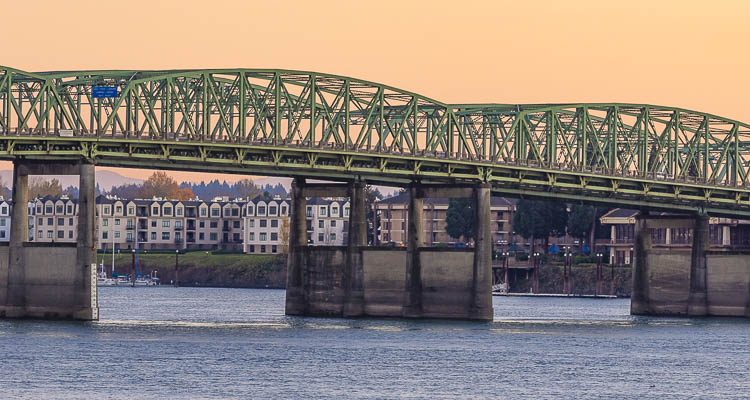
The draft EIS was originally expected to be released last year, but as of now has not been completed
TJ Martinell
The Center Square Washington
In 2020, officials with the Interstate Bridge Replacement Program to build a new I-5 Bridge across the Columbia River between Vancouver and Portland anticipated construction would begin in 2025. However, they have now pushed that timeline into 2026 due to delays with planning necessary before bridge designing work can occur.
Before construction can begin and federal funding can be obtained, the program will need to get approval for their plans with the U.S. Coast Guard and complete an environmental impact statement. The draft EIS was originally expected to be released last year, but as of now has not been completed, though program officials say it will be available later this year.
“We are committed to getting that done by late next year,” Project Administrator Greg Johnson told the Joint Oregon-Washington Legislative Action Committee at its Monday meeting.
When asked as to the reason for the project delays, Johnson said it was due to disagreements with federal agencies regarding the traffic modeling used in their plans.
“The federal transit and federal highway administration believes that some models across the country have been over-predicting ridership and we have to resolve that issue,” he added. “This is very common when you have complex projects and especially our project is complicated by having two federal leads, both Federal Highway Administration and Federal Transit Authority.”
However, the delays drew criticism during public comment by Joe Cortright, who runs a think tank called City Observatory. He told the committee that the “it’s a mark of the incompetence of the staff that they haven’t met their deadline to complete the DSCIS (draft supplemental environmental impact statement) in two years and that they failed to deal with easily foreseeable modeling issues.”
He added that the traffic modeling issue “is a risk that they [program staff] have known about for years. Traffic modeling is not a minor detail. It is foundational to every aspect of this project, is foundational to establishing how large it is, to understanding what its environmental impacts are to all of the claims that they make about traffic and how this will relieve or affect traffic.”
This report was first published by The Center Square Washington.
Also read:
- VIDEO: WA diesel hits record $6.53, crushing truckers and school budgets
 With diesel nearing $6.53 per gallon in Washington, trucking businesses and school districts now confront sharply higher fuel expenses affecting budgets and workers.
 - Opinion: In plain sight – yielding to pedestrians
 Drivers often fail to see pedestrians due to inattentional blindness, which highlights the need for more focused awareness at intersections and stronger safety practices.
 - Expect delays on SR 14 in Vancouver for guardrail repairs Wednesday
 State Route 14 travelers in Vancouver should plan for morning delays as WSDOT will close two eastbound lanes for guardrail repairs, affecting mileposts 6.0 to 7.0.
 - Overnight closure planned on westbound SR 14 Camas Slough Bridge Tuesday
 WSDOT crews will close westbound SR 14 at Exit 14 in Camas to collect bridge deck samples and plan future repairs; detours will be in effect.
 - Opinion: Stay in your lane – seriously, it’s the law
 Drivers must choose the nearest lane when turning in Washington, and left turns bring added risk. Even with signals, every driver must help prevent crashes by following law.
 wpDiscuz
