



Rep. John Ley says bill would let Oregon off the hook for $1.6 billion in borrowed funds to be paid back by tolling revenues
Ken Vance, editor
Clark County Today
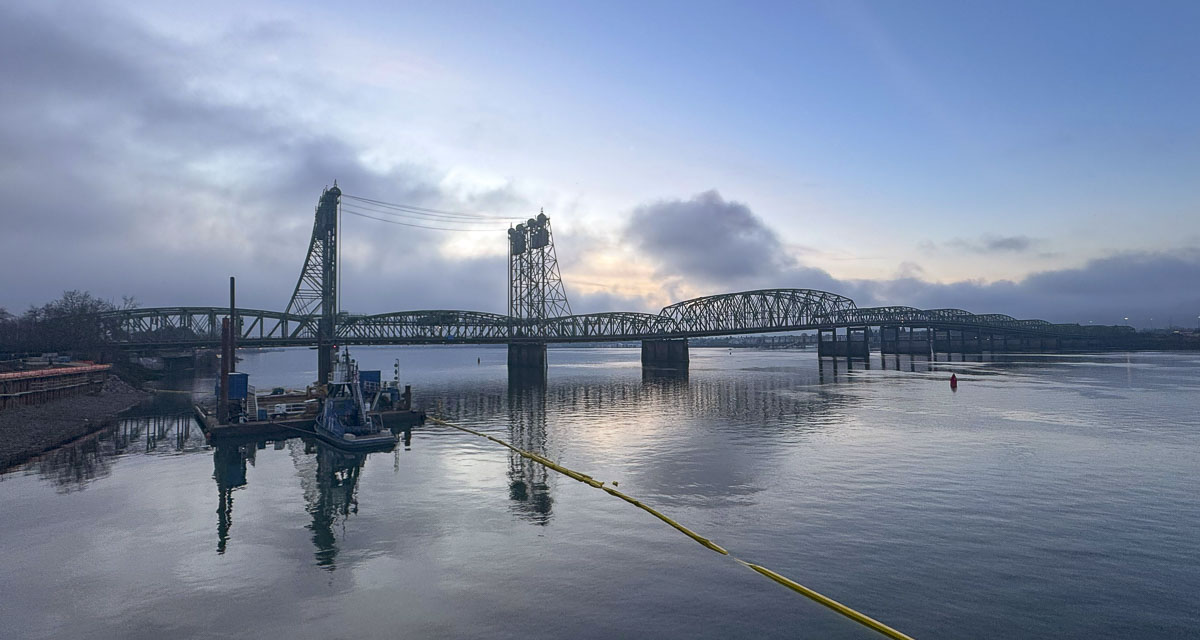
The Washington State House Transportation Committee will hold a hearing Monday (Feb. 24) at 1:30 p.m. on House Bill 1958. The bill, co-sponsored by Rep. Sharon Wylie (Democrat, 49th District), concerns the interstate bridge replacement toll bond authority.
According to opponents of the bill, HB 1958 would put 100 percent of the $1.6 billion in borrowed funds, to be backed by tolling revenues, on Washington residents.
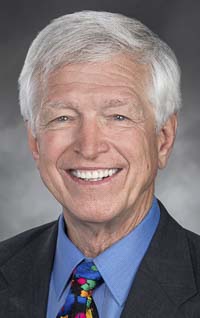
“There is no mention of Oregon in the bill’s language,’’ said Rep. John Ley (Republican, 18th District), a member of the House Transportation Committee.
Ley pointed out that the I-5 Bridge replacement project is theoretically a two-state project, where each state shares in the financial obligations. However, HB 1958 appears to let Oregon “completely off the hook,’’ Ley said.
“Furthermore, ‘if’ there is not enough IBR tolling revenue, then this bill allows WSDOT to use revenues from other tolled facilities to pay back the obligation,’’ Ley said. “And if that’s not enough, then they could use gas tax revenues. And if that’s not enough, they could use taxpayer money from the General Fund. It’s a horrible bill on many levels.’’
Ley urges concerned Clark County citizens to give their input on HB 1958 that would allow Washington state to borrow $1.6 Billion, to be paid back by tolls. This CCT story explains rising toll rates in Washington state, the very high cost of collecting tolls, and high interest payments paid to financiers on huge loans like this.
Residents can register a position on the bill at this link
See the bill webpage at this link
Ley encourages well-informed citizens to sign up and testify either in person or remotely.
Also read:
- Washington’s studded tire deadline is March 31
 Drivers must remove studded tires by March 31 or face a $137 fine, with WSDOT urging early action due to busy service centers and no planned deadline extension.
 - VIDEO: WA diesel hits record $6.53, crushing truckers and school budgets
 With diesel nearing $6.53 per gallon in Washington, trucking businesses and school districts now confront sharply higher fuel expenses affecting budgets and workers.
 - Opinion: In plain sight – yielding to pedestrians
 Drivers often fail to see pedestrians due to inattentional blindness, which highlights the need for more focused awareness at intersections and stronger safety practices.
 - Expect delays on SR 14 in Vancouver for guardrail repairs Wednesday
 State Route 14 travelers in Vancouver should plan for morning delays as WSDOT will close two eastbound lanes for guardrail repairs, affecting mileposts 6.0 to 7.0.
 - Overnight closure planned on westbound SR 14 Camas Slough Bridge Tuesday
 WSDOT crews will close westbound SR 14 at Exit 14 in Camas to collect bridge deck samples and plan future repairs; detours will be in effect.
 wpDiscuz
