



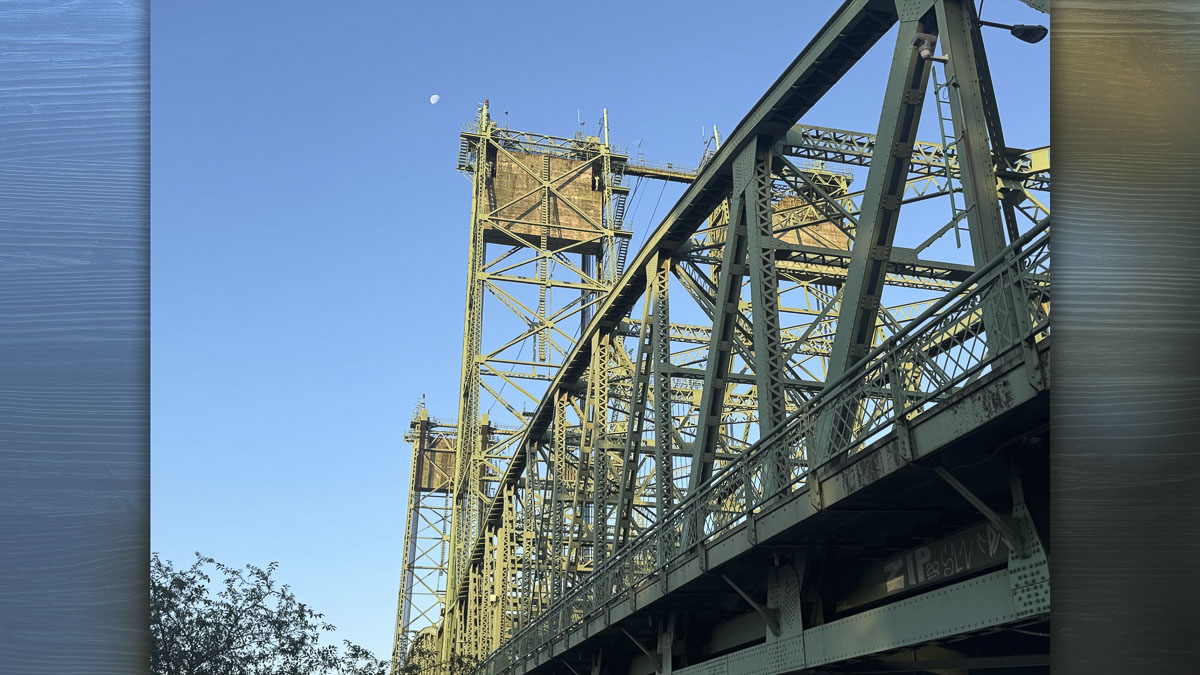
Clark County Today Editor Ken Vance offers his insight on this week’s I-5 Bridge replacement project news
Ken Vance, editor
Clark County Today
 See Grok’s analysis of this story
We’ve known for some time now that the true puppetmasters pulling all the strings behind the curtain of the I-5 Bridge replacement project are the officials from the Washington and Oregon Departments of Transportation. Those folks just gave Interstate Bridge Replacement Program (IBR) Administrator Greg Johnson quite the early Christmas present.

Johnson recently announced that he was jumping ship from the IBR program and its proposed project at the end of the year. For essentially two years, Johnson has been forced to feed us one excuse after another for why the IBR has been unable to meet its promises for an updated cost evaluation of the project.
Before this week, we were told that the estimate would come before the end of the year. There was even a report by Oregon Public Broadcasting that the updated cost estimate would come at Monday’s meeting of the Bi-State Legislative Committee. That did not happen. As a result, Johnson won’t have to face the scrutiny and backlash next year when IBR officials announce the project will likely now cost taxpayers more than $10 billion.
Program leadership stated that a revised estimate is still in development and depends heavily on the Coast Guard’s bridge clearance decision, which significantly affects design complexity, construction cost, and schedule. Officials acknowledged rising national construction costs, citing increases of 30–65 percent for materials and more than 70 percent growth in highway construction costs since 2020.
Legislators from both states expressed a considerable amount of frustration about the lack of current cost data, noting that upcoming legislative sessions will require budget decisions without clear financial information. Program staff responded that once the Coast Guard decision is issued, an updated cost estimate could likely be completed within one to two months.
Current status and upcoming milestones
Program leaders reported continued progress on major regulatory requirements. A critical environmental milestone — issuance of the federal biological opinion — has been completed, clearing the way for further permitting. IBR officials submitted an updated Navigation Impact Report to the U.S. Coast Guard in October, which entered a 30-day public comment period in December following delays caused by the federal shutdown. A preliminary Coast Guard determination is expected in early 2026 and will decide whether a fixed-span bridge (proposed at approximately 116 feet of clearance) or a movable-span bridge is permissible. The Coast Guard told program officials two and one half years ago the 116-foot option was not acceptable.
The program anticipates completing the Final Supplemental Environmental Impact Statement (SEIS) in early 2026, followed by an amended Record of Decision (ROD) later that year. Johnson told the lawmakers that the IBR hopes to get the ROD in the second quarter of the year. These approvals are required before construction can begin and before major federal funds can be obligated. The IBR must have a finance plan, provided to the federal government, in order to get the ROD. A total of $927 million must be obligated by the end of September, otherwise federal funds are at risk.
The Coast Guard public comment period ends Jan. 11. Then it has up to 30 days to evaluate public comments before issuing a decision. The movable span option will negatively impact the timeline and costs. The old estimate, without inflation, was $500 million for a lift span.
Will the bridge be single-level or double-decked?
IBR officials said that the Final SEIS will resolve several major design questions, including whether the bridge will be single-level or double-decked and whether one or two auxiliary lanes will be included. These determinations will be made by federal agencies through the National Environmental Policy Act (NEPA) process, based on technical analysis rather than legislative direction.
IBR staff remained committed that light rail transit and bicycle/pedestrian facilities are part of the modified locally preferred alternative and are therefore included in the current scope. Naturally, this led to spirited debate among some legislators, particularly over capacity for freight and vehicles and the inability to definitively commit to two auxiliary lanes at this stage.
Light rail operations and maintenance
Staff provided updated estimates for transit operations and maintenance costs tied to light rail and express bus service across the bridge. Revised ridership modeling reduced anticipated train frequency from nine trains per hour to four, cutting annual operating costs from about $21.8 million to approximately $10.3 million (in escalated dollars). After fare revenue, the remaining annual funding gap is estimated at $9.3 million, split between Oregon and Washington based on geographic mileage.
TriMet has committed to funding Oregon’s share. No funding source has yet been identified for Washington’s portion, though agencies continue discussions. Staff stated that commitments for transit operating funds will be needed by 2027 to support a planned federal transit funding application in 2028.

Oregon Rep. Shelly Boshart Davis angrily scolded the IBR staff citing their inability to provide a decision on one versus two auxiliary lanes yet officials are firm and unwilling to consider a project without light rail.
“This committee and this program cannot even definitively say two auxiliary lanes versus one auxiliary lane,’’ Boshart Davis said Monday. “Yet, definitively has transit that with C-TRAN’s lack of commitment to sharing the (Operations & Maintenance) cost and (TriMet’s) tremendous recent extreme financial woes and you’re still moving forward with this. It’s craziness.’’
With all due respect to the Oregon lawmaker, this project ventured into “craziness’’ many years ago.

This independent analysis was created with Grok, an AI model from xAI. It is not written or edited by ClarkCountyToday.com and is provided to help readers evaluate the article’s sourcing and context.
Quick summary
In this opinion column, Clark County Today Editor Ken Vance criticizes Interstate Bridge Replacement Program officials for delaying release of an updated cost estimate until after outgoing Administrator Greg Johnson’s departure, suggesting the timing shields him from scrutiny over likely costs exceeding $10 billion, while underscoring lawmakers’ frustrations and ongoing commitments to include light rail in the project.
What Grok notices
- Summarizes recent program updates, including reliance on an upcoming U.S. Coast Guard clearance decision, revised estimates for transit operations and maintenance costs (around $10.3 million annually), and debate over auxiliary lanes versus a fixed light‑rail component.
- Notes key milestones such as completion of the biological opinion and the public‑comment period ending January 11, helping readers track where the project stands in the environmental review process.
- Highlights concerns from legislators and local officials about transparency and the decision to postpone a new cost range, framing this as a taxpayer‑accountability issue.
- Mentions the leadership transition to interim administrator Carley Francis, without going into detail on how that change could affect future schedule or communications.
- Reflects Ken Vance’s perspective on openness, fiscal risk, and the implications of long‑term light‑rail commitments for local and state budgets.
Questions worth asking
- How might the Coast Guard’s early‑2026 navigation‑clearance decision shape final design choices, including whether the bridge is single‑ or double‑deck and whether a movable span is required?
- What funding sources are under consideration for Washington’s share of the revised transit operations and maintenance costs, and how stable are those revenue streams?
- To what extent could national construction‑cost inflation, interest rates, or supply‑chain pressures push the post‑Coast Guard cost estimate higher?
- Within the NEPA process, how are freight mobility and river‑navigation priorities balanced against light‑rail, bike‑pedestrian, and other multimodal elements?
- What risks does delaying the updated cost estimate pose to meeting federal grant‑obligation deadlines by September 2026, and what contingencies are in place if timelines slip?
Research this topic more
- Interstate Bridge Replacement Program – official timeline, cost ranges, and Coast Guard permit updates
- Washington State Department of Transportation – IBR project reports, briefings, and legislative materials
- Oregon Department of Transportation – bi‑state project details, funding breakdowns, and public‑involvement documents
- U.S. Coast Guard Bridge Administration – navigation‑clearance requirements and bridge‑permit decisions
- Federal Highway Administration – environmental review guidance and major‑project grant information
Also read:
- Opinion: IBR administrator receives generous Christmas gift on his way out the door
 Ken Vance argues that IBR leadership avoided accountability on rising project costs as Administrator Greg Johnson announced his departure without providing updated estimates.
 - Update: Belkot’s legal team submits sheriff’s report to its case against Clark County Council
 Michelle Belkot’s legal challenge against the Clark County Council advanced after a sheriff’s report alleging rule violations was accepted into evidence.
 - Opinion: ‘If you tolerate lies and dishonesty from the government, you’re guaranteed more’
 Lars Larson criticizes state officials for refusing to disclose updated cost estimates for the Interstate Bridge Replacement project, arguing that a lack of transparency guarantees further government dishonesty.
 - Maneuver to shore up WA’s transportation budget could be reversed
 Washington lawmakers are weighing whether to reverse a planned sales tax transfer to transportation as they confront a looming operating budget shortfall.
 - Rep. John Ley issues statement after I-5 Bridge replacement meeting yields few answers
 Rep. John Ley criticized the IBR Program for failing to provide updated cost estimates or key design decisions following a recent legislative oversight committee meeting.
