



The question follows a Clark County Today opinion column examining whether immigration enforcement should be viewed as a legal duty rather than an act of racism
This poll stems from a Clark County Today opinion column by editor Ken Vance responding to recent ICE enforcement actions in Vancouver that drew public criticism and accusations of racism. The column centers on a cell phone video circulated locally showing ICE agents taking a man into custody, which prompted the Vancouver Police Department to open a traffic investigation and sparked strong community reaction. Vance references statements from Vancouver police, the U.S. Department of Homeland Security, and family members of those detained, while also addressing a separate Thanksgiving Day ICE arrest involving a Vancouver father. Acknowledging that not all individuals targeted by ICE are criminals, the column argues that immigration laws exist for a reason and that enforcing them — even when controversial — is lawful, legal, and necessary. The poll asks readers whether they agree with that position.
Read more:
Opinion: ‘I don’t understand how it is an act of racism to enforce our immigration laws’


Also read:
- Opinion: Were Republican voters just sleeping during the August primary election?
 CCRP Chairman Matt Bumala says 60% of primary no-shows in the 17th and 18th districts were Republicans.
 - Opinion: WA Cares’ launch showcased care WA Cares did not provide
 Gov. Ferguson showcased a caregiving arrangement at the WA Cares launch that the program had not paid for a single day of.
 - Opinion: Portland’s War on Cars Part 4 – A smarter automobile strategy to end gridlock
 O’Toole argues fuel wasted in Portland-area congestion has sextupled since 1982, generating 250,000 tons of extra greenhouse gases annually.
 - Opinion: The Tooth Fairy’s secrets to making brushing & flossing magical
 Delta Dental of Washington’s Tooth Fairy Experience offers free resources to help children build lifelong brushing and flossing habits.
 - Opinion: Transit ridership trends are dismal but regional plans are oblivious
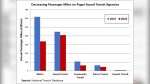 Puget Sound transit passenger-miles fell 31% from 2015 to 2024 despite a half-million-resident population increase.
 wpDiscuz