



🎧 GOP Senators: Delay Light Rail for New I-5 Bridge
‘A project this big, this complex and this costly should never be railroaded’
Sen. John Braun and Sen. Jeff Wilson
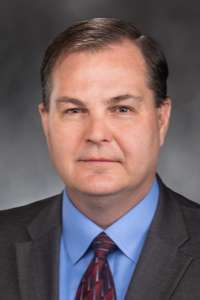
Sen. John Braun
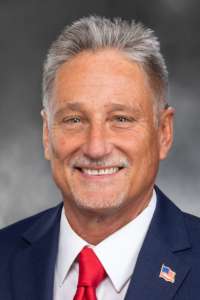
Sen. Jeff Wilson
Boston has its “Big Dig,” New York has its Second Avenue Subway, and the states of Washington and Oregon are getting set to play in the same league. Replacing the aging Interstate Bridge between Portland and Vancouver will be the biggest construction project our two states have ever undertaken. We’ve been working on this megaproject for 22 years, and we are closer to breaking ground than ever before.
Yet this latest effort is threatened by the same issue that killed the last big push 13 years ago. Decision-makers continue to see the new bridge as a means to get Portland light rail across the Columbia to Vancouver. They still haven’t figured out how we’ll pay for it.
Our message is simple. We need a safe bridge, and we need a bridge we can afford. We need a bridge that adds vehicle capacity and reduces traffic congestion. The oldest parts of the existing bridge date from 1917, it’s jammed with traffic morning and evening, and it’s at risk to fail in the next big earthquake. But we also need to get our priorities straight.
This is a bridge project, not a light rail project. And the only way this works is if we put light rail on hold until it makes sense for everyone – most importantly, the people of Clark County who would be taxed for light rail operations, and who have voted against it three straight times.
What we are suggesting should be obvious to everyone who has been following the story. What surprises us is that more people aren’t saying it. Everything became clear a few weeks ago when Interstate Bridge Replacement managers finally released an updated cost estimate they had been delaying for months. Projected costs have doubled since 2022 to $14.4 billion, counting everything – new bridge, light rail and five miles of freeway improvements.
We don’t have that kind of money. So IBR managers and the governors of Washington and Oregon are proposing that we build the project in phases. We’ve lined up $5.7 billion from state and federal sources, The bridge alone will cost us $5.68 billion. Still pricey, but within the range of what we can achieve.
But the people driving this project don’t want to stop with that. They want light rail, too. “That train has already left the station,” declared Washington Gov. Bob Ferguson, blithely ignoring the fact that light rail construction will add $3.5 billion we don’t have, and that the voters of Clark County still have not agreed to tax themselves for their share of operations, about $4 million a year.
The questions will take years to resolve. Will we qualify for a billion-dollar federal transit grant? What about the rest of the money? What about the public vote? Will the people of Clark County be insulated from the financial liabilities of the Portland Metro? And will the trains go all the way into Vancouver or will they stop on a viaduct 90 feet above the waterfront with no connection to local transit?
Committing to a multi-billion-dollar expenditure for light rail when questions like these go unanswered risks starving every other highway and bridge project in our two states, or pushing our bond capacity to the limit, or forcing taxpayer bailouts the entire populace will have to bear.
The problem is that this was conceived from the start primarily as a light rail project, with the bridge as a secondary element – what you might call the “rail that wags the dog.” It started in 2004 when Portlanders looked for a way to cross the river and tap the Washington tax base for light rail. They realized they would have a tough job selling Clark County, where residents of outlying communities have little interest in supporting a light rail system they are unlikely to use. But what if they sweetened the deal with a multi-billion-dollar freeway bridge?
That got our attention. The bridge part made sense. Unfortunately, advocates of what was then called the Columbia River Crossing were unable to find a way to make light rail financially feasible. Senate Republicans tried negotiating, but the governor’s office told us to take it or leave it. We said no, the deal collapsed, and here we are 13 years later with a new proposal that looks like the old one. Just think. If not for light rail, we could have had a new bridge by now.
How can we break this logjam?
- Let’s focus on things we know we can accomplish, like building a bridge. Light rail is a separate question. We can make the bridge “light rail ready,” but who says the trains need to roll from Day One?
- Before we build light rail, the people of Clark County need to vote. Somehow decision-makers keep forgetting this. The people who will be taxed for light rail need to say yes, and their rights must be respected.
- Let’s keep our promises. If we’re going to sell this project as a way to reduce congestion, let’s do more than just talk. The current plan adds no capacity. We’ll still have three traffic lanes each way. The bridge will be wide enough for an additional lane in each direction. Let’s build it that way from the start.
The engineering involved in this project is easy compared to the political challenges. Until the people of Clark County say yes to light rail, let’s not force it on them. A project this big, this complex and this costly should never be railroaded.
Sen. John Braun, R-Centralia is leader of the Washington Senate Republican Caucus. Sen. Jeff Wilson, R-Longview, represents the Senate Republican Caucus on the Joint Oregon-Washington Legislative Action Committee, which oversees bridge planning.

Also read:
- Opinion: Delaying light rail offers best hope for new bridge
 Two Republican senators argue light rail should wait until Clark County voters approve funding for operations.
 - Letter: ‘Now is the time to speak up, freedom is worth celebrating’
 Felida resident urges Clark County to preserve fireworks traditions for America’s 250th Independence Day celebration.
 - Opinion: Wolves thriving, cattle producers failing
 WDFW celebrates 270 wolves in 49 packs while Washington agriculture posts negative $396 million farm income.
 - Letter: The Climate Commitment Act – Washington’s high octane grift
 Vancouver resident breaks down the hidden costs of Washington’s Climate Commitment Act and its impact on gas prices.
 - Letter: The county manager gets a raise while taxpayers get a new tax
 County approves manager raise while claiming no general fund money exists for desperately needed deputies.
