



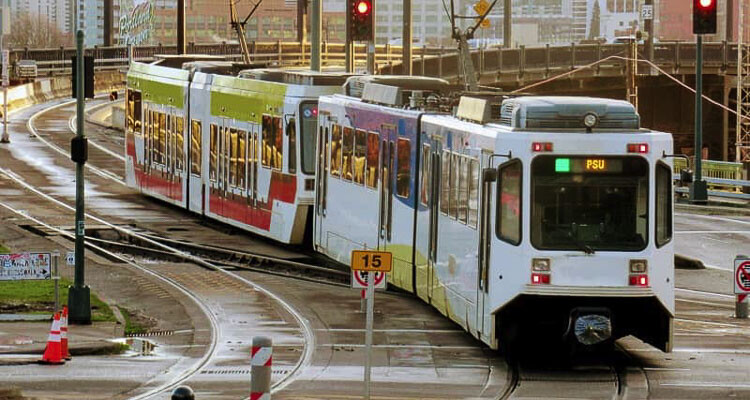
TriMet has continued to push for expansion of the Yellow Line, with plans to extend the line into Washington state across the proposed new I-5 bridge
Taylor Marks
Cascade Policy Institute
Over-promised and under-delivered.
Throughout its 18-year life, TriMet’s Yellow Line MAX has never met its promised ridership projections.
In fact, just before the pandemic hit, Yellow Line ridership was more than 25 percent lower than where it was projected to be for 2020. Following the COVID-19 drop-off in ridership, TriMet now doesn’t expect transit ridership to hit pre-pandemic levels until sometime after 2045.
Because of low ridership, TriMet is failing to abide by its commitments to service frequency. TriMet promised the Federal Transit Administration that Yellow Line trains would arrive every 10 minutes during peak hours and every 15 minutes off-peak. Instead, Yellow Line trains run every 15 minutes during peak periods and every 30 minutes during other parts of the day.
Despite this consistent underperformance, TriMet has continued to push for expansion of the Yellow Line, with plans to extend the line into Washington state across the proposed new I-5 bridge.
Is slow, low-ridership light rail really the best usage of lane space on the proposed I-5 bridge? Or, should the new bridge instead expand lane capacity for trucks and cars usage to reduce congestion on the region’s freeways?
Taylor Marks is a Research Associate at Cascade Policy Institute, Oregon’s free market public policy research organization.
Also read:
- Final Supplemental Environmental Impact Statement published for Interstate Bridge Replacement Program
 Federal agencies published the final environmental impact statement for the Interstate Bridge replacement project.
 - Speed cameras designed to bring added safety to work zones
 WSP issued 65,000 infractions in first year, with 59,000 being penalty-free first offenses as program expands statewide.
 - Marie Gluesenkamp Perez seeks federal assistance in combating sea lion predation of salmon & steelhead fishing stock
 Congresswoman pushes for expanded lethal removal authority as sea lions devour Columbia River fish stocks.
 - Opinion: The high cost of hiding – Why IBR’s delayed revenue study is a $15 billion warning sign
 IBR delays critical toll revenue analysis until June 2027, hiding financial details until after project approval.
 - Opinion: The high cost of hiding – Why IBR’s delayed revenue study is a $15 billion warning sign
 IBR delays critical toll revenue analysis until June 2027, hiding financial details until after project approval.
 wpDiscuz
