



The petition challenges the US Constitutionality of Washington’s unique approach to passing a capital gains tax as an excise tax rather than an income tax
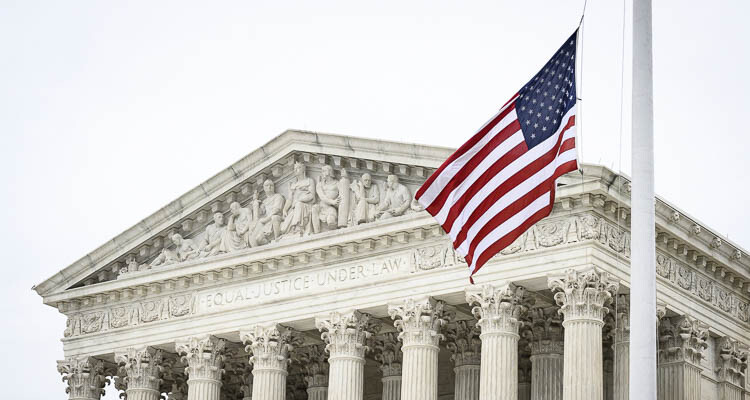
The United States Supreme Court is scheduled to review the petition for certiorari filed by the plaintiffs in Quinn v Washington.
The petition challenges the US Constitutionality of Washington’s unique approach to passing a capital gains tax as an excise tax rather than an income tax. The “excise tax” mimics a traditional capital gains income in almost every way, including taxing capital gains transactions that occur outside the border of Washington State. While this type of income tax is common among states, how it is taxed is not. Washington State is an extreme outlier in classifying these taxes as transactional rather than income taxes.
Why the need for this reclassification? Washington is not trying to correct centuries of tax law but is attempting to change words to avoid Article VII, Section 1 of the Washington State Constitution, which states “All taxes shall be uniform upon the same class of property within the territorial limits of the authority levying the tax and shall be levied and collected for public purposes only. The word “property” as used herein shall mean and include everything, whether tangible or intangible, subject to ownership.”
While the Washington State Constitution does not directly state income, court rulings have concluded rightly that income is property and must be taxed uniformly. Thus, there is a constitutionally imposed limit on progressive income taxes.
Washington State’s opposition brief of the Quinn petition to the Supreme Court tries to muddy the waters further by unilaterally reclassifying income taxes in other states as excise taxes, not income taxes. “Washington is one of forty-two states that apply an excise tax on certain capital gains earned by their residents.”
Forty-one other states apply an income tax on capital gains, not an excise tax. The Internal Revenue Service has made the distinction clear. In a response to a question proposed by Congressman Dan Newhouse, the IRS stated unequivocally “You ask whether tax on capital gains is considered an excise tax or an income tax? It is an income tax. More specifically, capital gains are treated as income under the tax code and taxed as such.”
Washington’s decision to tax out-of-state transactions through an excise scheme to avoid constitutional limitations on income taxes has created conflict with the Commerce Clause. As noted in our brief supporting the petition:
“The Washington Supreme Court’s decision threatens to unsettle numerous limitations on the scope of states’ taxing power and thereby prompt other states to follow Washington’s lead, when it suits their own purposes. If Washington can lay an excise on out-of-state sales of capital assets involving only out-of-state property, may California impose a gas tax on gasoline purchases in Arizona? May Texas impose an excise tax on stock sales in New York? May Pennsylvania impose a sales tax on grocery store checkouts in Ohio? Straightforward and long-standing principles of federalism dictate that the answer to all these questions should be no. But if this Court does not review Washington’s claimed authority to impose an excise tax with extraterritorial effect, other states will surely follow Washington’s lead and enact novel excise taxes of their own.”
The stakes are huge for Washington State and the nation. If the court does not take this petition or upholds the lower court rulings, it opens a pandora’s box of states taxing activity in other states and the potential unraveling of the Commerce Clause.

Also read:
- Letter: Freeze the scope and build the bridge
 Vancouver resident calls for project discipline after 22 years of planning and nearly half a billion in costs.
 - Opinion: Public workers’ First Amendment rights are getting attention – in Idaho, not Washington
 Idaho moves to stop public schools from collecting union dues through government payroll while Washington continues favoring unions over worker choice.
 - Opinion: Lawsuit filed against the unconstitutional income tax in Washington state
 Former Attorney General Rob McKenna and Supreme Court Justice Phil Talmadge challenge the 9.9% income tax in Klickitat Superior Court.
 - Letter: ‘Oregon and Washington aren’t refusing to clean their rolls — they’re contesting federal jurisdiction and timing’
 Camas resident challenges Lars Larson’s fraud claims, explaining legal disputes over federal jurisdiction.
 - Opinion: ‘When are we going to get the full and complete details of the Interstate Bridge Replacement Program’s I-5 Bridge replacement project?’
 IBR team buried key details about light rail ending at waterfront with massive elevator system required.
