


🎧 Vancouver Resident: Freeze Bridge Scope, Start Building
Peter Bracchi says ‘after 22 years and nearly half a billion dollars spent, the public deserves less fantasy, less drift, and more project discipline’
Editor’s note: Opinions expressed in this letter to the editor are those of the author alone and may not reflect the editorial position of ClarkCountyToday.com
The Interstate 5 bridge replacement has been dragging on so long that many people have forgotten how old this debate really is. The original Columbia River Crossing was launched in 2004, remained active from 2005 to 2014, and then died. The current Interstate Bridge Replacement Program (IBR) restarted in 2019. In practical terms, this region has been arguing, redesigning, studying, and delaying this bridge for about 22 years.

Peter Bracchi
And taxpayers have not been waiting for free. The current IBR program says spending since the restart in July 2019 totaled about $280.2 million through December 2025. Local reporting at the end of the failed CRC effort put that earlier planning cost at about $196.6 million through March 31, 2014. Put together, that means roughly $477 million to $480 million has already been spent before a replacement bridge is even under construction.
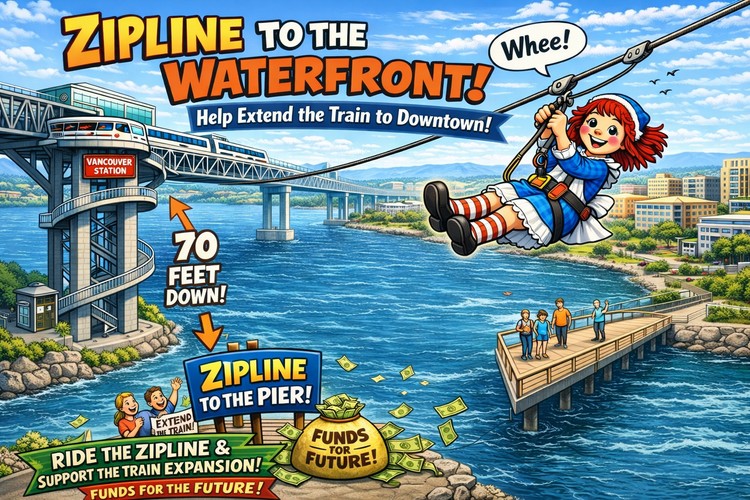
Now the public is being told that, for the currently fundable phase, light rail would extend only to Waterfront Station in Vancouver. The station itself is planned about 75 feet above existing ground, with access primarily by elevator and stairs. At the same time, the full five-mile corridor is now estimated at about $14.4 billion, while the currently identified “core set” is about $7.65 billion and still exceeds the roughly $5.5 billion in committed funding.
That is exactly what a long project looks like when scope keeps outrunning money.
Anyone who has ever managed a large project understands this pattern. The core mission starts out clear. In this case, it is to replace an aging, vulnerable crossing and build something that actually works. Then the wish list starts growing. One more feature. One more connection. One more political promise. One more design refinement. One more attempt to satisfy every interest group at the same time.
Eventually, discipline has to return.
That does not mean the added ideas are foolish. A stronger extension deeper into Vancouver may be worthwhile. Better ground-level connections may be worthwhile. A future downtown transit phase may be worthwhile. But worthwhile is not the same thing as funded, and vision is not the same thing as current scope.
That is the line public leaders need to stop blurring.
If the region cannot afford every bell and whistle right now, then say so honestly. Build the bridge. Build the part of transit the region can actually pay for. Preserve the structural ability to extend farther later. But stop selling every future hope as though it is already part of today’s deliverable.
After 22 years and nearly half a billion dollars spent, the public deserves less fantasy, less drift, and more project discipline.
Freeze the scope. Build the bridge. Then come back for Phase 2 when the money is real.
Peter Bracchi
Vancouver

Also read:
- Opinion: Were Republican voters just sleeping during the August primary election?
 CCRP Chairman Matt Bumala says 60% of primary no-shows in the 17th and 18th districts were Republicans.
 - Opinion: WA Cares’ launch showcased care WA Cares did not provide
 Gov. Ferguson showcased a caregiving arrangement at the WA Cares launch that the program had not paid for a single day of.
 - Opinion: Portland’s War on Cars Part 4 – A smarter automobile strategy to end gridlock
 O’Toole argues fuel wasted in Portland-area congestion has sextupled since 1982, generating 250,000 tons of extra greenhouse gases annually.
 - Opinion: The Tooth Fairy’s secrets to making brushing & flossing magical
 Delta Dental of Washington’s Tooth Fairy Experience offers free resources to help children build lifelong brushing and flossing habits.
 - Opinion: Transit ridership trends are dismal but regional plans are oblivious
 Puget Sound transit passenger-miles fell 31% from 2015 to 2024 despite a half-million-resident population increase.