Clark County Today Editor Ken Vance lists the reasons why he is encouraged by recent developments in the scrutiny of the $7.5 billion boondoggle
Ken Vance, editor
Clark County Today
Since Clark County Today was launched on Sept. 29, 2016, there is no single local news topic/issue that we have devoted more time and effort to than the proposed replacement of the Interstate 5 Bridge. Thanks in large part to the diligent pursuit of facts and information by Rep. John Ley, we have scrutinized and dissected virtually every element of the project. That will certainly continue even as Ley has ascended to the Washington State House of Representatives.

I don’t believe we have ever stated an objection to a project that will replace the I-5 Bridge. However, Ley, myself and many others have objected to THIS project, or at least elements thereof. Many of us would like to see the focus be on a third crossing over the Columbia River between Vancouver and Portland prior to the replacement of the I-5 Bridge. We also strenuously object to the project including an extension of TriMet’s light rail into Vancouver, which will make up at least $2 billion of the price tag, currently estimated to be as high as $7.5 billion. Ley and I have written countless times about other reasons why the current proposal isn’t what’s best for Clark County residents, including the fact that it does virtually nothing to address the growing traffic congestion issues in our region and specifically along the I-5 corridor.
This column is about the fact that more than at any other time in the history of this project, folks have hope that common sense will finally prevail and this project will either be amended or discontinued altogether. Better to start over yet again than to continue with a disaster of a project that will cost taxpayers billions over many decades.
The impact of the presidential election
The election of President Donald Trump in the Nov. 5, 2024 election has given many like me hope for the use of common sense in addressing problems that face our country. There’s no question that the I-5 Bridge replacement project screams for the need for common sense.
In an interview with KOIN 6 News, Ley welcomed more scrutiny of the project.
“Clearly, there’s a change with the federal election. It remains to be seen how the Trump administration will respond and look at that,” the Republican said.
The story pointed out that more than $2 billion has been earmarked federally, but the project hasn’t broken ground and there still isn’t a final design or a final price tag.
“This is where the DOTs, the governors need to say ‘Time out. Are we being well served by this project moving forward?’” said Ley.
Ley recently filed his first bill as a new Washington state legislator on Wednesday. It aims to prevent tolling as part of the I-5 Bridge replacement project. House Bill 1559 would repeal legislation that passed along party lines in 2023. Senate Bill 5765 authorized the Legislature to impose tolls to help pay for the project.
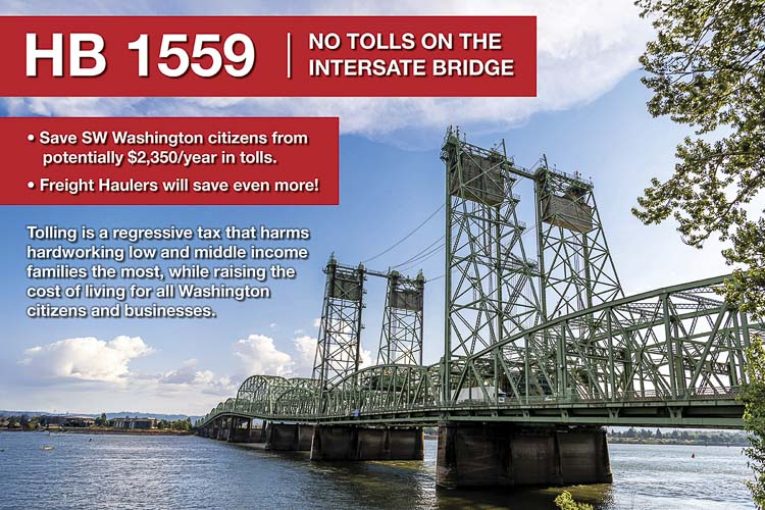
Proponents argue tolls are an important way to pay for a new bridge. However, the exact mechanisms have yet to be determined, and opponents argue tolling has many downsides.
More about what has changed
I had an email thread shared with me this week from members of the Hayden Island Community who have also spent a great deal of time and effort scrutinizing the project. Kimberly Haslett offered hope that President Trump, or the newly formed Department of Government Efficiency (DOGE), will at some point provide the common sense to the I-5 Bridge replacement project that we’ve all been seeking. Haslett also wrote a letter to the DOGE as a concerned citizen.
Here is what Haslett wrote:
“Trump may definitely pull back the funds for the following reason:
“1. They are taking a closer look at many federal funds previously pledged to States – and evaluating if they are being used in the most cost effective way.
“2. Trump has pledged to withhold Federal Funds to any state that is refusing to cooperate with his Executive Orders. Tina Kotek has already received a warning letter for her stance on keeping Oregon a Sanctuary (State), and refusing to cooperate with ICE.
“3. The Department of Government Efficiency is investigating any wasteful use of federal funding and requesting the public’s help in identifying projects that are not a wise use of those funds.
“I sent out an email to DOGE today as a concerned citizen.’’
C-TRAN board members express opposition to funding
Clark County Councilor Michelle Belkot recently became the third member of the C-TRAN board to express opposition to Southwest Washington taxpayers helping to fund TriMet’s light rail extension into Vancouver, following Bart Hansen and Tim Hein.
Belkot has proposed additional discussion by members of the C-TRAN board and the public on the issue. That is scheduled to be a topic at a meeting March 11.
Belkot, Hansen and Hein would need just two more votes to have a majority on the C-TRAN board.
Is the confidence of proponents waning?
One of the reasons why Clark County Today has been so persistent in providing scrutiny of this project is that seemingly so few were doing so. It was shocking to me that the Interstate Bridge Replacement Program and proponents of the project were seemingly working virtually unchecked on the way toward an inevitable conclusion that would be a grotesque abuse of power and misuse of taxpayer funds. But the belief now, finally, is that folks have finally woken up and are taking notice and that we hold the hammer because of the election of President Trump and the formation of the DOGE.
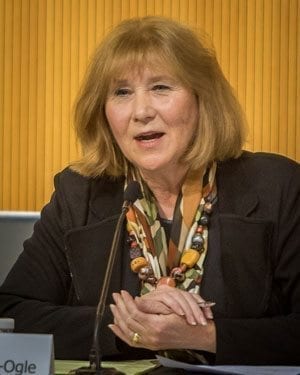
There has seemingly been no greater proponent of this project than Vancouver Mayor Anne McEnerny-Ogle, who appeared to reveal a crack in her confidence for the project in recent comments made to Oregon Public Broadcasting.
“The contracts haven’t been written, the checks haven’t been signed. So, until that happens, we don’t have a bridge right now. We’re working as if we will, hoping to get a record of decision Sept. 8, 2025 and put a shovel in the dirt the next day,” Mayor McEnerny-Ogle said, referring to early construction preparation. “Until all of those documents are signed, we don’t have a bridge.”
That’s the best news I’ve heard on this project in years.
Also read:
- Letter: Has $450 million been wasted on a bridge that’s too low for the Coast Guard with a foundation too costly to build?A Seattle engineer questions whether hundreds of millions of dollars have been spent on a bridge design he argues is unnecessarily risky and costly compared to an immersed tunnel alternative.
- Opinion: Transit agencies need accountability not increased state subsidyCharles Prestrud argues that Washington transit agencies face rising costs and declining ridership due to governance structures that lack public accountability.
- Opinion: Does tailgating cause speeding?Target Zero Manager Doug Dahl examines whether tailgating contributes to speeding and explains why following too closely increases crash risk with little benefit.
- Free fares on New Year’s Eve is a big hit with C-TRAN ridersC-TRAN’s New Year’s Eve free-fare program provided extended late-night service and a safe transportation option for riders across Clark County just after midnight.
- Four Western WA counties granted $6.6M in federal funds for road safety programsFour Western Washington counties will receive $6.6 million in federal funding for road safety projects, including an EMS pilot program in Clark County.


Autonomous shuttles should be free at rush hours. That will fix congestion. We can’t afford a $6 Billion freeway and a $2 Billion Max train that will be 90% subsidized. Forever.
U.S. cities WILL BE using driverless vehicles in 2025:
– Tesla will launch unsupervised driving in June. The service will launch in Austin, Texas, this summer. They will be available for paid trips, and will arrive without anyone behind the wheel. Tesla aims to introduce unsupervised ride-hailing services in California and Texas in 2025, pending regulatory approval.
– Self-driving competitor Waymo has begun testing robotaxis on LA freeways, including Interstates 10, 110, 405, and 90. These robotaxis will NOT have a human safety operator behind the wheel.
Waymo will test in 10 new cities in 2025, starting with Las Vegas and San Diego. Waymo, which is owned by Google, runs its driverless-taxi service in San Francisco, Los Angeles, and Phoenix, and plans to expand next into Austin and Atlanta through its partnership with Uber.
– Amazon-owned Zoox aims to launch its robotaxi service to the public in Las Vegas in 2025 and is now also running trials in San Francisco, Austin, and Miami.
– Miami: Waymo plans to launch its self-driving taxi service.
– Austin: Waymo will offer its self-driving taxis exclusively on Uber.
– Atlanta: Waymo will offer its self-driving taxis exclusively on Uber.
– Las Vegas: Zoox aims to launch its robotaxi service to the public.
– San Francisco: Zoox is running trials and expanding its service.
– Foster City, California: Zoox plans to introduce robotaxis.
Waymo delivered 150,000 paid trips per week across the U.S. by December 2024, indicating significant growth potential for 2025. Waymo’s CEO says they will be in 10 cities by the end of the year.
Driverless mini buses are a fix for congestion. Why? Because they can pick you up where you live. Drop you off at your destination.
Who needs a personal car? It’s parked 90% of the time. Taking up space.
Max trains aren’t a solution. Why? Three train cars won’t fit on downtown Portland’s small blocks. But more trains will block car traffic on and off the Steel Bridge. Traffic simply can’t move.
That’s what TriMet’s own analysis says.
Here’s the problem with trains:
– You have to drive to a rail hub.
– Pay to park your car.
– Wait for a train.
– Take another bus to get to work.
It’s simply not worth it. Nobody’s going to ride the train. Takes too long. Inconvenient.
Could self-driving cars work on I-5? Of course it will.
A joint commercial/municipality might run the system:
– Make it free during the morning and evening commute. It will pick you up near your home, drop you off at work. Ride with 5-20 friends in the morning and evening. Door-to-door. No charge.
– It makes money during non-rush hours. Figure ten, $15 rides a day. No drivers. That’s $150/day. A built-in subsidy.
– If a robotaxi costs $150K, could you run it for 5 years to generate about ~$50k/year? $50k/year divided by 300 days is around $150/day.
– No drivers. No gas. Little maintenance.
– ELIMINATE the 90% taxpayer subsidy that Tri-Met receives and YOU WILL pay.
A new $6B I-5 bridge AND $2B light rail bridge? That bridge is 5 years off and WILL cost you $10 a day.
It’s all about the money for the DOTs.
Riders want service and congestion relief. Lower the subsidy and make public transportation, fast, fun and free.
Congestion solved.
Sam — excellent comments.
RE: “Waymo delivered 150,000 paid trips per week across the U.S. by December 2024, indicating significant growth potential for 2025. Waymo’s CEO says they will be in 10 cities by the end of the year.
Driverless mini buses are a fix for congestion. Why? Because they can pick you up where you live. Drop you off at your destination.”
THAT is what public transit out to become. NOT 40-100 passenger huge buses that require a transfer and you standing out in the cold, rainy elements waiting for the next bus to show up.
We are wasting far too much money for the few passengers we are carrying. We must deliver better value to the taxpayers and the customers who use transit.
Thank you for the research and the posting, my friend!
By uniting as a community and demanding a practical, voter-approved solution, we can ensure a bridge replacement that truly serves the people of Vancouver and Southwest Washington for generations to come.
I’d be careful what we wish for with Robotaxis. This great video I linked breaks down some of the potential issues they could cause:
https://youtu.be/040ejWnFkj0?si=BN7YEwaClDkBKxdY
I have to ask have you ever travelled to a city with fantastic metro systems? I agree the MAX is extremly flawed in downtown Portland since it acts as a streetcar rather than having a proper metro tunnel. Instead of letting Silicon Valley reinvent the Taxi without a driver and really solve nothing other than our own insecurities about talking to an Uber driver, its worth looking at what other cities do and copying their success. For example Amsterdam, Milan, Tokyo, Seoul, Hong Kong, Berlin, most of the developed world aside from the USA, Canada, & Australia where your home and destination are rarely more than a 15 minute walk from a metro station or high frequency bus to a metro station where a train shows uo every 3 to 5 minutes to wisk you away at high speed since its under ground on aside from street cars used for shorter last mile journeys.
With all due respect, there is no need to discuss underground or over round public transportation for the Portland metro area. Unlike megacities such as Shanghai, which has over 500 metro stations, Portland’s population simply does not warrant such an investment.
How can we justify this level of spending when the U.S. military budget is set to decrease by 8% yearly over the next four years? Rather than burdening taxpayers with costly transit projects, we should allow private companies—whether through autonomous buses or other shuttle services—to handle local transportation needs.
We must take a stand against reckless spending and focus on reducing our national debt, which has already reached $35 trillion. It is our responsibility to ensure we do not leave this burden to our children and grandchildren.
$2 BILLION currently estimated for voter-rejected Light Rail out of a current estimate of $7.5 BILLION for the project, increases expected. Bus Ridership Across both I-205 and I-5 is lower than 2019. At the December CTRAN meeting, when the low ridership report was given,Vancouver Mayor Anne McEnerny-Ogle was dismayed, and insisted that going to another vote on light rail must be avoided at all costs. Instead, she suggested that the board authorize the CTRAN lobbyist to go to Olympia to find a way to circumvent the voters. The locals have never preferred light rail at the ballot box,, light rail is not the locally preferred transportation alternative for the majority of residents.
In 2012, every city in Clark County voted against the CTRAN proposition to extend TriMet Max light rail over the I-5 Bridge into Clark County. Thousands of voters in north and east Clark County who pay the CTRAN sales tax were excluded from the vote. To include the whole county, County Councilor David Madore led the charge in 2013 to put an advisory vote on the ballot to oppose any Light Rail project in Clark County unless it is first supported by a majority of voters in a county-wide vote of the people. Over 68% of voters approved the measure. No county-wide vote has been held, yet the scam continues, and highly paid consultants continue to plan, as if we had never voted.
Why would Clark County residents choose to pay higher taxes for gold plated light rail that 99% of the county would likely never use? $2 BILLION for the 1.7% of I-5 bridge crossings on an average weekday that use public transit is outrageous. Fixed tracks leading to limited locations (with Transit Oriented Developments), and overhead electric lines that freeze every winter are problematic.
Last Winter,a bad storm started Saturday, Jan. 13, See frozen tracks on Sunday. Tracks and ovehead lines were frozen for over 6 days in most of the system per this KPTV report
“TriMet said Friday Jan 19) at 7:30 p.m. that crews are continuing to work to reopen MAX service further, but it does not have an estimated reopening time.
Shuttle buses are carrying travelers along all MAX lines…”
There are more effecient, and cost effective ways to cross the bridge than light rail. Rubber tire vehicles that operate on our existing road system have met the need for decades, and may do so well into the future. Roads for all, freight, commercial and service vehicles, emergency vehicles, public buses & vans, commuters, travelers, vs light rail for a very few.
“At the December CTRAN meeting, when the low ridership report was given, Vancouver Mayor Anne McEnerny-Ogle was dismayed, and insisted that going to another vote on light rail must be avoided at all costs. Instead, she suggested that the board authorize the CTRAN lobbyist to go to Olympia to find a way to circumvent the voters”
THE ABOVE STATEMENT [bold emphasis is mine] NEEDS TO BE THE CAMPAIGN SLOGAN FOR ANY MAYORAL CANDIDATE IN THE UPCOMING ELECTION.
Mayor annie simply needs to go. Her time is up; she’s catered to the rich, deep-pocket developers enough. She does NOT want to consider what the majority wants; she considers only that which big-money wants. She defends her actions by falling back on the cliche’, generic statement of “promoting development.” Vancouver needs new blood in its leadership roles.
And Vancouver clowncil… you’re included, too. (see previous articles re: 4th Plain and McGilvary Blvd. debacles)
By uniting as a community and demanding a practical, voter-approved solution, we can ensure a bridge replacement that truly serves the people of Vancouver and Southwest Washington for generations to come.
With all due respect it might be worth taking a step back and asking why bus ridership over the bridge is so low. Because the buses are stuck in the same traffic as cars. So in one of the cheapest countries in the world to own a car what are people going to do? Drive over the bridge because it saves time getting to their destinstion. Now imagine the train is has something over the cars since it has its own lane to sail by the stop and go, people are going to start riding it. Even people who never use the light rail should want this, because if you study traffic flow the curve if car count to flow is not linear, getting even a small amount of cars off the road with a train will massivly reduce travel times for cars over the bridge and reduce green house gas emmisions far more than any EV vehicle does. Instead if getting angry and fearing change maybe we should go travel and see how the rest of the developed world builds their cities around people not cars. To be clear I’m not anti car, I love cars as a hobby to go drive at PIR on the weekends, but us Americans are great at being extremly inefficient by filling our cities with cars, traffic, and parking lots and making an unpleasant place to exist as a pedestrian…
The piece you are missing on this is that nobody wants to ride a Yellow Line train down Interstate Avenue, doing an average of 15 MPH in between the many stops along the way to the Rose Quarter.
I can’t afford a car and live on Hayden Island. I prefer to travel by train. But there is NO express train (one track). The train bridge to Vancouver kills the economic model, but was included because of federal gov funds. I think autonomous and bus lanes ought to have equal sway. Terminating Max on Hayden Island might make sense. Autonomous (free) service from your home in Vancouver to our train terminal on Hayden Island. Everyone benefits. Fast. No Toll.
By uniting as a community and demanding a practical, voter-approved solution, we can ensure a bridge replacement that truly serves the people of Vancouver and Southwest Washington for generations to come.
First and foremost is the hard, cold fact that the US Coast Guard has already rejected any bridge design that shuts down river traffic at Vancouver. Unless and until that position changes, all other discussion of building this bridge amounts to fantasy.
Although a former bridge design was rejected as too low, this one is higher, and there is an alternative for a bridge with a moveable span that could be reverted too. Right now, IBR consultants appear to be working overtime to offer taxpayer funded buy outs to businesses who would go under if the bridge height is lower than today. The amounts being offered haven’t been publicized as far as I know. The lost jobs that will never be recovered don’t appear to be included in the rosy future employment forecasts. Only job increases are forecast it seems.
Its not just business that would be affected. The Army Corps of Engineers maintains a pair of dredges over at Swan Island, that are used to keep the navigation channel in the Columbia open. Neither one will fit under any fixed design for a bridge.
Light rail is what drives bridge height. Trains simply cannot climb tracks that exceed a certain grade. A bridge that is high enough for river traffic, with a grade a Trimet train can climb, would be so tall as to completely bypass over the top of the City of Vancouver. The proposed transit stop at Evergreen is already 9 stories off the ground.
By uniting as a community and demanding a practical, voter-approved solution, we can ensure a bridge replacement that truly serves the people of Vancouver and Southwest Washington for generations to come.
Excellent presentation, Ken!
Of course, it’ll be crickets-chirping-as-usual when it comes to the Columbian taking on a similar in-depth discussion and/or opinion piece.
So if $7.5 Billion is already “too much” for this project, what will be the result of releasing updated budget numbers later this summer that show a cost North of $12 Billion??
There hasn’t been a Federal Transportation Project in my lifetime that did not significantly exceed what any of the original budget projections predicted. Why would this one be any different??
The bottom line is that nobody can know or predict just how much this fiasco would actually cost.
Exactly right. We can’t afford the current cost. And surely we can’t afford the final cost, if they begin construction in a year.
As a resident of Hayden island, Now that D Trump has cancelled the financial support; it is time once again to produce an alternative plan to build a third bridge across the Columbia River. Most toll bridges in the country have an alternate passage of choice.
Considering a tunnel is absurd due to the ever increasing volume of traffic. A single accident would be a major disaster. Emergency vehicle would have NO access. Well, since the funding has disappeared , it may be another 4 years to come up with a logical, common sense solution.!!!
The Need for a Proper Replacement of the I-5 Interstate Bridge
The I-5 Interstate Bridge must be replaced with a well-planned and efficient solution. To achieve this, we must actively promote, support, and elect true patriots from Vancouver and the Southwest Washington region to key offices, including the Mayor of Vancouver, the Clark County Council, and representatives in both the Washington State Legislature and the U.S. Congress.
It is imperative that we put an end to any discussions regarding a light rail connection between Vancouver and Portland, as well as the tolling proposal. These issues should be decided by a public vote.
Rebuilding the bridge at its current location is impractical. The traffic congestion in the first few miles of Portland after crossing the existing bridge is a well-known problem. A new approach is needed to alleviate these persistent issues.
The proposal by David Madore offers a viable and strategic solution, with several key objectives:
Construct a new bridge before decommissioning the existing one.Reroute northbound I-5 traffic away from downtown Vancouver to reduce congestion.Promote economic development in eastern Clark County and eastern Portland.Build the new bridge,ensuring adequate clearance for Columbia River ship traffic without requiring additional equipment.This alternative approach provides a forward-thinking solution that addresses traffic concerns, supports regional growth, and avoids unnecessary costs and complications. It is time to take decisive action and advocate for a smarter, more effective bridge replacement plan.
Gotta wonder how much trust can we can place in a man (Ley) who, according to The Columbian, “pleaded guilty Friday to two charges of attempted voter violations: knowingly providing false information and candidacy declaration.” Full disclosure: I am no longer a resident of Clark County, much to my chagrin.
I5 should only carry freight and traffic. Light rail, bicycles, pedestrians should not be accommodated on that location. The only reason to include these, is the federal funds, that the PTB do not want to lose. Coast Guard and FAA haven’t signed off on a design. Spitting in the wind, while the meter is running for the ‘consultants’.
The Need for a Proper Replacement of the I-5 Interstate Bridge
The I-5 Interstate Bridge must be replaced with a well-planned and efficient solution. To achieve this, we must actively promote, support, and elect true patriots from Vancouver and the Southwest Washington region to key offices, including the Mayor and the Council of Vancouver, the Clark County Council, and representatives in both the Washington State Legislature and the U.S. Congress.
It is imperative that we put an end to any discussions regarding a light rail connection between Vancouver and Portland, as well as the tolling proposal. These issues should be decided by a public vote.
Rebuilding the bridge at its current location is impractical. The traffic congestion in the first few miles of Portland after crossing the existing bridge is a well-known problem. A new approach is needed to alleviate these persistent issues.
The proposal by David Madore offers a viable and strategic solution, with several key objectives:
This alternative approach provides a forward-thinking solution that addresses traffic concerns, supports regional growth, and avoids unnecessary costs and complications. It is time to take decisive action and advocate for a smarter, more effective bridge replacement plan.