Last year, TriMet lost $850 million with a budget of $1.84 billion
Rep. John Ley
for Clark County Today
TriMet is in financial trouble – demanding huge subsidies from taxpayers via the Oregon Legislature. The agency is currently seeking a five-fold increase in a head tax paid by all Oregon employers. Reports indicate the legislature is considering an 80 percent increase; far short of the 500 percent increase TriMet says they must have.
The Cascade Policy Institute’s John Charles says they’re in a “death spiral” and questions the need for TriMet. Conservative talk show host Lars Larson has labeled TriMet’s demand for 19 over-priced light rail vehicles for the Interstate Bridge project a “fleecing” of taxpayers.
Local news reported “TriMet’s subsidy per ride has soared from $1.77 in 2014 to $7.88 last year. Operating costs are up 53 percent since 2019.” They carry 30 million (30 percent) fewer passengers than they did pre pandemic.
A news commentary labeled it a “doom loop” for TriMet. They mention that even if TriMet got an 80 percent increase from the legislature, the transit agency would still cut 34 of their 78 bus routes by 2027 and two thirds by 2031.
“Put simply, not as many people are taking TriMet to work, whether because they’re no longer required to work in person or because their workplace is no longer in the city center,” said TriMet spokesperson Mark Miller.
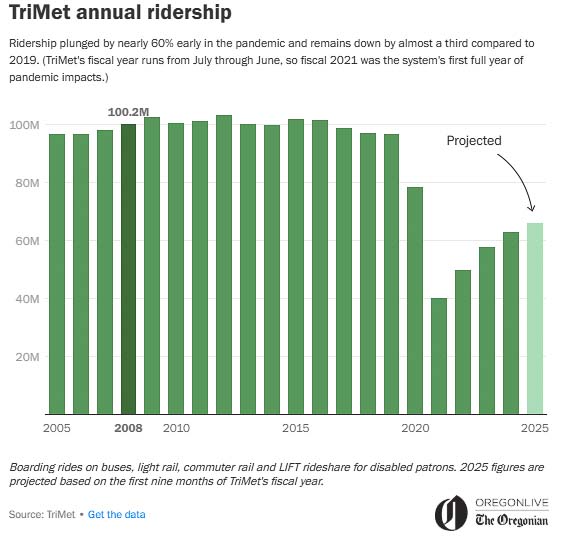
Last year, TriMet lost $850 million with a budget of $1.84 billion. Its ridership was down 40 percent and passenger revenues were down 50 percent due to the “slow return to in-person office work.” Yet they added two new divisions including an Inclusion, Diversity, Equity & Accessibility (IDEA).
The agency has had operating losses over $6 billion in the past decade. TriMet received $669.4 million in one-time funds over three years as pandemic relief.
TriMet’s current budget states: “It is expected the fund balances of today will sustain the agency in the future until pre-pandemic levels of revenues return.” The proposed TriMet budget has a 9.5 percent increase in spending. Yet, TriMet officials are telling Oregon legislators they will have to cut 65 percent of their bus routes within the next six years if the agency doesn’t get a significant taxpayer bailout.
Should Clark County Pay?
Part of that bailout could come from Clark County taxpayers, via a $7.2 million annual contribution towards the proposed 1.8-mile MAX light rail extension into Vancouver, as part of the Interstate Bridge Replacement (IBR) program. This would allegedly help pay for operations and maintenance (O&M) of the MAX that will extend 4,350 feet into Vancouver.
Another part of the bailout is TriMet’s demand for 19 new light rail vehicles as part of the Interstate Bridge replacement project. TriMet officials indicate the cost of those vehicles will be between $190 million and $290 million, or $10-$15 million each. Additionally, they demand an upgrade to their Gresham Ruby Junction Facility for $45-$65 million, plus a Light Rail Overnight Facility at Expo for $9-14 million.
The IBR proposes $2 billion for the transit component, for which the Federal Transit Administration (FTA) could contribute up to 50 percent, or $1 billion. This leaves $500 million for each state to find to fund the transit component. Yet just $33 – $50 million of that goes to C-TRAN for express bus service. The overwhelming majority of the money is for TriMet.
C-TRAN has offered the only transit service over the Columbia River for over four decades. Yet TriMet and Portland have never contributed a penny towards C-TRAN O&M costs, nor purchased any buses for the C-TRAN service.
What does a LRT vehicle cost?
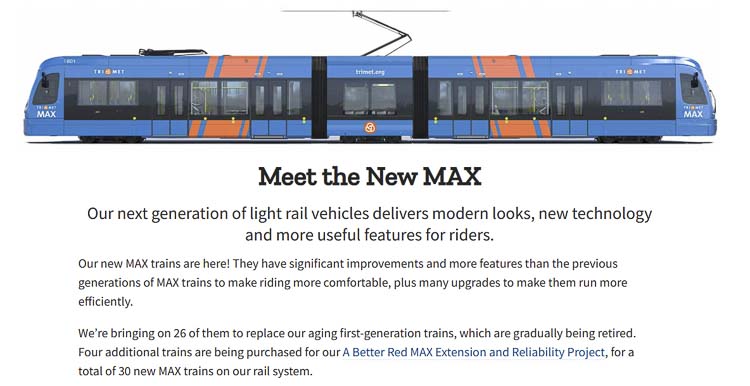
In July 2019, TriMet ordered 30 S700 light rail transit (LRT) vehicles from Siemens. The contract included options to purchase an additional 60 vehicles. “We’re bringing on 26 of them to replace our aging first-generation trains, which are gradually being retired,” TriMet reported. Four were for the “Better Red” extension to Hillsboro.
A year later, Sacramento’s transit system ordered eight LRT vehicles from Siemens for $23.6 million, or $3 million each. Orange County (CA) is currently building a new 4.15 mile streetcar line, using eight vehicles, for $649 million.
A Sound Transit report indicates $4.2 million per vehicle in Seattle. Sound Transit just completed a 3.4-mile light rail extension between Redmond and Bellevue for $1.2 billion. The new station at Marymoor Village features a 1,400-car parking garage. There is an elevated station in Downtown Redmond.
The IBR has apparently not questioned TriMet’s demand for 19 LRT vehicles, let alone the price tag of $190 – $290 million for them. Will the FTA dig into the details and question the cost they are being asked to fund?
The reality is that TriMet must replace 26 of its original LRT vehicles purchased in the mid 1980s. They are beyond their useful life. Note the current order was placed four months before the two governors resurrected the previously failed Columbia River Crossing in November 2019.
What does Operations and Maintenance cost?
In 2018, it was reported that the proposed 12-mile Southwest Corridor light rail line would require $22 million in O&M costs, or $1.83 million per mile. Portland area voters rejected that proposal in November 2020.
In FY 2022, TriMet spent $128.1 million on operations for its entire 60-mile MAX light rail system. That equals about $2.1 million per mile. Yet, TriMet officials are demanding over $10 million per mile for IBR O&M costs.”It’s $6.8 million to run light rail transit today and $442,000 to run the bus,” the staff told the board. MAX is 17 times more expensive than buses to operate.
At the December 2024 C-TRAN Board meeting, TriMet officials said their light rail O&M costs would be $20,238,570 for the 1.83-mile MAX extension into Vancouver. That equals $11.06 million per mile. That’s over five times the 2022 costs.
TriMet’s FY 2026 budget shows $539.4 million in O&M costs for their entire system, plus spending another $221 million in capital improvements. The total TriMet budget is $1.94 billion – a 9.5 percent increase from 2025.
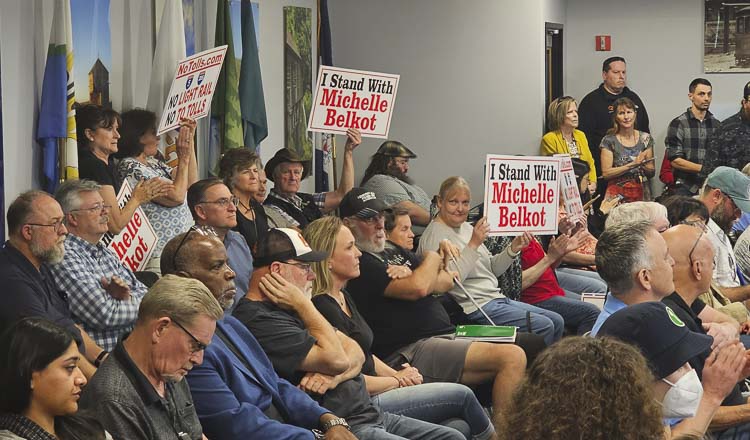
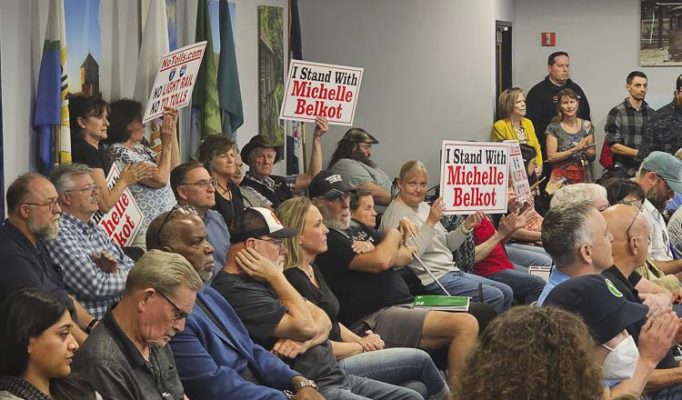
Bottom line is that there remain more questions than answers. However, Clark County citizens are wary of paying taxes for a transit agency not owned or operated in Washington state. In April, the C-TRAN Board “got an earful” as dozens of citizens spoke out against supporting light rail with their taxes.
The Board “paused” making a decision to reverse their November policy change, allowing them to “talk” with TriMet about funding the light rail component of the Interstate Bridge Replacement project. Citizens might wonder what the Board has learned, after six months of “talking” with TriMet.
Why should Clark County or Washington taxpayers pay to replace worn out LRT vehicles, let alone fund operations and maintenance of an out of state transit agency? Will TriMet even be around next decade if they actually cut 65 percent of their bus service?
Also read:
- Opinion: Half the road, full stop – Understanding pedestrian right-of-way
 Doug Dahl explains how Washington’s law requires drivers to stop when a pedestrian is within one lane of their half of the road, not just when directly in front.
 - Opinion: What is the cost of a bridge?
 John Ley argues the I-5 Bridge replacement’s soaring cost stems from costly extras like light rail, noting other states deliver larger, toll-free bridges for much less.
 - Letter: Vancouver Mayor Anne McEnerny-Ogle makes several serious and incorrect engineering statements
 Bob Ortblad critiques engineering claims by Vancouver Mayor Anne McEnerny-Ogle, highlighting cost and safety advantages of an immersed tunnel for the I-5 crossing.
 - Washington’s studded tire deadline is March 31
 Drivers must remove studded tires by March 31 or face a $137 fine, with WSDOT urging early action due to busy service centers and no planned deadline extension.
 - VIDEO: WA diesel hits record $6.53, crushing truckers and school budgets
 With diesel nearing $6.53 per gallon in Washington, trucking businesses and school districts now confront sharply higher fuel expenses affecting budgets and workers.
 wpDiscuz