



Neighbors for a Better Crossing is urging legislators to convene an independent commission to evaluate the ITT alternative before locking taxpayers into a $9 billion-plus financial disaster
VANCOUVER – Washington State Representative John Ley has issued a stark warning to Clark County taxpayers regarding Portland’s TriMet transit agency’s escalating demands for the Interstate Bridge Replacement (IBR) program. According to Ley, TriMet is attempting to overcharge taxpayers for new MAX light rail vehicles, with costs soaring far beyond previous contracts.
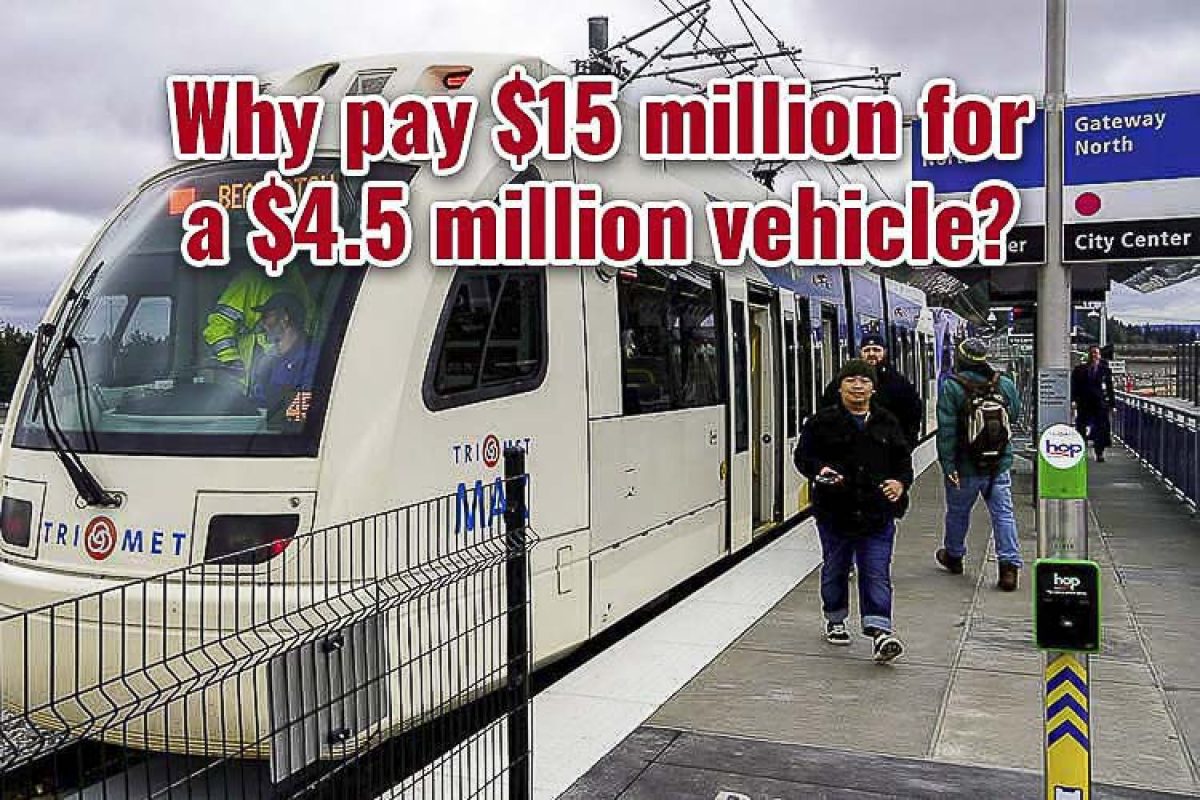
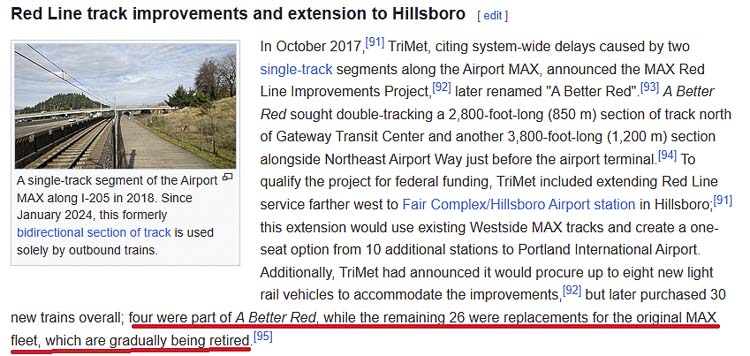
In a recent statement on X, and an opinion piece in Clark County Today, Rep. John Ley criticized TriMet’s actions, declaring, “TriMet is trying to fleece taxpayers with inflated costs for light rail vehicles tied to the I-5 Interstate Bridge Replacement project.” A public record request uncovered that four months before the Washington and Oregon governors revived the failed Columbia River Crossing (CRC) project in 2019—a project that collapsed in 2014 when the Oregon Legislature refused funding—TriMet had ordered 26 new Siemens light rail vehicles (LRVs) for $147 million. According to Ley, this averaged under $5 million per vehicle, including parts, manuals, and training. TriMet later paid $4.5 million each for four additional vehicles for its Better Red project under the same 2019 contract.
However, Ley found a significant discrepancy in TriMet’s current demands for the IBR project. “TriMet officials have been telling the Interstate Bridge Replacement Program the cost for 19 new vehicles they demand will be between $190 million and $290 million, or $10 million to $15 million each,” Ley emphasized the need for transparency. “They’re demanding 19 new vehicles at a price that’s more than double what they paid just a few years ago—taxpayers deserve transparency.”
The IBR program itself has seen significant cost escalations. In December 2022, IBR Administrator Greg Johnson updated the project’s cost estimates to a range of $5 billion to $7.5 billion, targeting $6 billion, with the transit component’s high-end cost reaching $2 billion. As part of this, TriMet is demanding Clark County contribute annually to support operations and maintenance for a 1.8-mile MAX Yellow Line extension into Vancouver, alongside the 19 additional light rail vehicles. Ley argues these vehicles are unnecessary for the short extension.
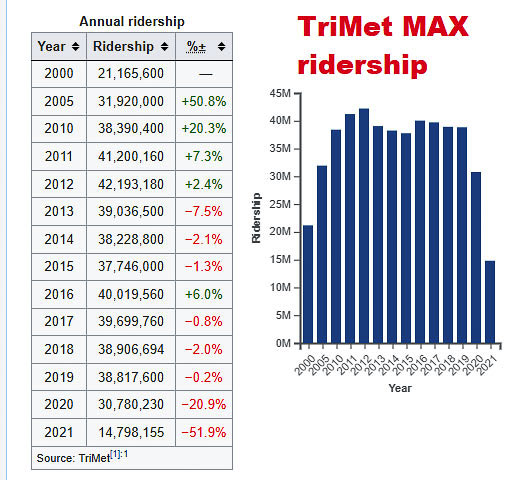
TriMet’s financial stability and ridership trends further fuel Ley’s concerns. The MAX Yellow Line recorded only 10,611 weekday riders in 2024—70% below the projected 35,320 by 2020. System-wide, TriMet provided 62.3 million boardings in fiscal year 2024, a 29.7% decline since 2014, with MAX light rail ridership dropping 37.7%. The agency reported an $850 million operating loss last year, prompting warnings of a “fiscal cliff” by 2031 without significant bailouts. “Committing Clark County taxpayers to a struggling transit system with questionable financial management is a risky proposition,” Ley cautioned.
Rep. Ley urges the C-TRAN Board and Washington legislators to reconsider long-term financial agreements with TriMet, especially as the Oregon Legislature faces a multi-billion-dollar shortfall for transportation projects. He advocates for prioritizing a third Columbia River bridge, conducting and independent study on an Immersed Tube Tunnel, or replacing the light rail component with cost-effective bus rapid transit to better serve the regions needs.
About John Ley
John Ley is a Washington State Representative serving the 18th Legislative District. A vocal advocate for fiscal responsibility and efficient transportation solutions, Ley focuses on protecting Clark County taxpayers from costly and unsustainable projects.
About Neighbors for a Better Crossing
A grassroots coalition of concerned residents and businesses from Oregon and Washington, united in advocating for an Immersed Tube Tunnel (ITT) — an innovative solution that will save billions in taxpayer dollars, eliminate the need for tolls, safeguard the Columbia River’s delicate ecosystem and marine life, and preserve the historic I-5 Bridge as a car-free gateway for tourism, pedestrians and cyclists between Oregon and Washington. Neighbors for a Better Crossing is urging legislators to convene an independent commission to evaluate the ITT alternative before locking taxpayers into a $9 billion-plus financial disaster.
Also read:
- POLL: With updated estimates reaching as high as $17.7 billion, what should happen to the I-5 Bridge replacement project?
 A new poll asks readers how the I-5 Bridge replacement project should proceed amid higher cost estimates and questions about transparency within the Interstate Bridge Replacement Program.
 - Opinion: ‘The IBR team has been lying to us and thanks to a veteran Oregon journalist, we have the smoking gun’
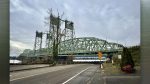 Ken Vance argues newly obtained documents show Interstate Bridge Replacement staff withheld updated cost estimates from lawmakers and the public.
 - Oregon Gov. Kotek calls for repeal of transportation funding package she championed
 Oregon Gov. Tina Kotek is urging lawmakers to repeal a transportation funding package she previously supported after a referendum effort halted key tax increases.
 - Letter: Has $450 million been wasted on a bridge that’s too low for the Coast Guard with a foundation too costly to build?
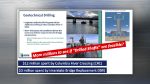 A Seattle engineer questions whether hundreds of millions of dollars have been spent on a bridge design he argues is unnecessarily risky and costly compared to an immersed tunnel alternative.
 - Opinion: Transit agencies need accountability not increased state subsidy
 Charles Prestrud argues that Washington transit agencies face rising costs and declining ridership due to governance structures that lack public accountability.
 wpDiscuz
