


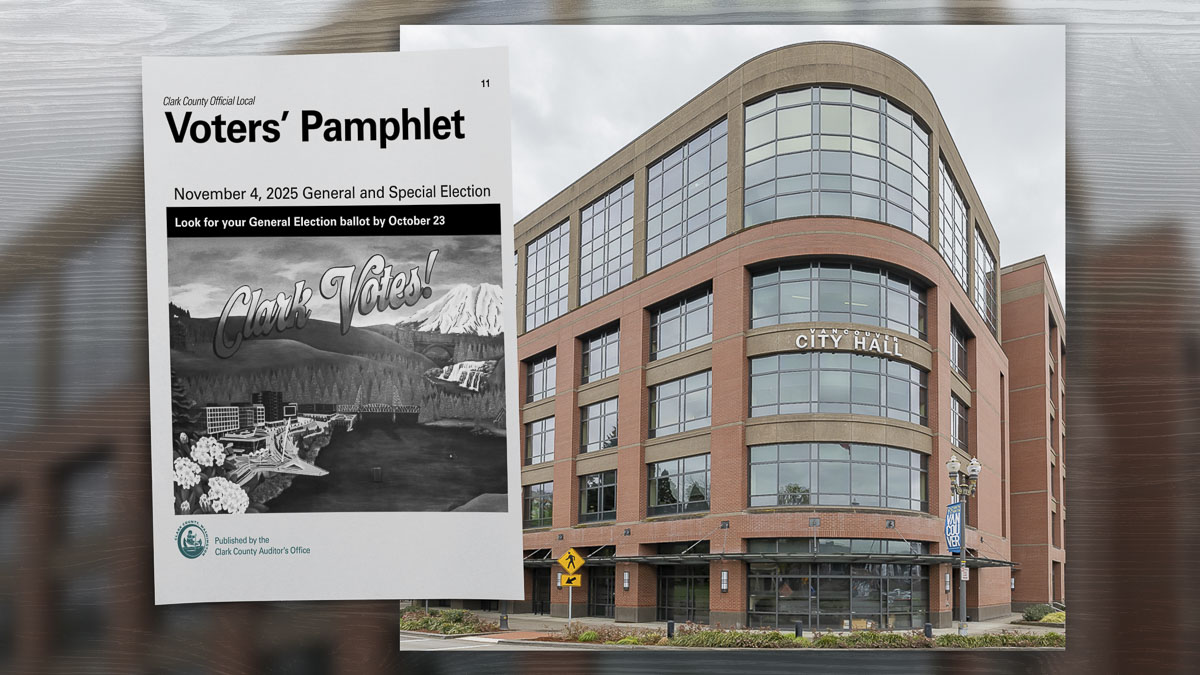
Candidates for Vancouver mayor and City Council positions offer their views on the proposed I-5 Bridge replacement project
Paul Valencia
Clark County Today
While Wikipedia has been criticized for concerns regarding reliability, the website does have a very interesting tidbit when it comes to a proposed new Interstate 5 Bridge.
Do a search for Columbia River Crossing. It claims the project was ongoing from 2005 to 2013 and it has a very accurate description beside the line that reads Opened:

That description? “Never opened.”
Fast forward a dozen years and there is a new name, but still no guarantees. The Interstate Bridge Replacement Program (IBR) continues its work in hopes of building a bridge.
In June of 2024, Vancouver Mayor Anne McEnerney-Ogle told a community forum that there would be big news associated with the IBR in July of that year, and that construction of the new bridge should start in 2025.
Here we are in late October of 2025, and no construction has started yet. There is no approved bridge design.
As we approach the November election, what do Vancouver city candidates have to say about that?
Clark County Today sent out a questionnaire to the eight candidates (two for mayor and six for three City Council positions) recently and received responses from seven.
Today’s subject is focused on the new bridge or new options in regard to the Interstate Bridge Replacement Program.
The questions:
With the failure of the CRC and now the snail’s pace of the IBR, would you be willing to push for a new plan? If the design plan for a bridge is not approved, how should we proceed?
The answers ranged from looking to find a spot for a third bridge, to looking at a tunnel, to sticking with the IBR program’s vision.
Here are the answers from the candidates:
Mayor
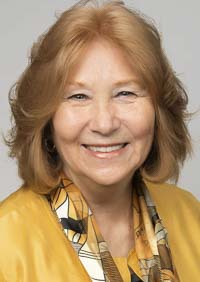
Anne McEnerney-Ogle: “… This revised approach would allow them to prioritize the core goal: building the bridge.”
“To move forward with bridge construction, they could implement a revised plan that reduces the project’s overall scope. This could involve defining a smaller, more focused ‘Bridge Influence Area’ and limiting the number of ancillary projects. This revised approach would allow them to prioritize the core goal: building the bridge.’’
Justin Forsman: “Vancouver deserves an infrastructure worthy of its growth, not another decade of stalled studies …”
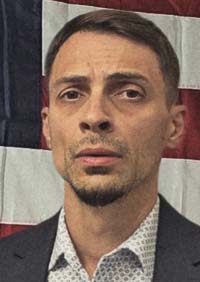
“Vancouver has waited long enough. With the failure of the CRC and the endless delays of the IBR, it is time for a new direction. I support building a third bridge to the east side of the city, and from there exploring the idea of a fourth bridge, a bypass, or a tunnel system to finally break the gridlock strangling our region.
“A third bridge would pull massive congestion off I-5, I-205, and I-84. A tunnel corridor could limit property seizures under eminent domain and open multi-directional traffic relief. Once a new crossing is in place, we can safely repair and then modernize the I-5 bridge without crippling our commerce.
“Vancouver deserves an infrastructure worthy of its growth, not another decade of stalled studies and payouts to foreign consultant agencies. No more waiting for Olympia and Portland to save us. We will lead the way and build a path that fits the needs of Vancouver.’’
Council Position 1
Pooneh Gray: “At this point, we need to wait and see how the federal administration responds before determining the next steps.”
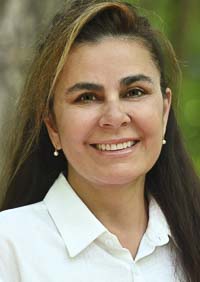
“The I-5 Bridge was built in the early 1900s and needs to be replaced, as it may not withstand a major earthquake. This is a complex and evolving issue. My understanding, as of about three weeks ago, is that the current replacement plans have been submitted to the federal administration. The inclusion of a light-rail component was added as a condition of the federal grant supporting the project.
“The initial annual operating cost for the light rail portion was projected to be approximately $23 million, to be shared between Oregon and Washington. Some of that cost would be offset by federal grants. From discussions with individuals working on the project, I understand that this cost has since been reduced to about $4 million annually, and funding sources have been identified to cover it.
“At this point, we need to wait and see how the federal administration responds before determining next steps. Based on current information, it does not appear that a redesign will be required unless something changes with the light-rail component.’’
Council Position 2
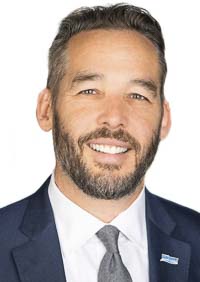
Erik Paulsen: “We must keep the current project on track and break ground in the next 18 months.”
“We must keep the current project on track and break ground in the next 18 months. This is a project that is decades overdue and is essential to the economic prosperity of our region and must be designed to meet the interstate transportation needs of our community for the next 100 years.’’
Derek Thompson: “The IBR’s massive, costly design is simply too contentious to survive.”
“… I am ready to push for a new plan to replace the aging Interstate Bridge. The glacial pace of the current Interstate Bridge Replacement (IBR) Program, coupled with the ghost of the previous, failed Columbia River Crossing (CRC), signals a critical truth: we are headed toward another decade of delay while a seismically vulnerable structure remains in place.
The IBR’s massive, costly design is simply too contentious to survive. If the current design fails to gain final approval — a very real possibility given the historic setbacks — we must be prepared to pivot immediately.
“Here is the three-part strategy to replace the I-5 crossing with a viable, fiscally responsible solution:
“1) Salvage funding and scale down. We have billions in federal funding committed to this project. Our first job is to ensure we don’t lose that money by starting from scratch. Instead of scrapping everything, we must radically scale back the scope.
“The new mission should focus exclusively on the seismic replacement core of the bridge. Controversial, expensive components — like the extensive 5-mile freeway widening and the light rail extension — must be decoupled and phased out as separate, future investments. This strategy delivers the urgent safety upgrade immediately, significantly lowers the price tag, and preserves the federal grants.
“2) Seriously evaluate the tunnel alternative. For too long, planners have dismissed the Immersed Tube Tunnel (ITT) concept. If the current bridge design collapses, we must give the ITT a fair, unbiased engineering review. The tunnel offers major advantages that solve the bridge’s core problems:
“No navigation conflict: A tunnel instantly eliminates the conflict with the U.S. Coast Guard over the bridge’s height.
“Superior resilience: Tunnels are generally more resilient to major earthquakes, offering better long-term safety assurance.
“Generate revenue: Undergrounding the freeway preserves and frees up valuable waterfront real estate on both the Vancouver and Hayden Island sides, creating new development opportunities and potential revenue for the region.
“3) Demand a new, accountable bi-state compact. The CRC failed due to political gridlock, and the IBR is suffering from bureaucratic bloat. To succeed, we need a transparent and streamlined governance structure:
“Impose a hard cost cap: State legislatures must agree to a strict, non-negotiable budget cap to prevent further runaway costs.
“Mandate external review: We must appoint an independent panel of experts — outside the current consulting firms — to review all design and cost options. This will provide a neutral, fiscally sound recommendation to the states, restoring public trust and preventing the next project from becoming another political football.
“The clock is ticking on a structure that is a regional liability. We must be ready to end the IBR’s ‘snail’s pace’ and aggressively pursue a focused, politically viable, and most importantly, safe replacement for the I-5 bridge.’’
Council Position 3
Diana Perez: “No, I am not willing to push for a new plan.”
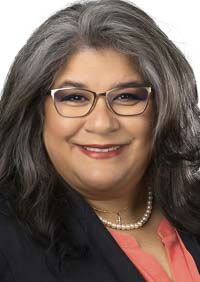
“No, I am not willing to push for a new plan. If you think about the total amount of money, time, effort, and political oxygen that has gone into this issue since the CRC only to let politics get in the way, it’s so disappointing and a true disservice to the taxpayers.
“If the design plan for the bridge is not approved, it would be wise to keep progress viable under the current NEPA scope and analyzed alternatives. For example, build what is permittable first or in phases, do a supplemental for any necessary tweaks, protect funding by showing credible schedule control and a permittable path, and decouple tolling politics from the permit/design pivot.’’
Robert Elkin: “We owe it to future generations to have a safe and reliable crossing, and we should not have to bankrupt everyone to do that.”

“I am not an expert on transportation or the government funding available and what requirements it mandates. I do know we cannot let Vancouver bear the brunt of funding the bridge. Why has this become a political issue? If you want the bridge, you must be a lefty liberal, and if you don’t, you must be a right-wing conservative? I would push for everyone to actually LISTEN and look at ideas from what they consider ‘the other side.’
“This isn’t a black-and-white issue. We owe it to future generations to have a safe and reliable crossing and we should not have to bankrupt everyone to do that.’’
Note: Kim Harless, the incumbent in Position 1, did not respond to the questionnaire.

Also read:
- VIDEO: Federal court hears Puyallup wrestler’s alleged sex assault, Title IX case
 16-year-old Kallie Keeler is seeking a federal injunction after alleging sexual assault during a Dec. 6, 2025 wrestling match against a transgender athlete.
 - Opinion: Workers need their wages more than the state’s paid-leave program does
 Washington’s paid-leave payroll tax stands at 1.13% and is projected to hit its 1.2% cap by 2027, with some lawmakers eyeing a 2% rate.
 - Opinion: ‘It may be time for McCleary 2.0’
 Dick Rylander examines the Battle Ground School District’s proposed $116,830,000 three-year EP&O levy heading to the November 2026 ballot.
 - Washington Policy Center tax expert warns that new income tax will affect everyone
 Ryan Frost argues Washington’s new 9.9% income tax has a $1M deduction that a simple legislative majority could remove.
 - Opinion: Were Republican voters just sleeping during the August primary election?
 CCRP Chairman Matt Bumala says 60% of primary no-shows in the 17th and 18th districts were Republicans.
 wpDiscuz