



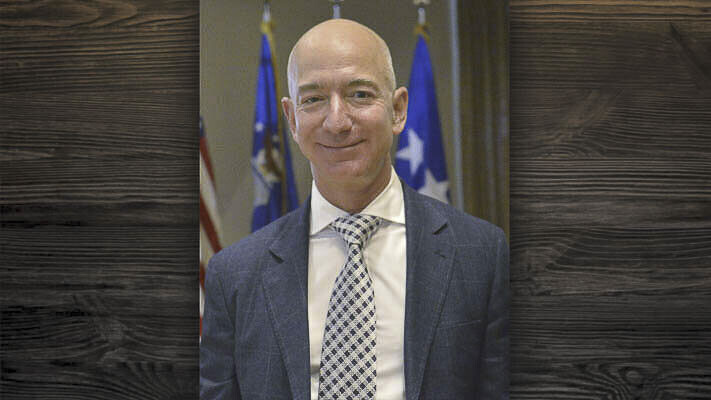
The Department of Revenue announced that it had made a series of errors in tallying the state’s new capital gains tax and the recent departure of the billionaire to live in another state
Carleen Johnson
The Center Square Washington
The executive director of the Washington State Economic and Revenue Forecast Council says the overall revenue picture for the state is “pretty good.”
But the elephants in the room as Dave Reich began his revenue forecast presentation Wednesday morning were the state Department of Revenue’s Tuesday announcement that it had made a series of errors in tallying the state’s new capital gains tax and the recent departure of a billionaire to live in another state.
The errors, he said came from “a double booking of about $50 million in tax receipts from the capital gains tax.”
The other error Reich said was a coding issue at DOR.
“So we’ve adjusted our forecast down,” he explained.
A Washington State Republican Party news release took DOR to task for the errors.
“The series of errors has caused an overstatement of approximately $150 million for the current budget cycle that now needs to be cut from budgets,” the news release said.
Republicans contend the miscalculations are more proof of how volatile the “capital gains income tax scheme is.”
The tax was forecast to impact about 700 of the wealthiest Washingtonians, but even before implementation, opponents said many of those super-wealthy residents would leave the state to escape the tax.
Amazon founder Jeff Bezos moved to Miami from Seattle last year, effectively escaping Washington state’s new capital gains tax of 7% on the sale or exchange of long-term capital assets such as stocks and bonds.
As reported by The Center Square, Bezos’ planned stock sale of some $2 billion worth of Amazon shares in 2024 would have cost him upwards of $610 million if he were still a Washington resident.
During Wednesday’s revenue update, The Center Square asked Reich about Bezos’s move and if the DOR is tracking how many of the roughly 700 people the capital gains tax applies to.
“A small number of taxpayers account for a significant share of the capital gains collections,” Reich responded.
He went on to say, “It’s very volatile, and there are a very small number of taxpayers who account for most of the revenue. We won’t talk about any individuals, though we assume there will be fluctuations because of the volatility of capital gains.”
Republican Sen. Lynda Wilson, R-Vancouver, who chairs the council, had a different take.
“We know that just the one individual who has left,” she said. “We would have received $600 million in capital gains if he sold the same amount of stock he sold every other year.”
The capital gains tax, she said, was likely a motivating factor.
“He didn’t last year because of capital gains,” Wilson said. “Now I’m assuming this right, but you put one and one together and you get two.”
Rep. April Berg, D-Mill Creek, also responded to the question about Bezos leaving.
“I’m going to push back here a bit,” she said. “Just assigning motive to why people are moving, sometimes one and one doesn’t make two.”
She referenced the controversy over whether the capital gains tax functions as income tax or an excise tax.
“I think a lot of people move for a variety of reasons, and we don’t have an income tax; we have an excise tax, and I don’t think that’s why anyone is leaving,” Berg said.
She went on to say, “Mr. Bezos does have family in Florida; he has businesses in Florida, and he has a new relationship, so I’m not sure our tax policy was as big of a factor as some people think it is. I think we’ll see a lot of changes and people moving, but it won’t be because of tax policy.”
Complicating matters is Initiative 2109 to the Legislature, which would repeal the capital gains tax. Enough signatures were gathered to qualify it for the ballot, and it has since been certified by the secretary of state.
Washington’s projected Near General Fund revenue collections for the 2023–25 state budget increased by $122 million to around $67 billion from the November 2023 projection, according to estimates by the Economic and Revenue Forecast Council on Wednesday.
This report was first published by The Center Square Washington.
Also read:
- White House govt. Funding request for 2027 cuts $73 billion
 President Trump’s budget seeks to boost defense funding while cutting $73 billion from agencies like the EPA, NASA, and Agriculture, prompting sharp criticism from Democratic leaders.
 - Heywood asks WA Supreme Court to allow referendum effort on income tax
 Brian Heywood is petitioning the state Supreme Court after the Secretary of State rejected a referendum to repeal Washington’s new 9.9% tax on income over $1 million.
 - Opinion: Half the road, full stop – Understanding pedestrian right-of-way
 Doug Dahl explains how Washington’s law requires drivers to stop when a pedestrian is within one lane of their half of the road, not just when directly in front.
 - Clark County seeks volunteer for Law and Justice Council
 Applicants with experience in mental health services are encouraged to help guide Clark County’s coordination of local criminal justice and corrections planning.
 - VIDEO: Families at center of WA transgender sports debate face-to-face with OSPI
 Two Washington high school students and their parents met with Superintendent Chris Reykdal to discuss concerns about sports policies after one student faced an investigation for harassment.
 - As Washington lawmakers punt on school cellphone ban, some want more action
 At Robert Eagle Staff Middle School, all-day phone removal led to fewer conflicts and more student engagement, but some parents and lawmakers argue a ban should not be imposed statewide.
 - Opinion: The state’s RFK-proofing bill comes with a cost
 Mandates like HB 2242 can lead to higher premiums as insurance companies absorb costs for new preventive services, affecting affordability statewide.
