



The Clark County Emergency Medical Services Council will receive $820,480 to launch a countywide pilot program aimed at improving post-crash emergency care by equipping and training EMS teams to provide whole blood transfusions in the field
Spencer Pauley
The Center Square Washington
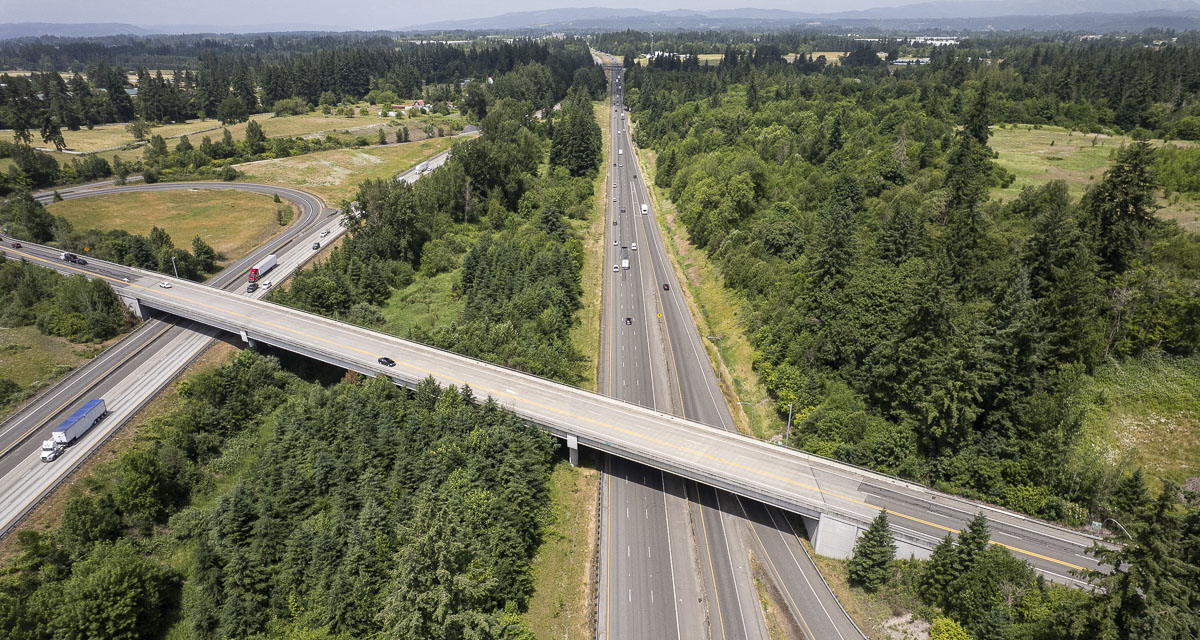
Selected communities in four Western Washington counties will receive a combined $6.58 million in federal funding for road safety improvements, as new data shows a decline in fatal and serious injury crashes in 2025.
U.S. Sen. Maria Cantwell, D-Wash., announced the federal grant awards to cities and Native tribes in King, Snohomish, Clark and Thurston counties through the U.S. Department of Transportation’s Safe Streets and Roads for All program.
The funding comes despite recent changes to the program announced in April, when U.S. Transportation Secretary Sean Duffy said the department would remove diversity, equity, inclusion, and environmental justice requirements established under the Biden administration.
As of Dec. 29, there have been 1,316 fatal and suspected serious injury crashes across the four Western Washington counties, according to data from the Washington State Department of Transportation. That is a 13% decrease from 1,518 crashes reported in 2024.
King County – Washington’s most populous county – recorded 780 fatal and serious injury crashes in 2025, down from 891 in 2024. Snohomish County followed with 260 such crashes this year, as compared to 320 in 2024.
The Snohomish County cities of Everett, Mill Creek and Mukilteo will receive a combined $3.3 million to fund planning and pilot projects aimed at improving road safety for drivers and pedestrians. Projects include updates to active transportation plans, corridor redesign studies, and development of comprehensive safety action action plans to reduce serious and fatal crashes.
Cities in King County – Des Moines, Redmond and North Bend – will receive a combined $2.06 million for speed-reduction tests, pedestrian crossing improvements, and enhanced safety data collection.
The Clark County Emergency Medical Services Council will receive $820,480 to launch a countywide pilot program aimed at improving post-crash emergency care by equipping and training EMS teams to provide whole blood transfusions in the field.
The city of Yelm in Thurston County will receive $240,000 to conduct a safety study along the State Route 507 corridor.
Oregon-based Thoreau Institute Senior Economist Randal O’Toole argues that pedestrian and bicycle fatalities have continued to increase in general, despite the millions in federal funding, while creating “auto-hostile environments.” O’Toole noted bicycle lanes as one example of a failing attempt at improving traffic safety.
“In many cities most cycling fatalities take place at intersections, where the lanes disappear. Increasing cyclists without protecting them at intersections may be contributing to the increase in fatalities,” O’Toole emailed The Center Square. “If they were truly interested in safety, they would use a data-driven process to figure out exactly why fatality rates have been rising and then focus on fixing those problems.”
The Safe Streets and Roads for All program was enacted in November 2021 and has funded more than 1,600 transportation projects in Washington since, according to Cantwell’s office, including projects related to roads, bridges and ports.
The latest round of awards brings Washington’s total funding under the program to $88.8 million across 78 projects since its launch.
Washington has emphasized traffic safety since it developed its first “Target Zero Plan” in 2000, establishing the goal of zero fatalities and serious injuries on Washington roads. At the time, 2030 was an aspirational timeline for this vision, but according to the Washington Strategic Highway Safety Plan’s executive summary, “like any ambitious goal, there have been both advances and setbacks.”
According to the plan, in 2022 alone, the societal financial cost of crashes in Washington was more than $20 billion.
Nationwide, 521 projects across 48 states, 18 tribes, and Puerto Rico are receiving $982.2 million through the program as part of the latest grant cycle.
Cantwell’s office did not respond to The Center Square’s request for comment by the time of publication.
This report was first published by The Center Square Washington.
Also read:
- VIDEO: WA diesel hits record $6.53, crushing truckers and school budgets
 With diesel nearing $6.53 per gallon in Washington, trucking businesses and school districts now confront sharply higher fuel expenses affecting budgets and workers.
 - Opinion: In plain sight – yielding to pedestrians
 Drivers often fail to see pedestrians due to inattentional blindness, which highlights the need for more focused awareness at intersections and stronger safety practices.
 - Expect delays on SR 14 in Vancouver for guardrail repairs Wednesday
 State Route 14 travelers in Vancouver should plan for morning delays as WSDOT will close two eastbound lanes for guardrail repairs, affecting mileposts 6.0 to 7.0.
 - Overnight closure planned on westbound SR 14 Camas Slough Bridge Tuesday
 WSDOT crews will close westbound SR 14 at Exit 14 in Camas to collect bridge deck samples and plan future repairs; detours will be in effect.
 - Opinion: Stay in your lane – seriously, it’s the law
 Drivers must choose the nearest lane when turning in Washington, and left turns bring added risk. Even with signals, every driver must help prevent crashes by following law.
