



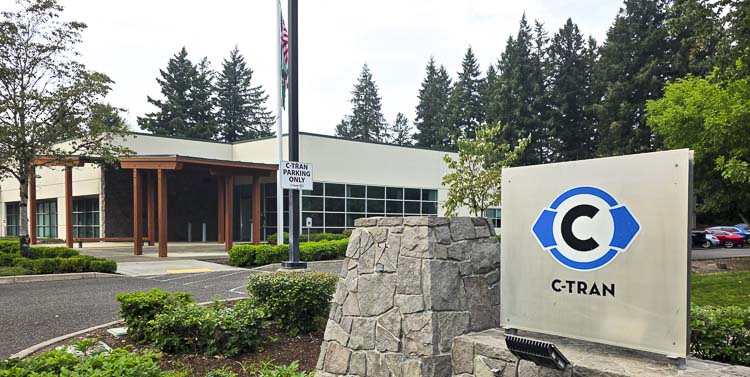
The state has already denied the 3-3-3 plan for the C-TRAN Board – three seats for Vancouver, three for Clark County, and three for the smaller cities – but an argument has been made by the City of Ridgefield that a 3-3-3 plan could work and the state’s 4-3-2 proposal could be illegal
Paul Valencia
Clark County Today
The C-TRAN Board Composition Review Committee voted on Wednesday to resubmit to the state the same proposal it sent a month ago, knowing there are risks involved if the state determines the composition of the C-TRAN Board of Directors remains out of compliance with state law.
Then again, as one committee member pointed out, going with the state’s suggestion also could put the board in legal jeopardy.
So goes another chapter in a wild year for the politics surrounding C-TRAN.
The committee voted 8-3 to submit the 3-3-3 proposal, keeping the city of Vancouver with three representatives on the C-TRAN board, adding one seat to Clark County to give the county three seats, and taking a seat away from the small cities, which would mean the small cities share three seats.
That was the proposal submitted after the Aug. 12 review committee meeting. The Washington State Department of Transportation denied that proposal, saying the board would still be out of compliance in regard to representation based on population. The state suggested instead that a 4-3-2 proposal would do the job, with Vancouver getting four seats and the smaller cities sharing two seats.
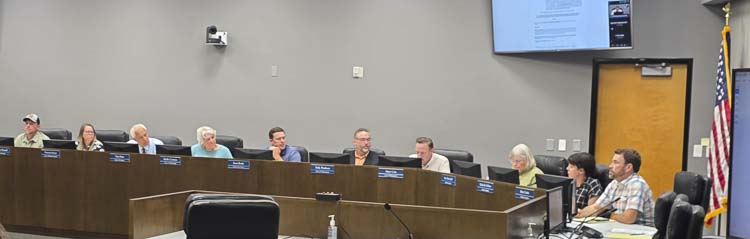
After public comment, the review committee went into executive session for 40 minutes. When the committee resumed the meeting, Ridgefield Mayor Matt Cole moved to vote on the 3-3-3 proposal.
Cole successfully argued to most of the committee that the 3-3-3 proposal could be sufficient to the state. He showed his work, so to speak, in a letter to the review committee earlier in the week.
Cole also pointed out that WSDOT’s 4-3-2 proposal would essentially give Vancouver five seats — while including one of the county’s seats that also represents Vancouver — and the law states that no one jurisdiction can have a majority on the board.
The state had previously said that the C-TRAN Board must be in compliance with state law by October or face the possibility of C-TRAN losing grant money that could be in the millions of dollars. Matt Little, a Clark County councilor and a member of the review committee, asked for an amendment to Cole’s 3-3-3 proposal, asking the state to delay any action on grant money until this issue is resolved.
All agreed on the amendment.
Cole asked that along with the 3-3-3 proposal that the review committee also submit the City of Ridgefield’s letter to WSDOT.
Erik Paulsen, Vancouver City Council member, said he would not support the 3-3-3 proposal, “as a person who cares deeply about transit in our community and thinking about the services that would be lost if that money wasn’t available.”
Sue Marshall, the Clark County chair, concurred with Paulsen.
“I think the risk is too great for C-TRAN and its ridership,” she said.
Marshall and Wil Fuentes, a Clark County councilor, also disagreed with Cole’s position that Vancouver would be gaining a fifth seat under the 4-3-2 plan. Fuentes acknowledged his district covers east Vancouver, but he said he represents the county, not the city.
Cole argued that county members are voted on by districts, and if a county councilor represents a district in Vancouver, that councilor is legally obligated to represent the district.
“To have a member of the County Council sit on the (C-TRAN) board (also) be a representative of Vancouver, it would effectively give Vancouver a majority on the C-TRAN board,” Cole said.
Tim Hein, a city of Camas Council member and review committee member, agreed there are risks involved, but this is a risk Camas is willing to take to ensure representation for the smaller cities.
He said that if the state forces a 4-3-2 board, Camas’ representation would be diminished but the city’s financial commitment to C-TRAN would not change. As it is, Hein said, Camas is already paying “2.5x” in sales tax revenue to C-TRAN vs. benefits received from C-TRAN.
“We do support the 3-3-3 alternative,” Hein said. “I appreciate the city of Ridgefield on such an excellent … document.”
Cole acknowledged the review committee is in a pickle. He understands a 3-3-3 might not be accepted by the state, but he believes wholeheartedly that the 4-3-2 puts C-TRAN at legal risk, too.
“To move forward to a 4-3-2 would be to put the organization in jeopardy because it would effectively give one jurisdiction an effective majority on the C-TRAN board,” Cole said.
“I’d rather err on the side of a balanced and proportional board that reflects the viewpoints and contributions of all jurisdictions in Clark County,” he added.
Cole also made reference to the possibility that changes made earlier this year to the C-TRAN board, and this potential change, could have come because one group did not like the outcome of a potential vote on a subject.
Earlier in 2025, a vote to protect C-TRAN taxpayers from annual operating and maintenance expenses for Oregon’s light rail expansion into Vancouver was delayed at the last minute. That delay came only after it was made clear that the smaller cities and one county councilor was about to change the language, to ensure C-TRAN did not have to pay for TriMet’s venture into downtown Vancouver. Later that week, the county councilor — Michelle Belkot — was voted off the C-TRAN board by three of her colleagues. That move has led to multiple lawsuits, which are still pending. That vote to protect taxpayers has remained on hold.
Cole said it is his hope that a 3-3-3 model would help bring everyone together, to dig in to do the hard work to come up with solutions. He said a 4-3-2 format would only “exacerbate” the feeling that only one jurisdiction matters.
“3-3-3 gives us that balance. That’s why I support that decision,” Cole said.
In the end, the 3-3-3 proposal passed by an 8-3 vote.
In favor: Sean Boyle of La Center, Molly Coston of Washougal, Michelle Belkot of Clark County, Tim Hein of Camas, Victoria Ferrer of Battle Ground, Matt Cole of Ridgefield, Matt Little of Clark County, Brandon Russell of Yacolt.
Against: Wil Fuentes of Clark County, Sue Marshall of Clark County, Erik Paulsen of Vancouver.
The C-TRAN Board Composition Review Committee scheduled its next meeting for Sept. 25, in case the state does not accept the 3-3-3 proposal.
Also read:
- Letter: Vancouver Mayor Anne McEnerny-Ogle makes several serious and incorrect engineering statements
 Bob Ortblad critiques engineering claims by Vancouver Mayor Anne McEnerny-Ogle, highlighting cost and safety advantages of an immersed tunnel for the I-5 crossing.
 - Washington’s studded tire deadline is March 31
 Drivers must remove studded tires by March 31 or face a $137 fine, with WSDOT urging early action due to busy service centers and no planned deadline extension.
 - VIDEO: WA diesel hits record $6.53, crushing truckers and school budgets
 With diesel nearing $6.53 per gallon in Washington, trucking businesses and school districts now confront sharply higher fuel expenses affecting budgets and workers.
 - Opinion: In plain sight – yielding to pedestrians
 Drivers often fail to see pedestrians due to inattentional blindness, which highlights the need for more focused awareness at intersections and stronger safety practices.
 - Expect delays on SR 14 in Vancouver for guardrail repairs Wednesday
 State Route 14 travelers in Vancouver should plan for morning delays as WSDOT will close two eastbound lanes for guardrail repairs, affecting mileposts 6.0 to 7.0.
 wpDiscuz
