



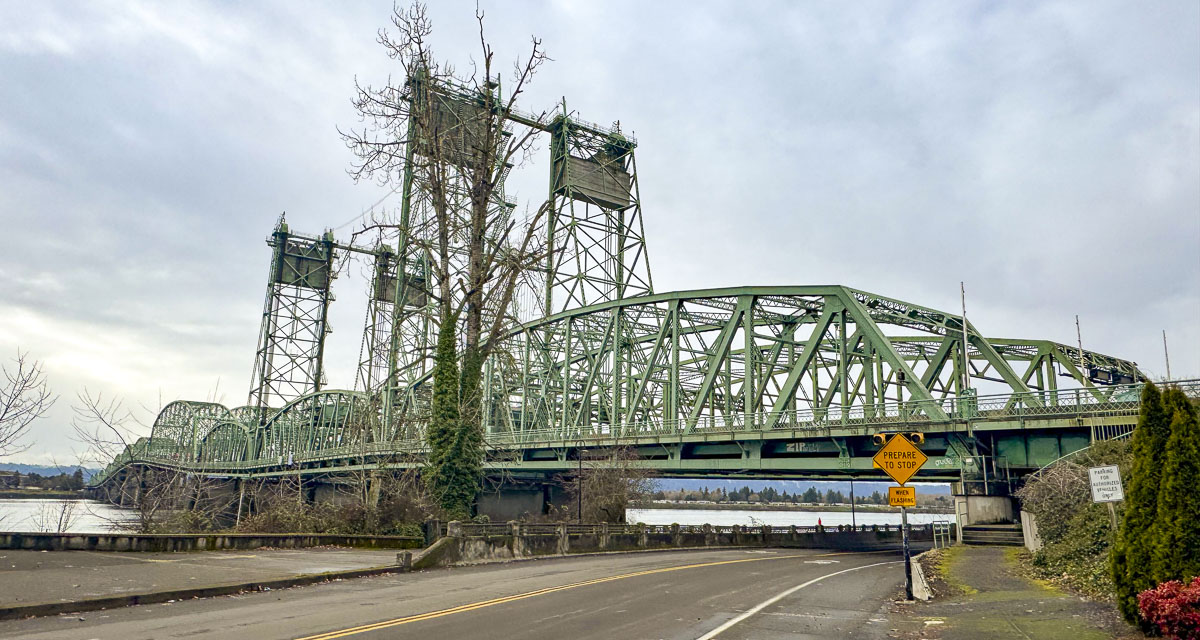
The decision comes on the heels of the Camas City Council’s unanimous passage of a similar resolution in February, which was authored by Councilor Leslie Lewallen
BATTLE GROUND – Monday (March 3) night, the Battle Ground City Council voted 4-3 to pass a resolution opposing the inclusion of light rail in the Interstate Bridge Replacement (IBR) project, marking another major stand by Southwest Washington communities against the costly and ineffective transit proposal.

This decision comes on the heels of the Camas City Council’s unanimous passage of a similar resolution in February, which was authored by Councilor Leslie Lewallen. The growing opposition underscores the region’s concerns about the light rail portion of the project’s financial burden, lack of congestion relief, and the potential for Portland’s public safety issues to spill into Southwest Washington.
“I’m thrilled to see Battle Ground join the fight against wasteful spending on light rail,” said Lewallen. “This should be a wake-up call for every municipality in Southwest Washington. Our communities deserve real transportation solutions — not billions wasted on a failing system. I encourage other local governments to take a stand and ensure our voices are heard.”
The I-5 Bridge replacement project has already spent $400 million in taxpayer dollars, with light rail being one of its most controversial components. The current proposal includes just 1.9 miles of light rail extending into Washington at a staggering cost of $2 billion, plus nearly $20 million in projected annual operations and maintenance costs.
With two cities now formally opposing light rail, the movement to remove it from the IBR project is gaining momentum. Local leaders and residents across the region are calling for practical, fiscally responsible transit solutions that better serve Southwest Washington’s commuters.
Also read:
- C-TRAN ridership grows for fourth consecutive year
 C-TRAN ridership topped 5 million trips in 2025, marking the fourth straight year of growth.
 - Opinion: ‘If they want light rail, they should be the ones who pay for it’
 Clark County Today Editor Ken Vance argues that supporters of light rail tied to the I-5 Bridge replacement should bear the local cost of operating and maintaining the system through a narrowly drawn sub-district.
 - Opinion: IBR falsely blaming inflation
 Joe Cortright argues that inflation explains only a small portion of the IBR project’s cost increases and that rising consultant and staff expenses are the primary drivers.
 - Letter: The Interstate Bridge Replacement Program’s $141 million bribe can be better spent on sandwich steel-concrete tubes
 Bob Ortblad argues that an immersed tunnel using sandwich steel-concrete tubes would be a more cost-effective alternative to the current Interstate Bridge Replacement Program design.
 - A sub-district vote could be a way to go to pay O&M costs associated with light rail
 Clark County Council members heard details on how a voter-approved C-TRAN sub-district could be created to fund long-term operations and maintenance costs for light rail tied to a new Interstate Bridge.

The current estimates of $2 Billion to construct light rail, and over $20 Million are already expected to increase says IBR, to be announced later. In Puget Sound, dramatic cost increases for light rail extensions are paid out.
“Since 2017, Sound Transit’s full system expansion went from costing taxpayers $92 billion to an incredible $142 billion, and project completion was stretched from 2041 to 2046. That’s $50 billion in unanticipated expenses to deliver a project later than expected…
This huge increase will not add more elements to the plan, nor will it increase projected ridership. It only reflects the program’s massive cost overruns.
After all these dollars – and probably billions more – are spent, Sound Transit will have built a rail system that will likely carry fewer than 5% of regional trips, according to Puget Sound Regional Council (PSRC) data. Meanwhile, billions of dollars in desperately needed highway and road projects, including bridge repair and basic maintenance, remain unfunded.” see full report at link.
https://www.washingtonpolicy.org/publications/detail/in-five-years-sound-transit-has-racked-up-an-additional-50-billion-for-rail-plan
The Slough Bridge on Hiway 14 through Camas is an example of a bridge in need of repair or replacement. Hazardous potholes in winter damage vehicles, and create hazardous driving conditions. The bridge is too narrow. Last year, a wide load got stuck on the bridge, and a fatal accident on the bridge involved 5 vehicles. Re-routing freight thru Camas isn’t the best solution. We must prioritize maintenance of existing roads over $ Billions for light rail.