



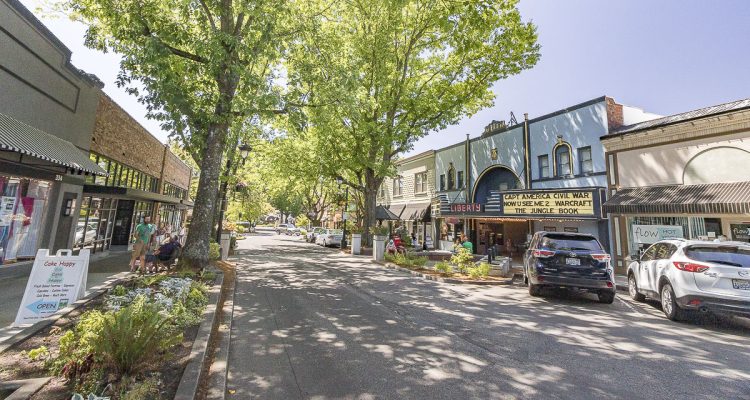
Camas City Council Member Leslie Lewallen believes her city deserves more help from regional partners to address the perceived ‘housing gaps’ Camas and other cities have
Ken Vance, editor
Clark County Today
The city of Camas was in the news recently when members of the Camas City Council voted (Aug. 18) to ban camping in public areas and public sidewalks, a move that became an option in 2024 after a Supreme Court ruling.

The Supreme Court overturned a lower court’s decision that said that ordinances against camping criminalized homelessness. For years, a city could not ask the homeless to move on or stop camping in public spaces unless the city had a place for them to live — a shelter, for example. In 2024, in Grants Pass vs. Johnson, the Supreme Court ruled that camping bans on public property regulated conduct, not the status of the individual who was camping. That has opened the door for cities across the country to enact bans or strengthen law already on the books. By some accounts, more than 200 cities, including Camas, have done just that.

Camas Council Member Leslie Lewallen reached out to me this week to share a reaction that she had to the news coverage of the decision, specifically addressing an element of the story that she believes has been overlooked.
“I read a few articles and comments noting that Camas doesn’t have any shelter beds,’’ said Lewallen, speaking to me on her own behalf and not in representation of the Camas City Council. “We do have organizations in Camas that assist and allow folks to stay overnight, and there was discussion about creating tiny home shelters a few years back, but there’s an angle no one has talked about.
“Camas pays significant fees (taxpayer dollars) towards the SW regional ECHO (Ending Community Homeless Organization) program to help address the perceived ‘housing gaps’ Camas and other cities have,’’ she added. “However, blindly paying into that program without any accountable regional performance metrics is, as you can imagine, buying failure with an expensive price tag.’’
Lewallen believes that cities such as Camas are actually thought leaders in getting nearer to the right solution for homelessness. She makes a compelling case.
“Local cities adopt and enforce strict homelessness laws,’’ she said. “Those force the homeless into regionally run and funded programs to help exit them from homelessness. That’s the most effective way to leverage tax dollars rather than each city building homeless programs themselves.
“Camas is doing its end of the bargain,’’ she said. “Our regional partners are not. They take our money but do little to make any meaningful difference. The real story isn’t Camas. It’s ECHO and it’s abject failure in doing anything to make a difference.’’
Camas ordinance No. 25-015
The recently passed ordinance in Camas amends the city’s municipal code relating to unlawful camping and storage of personal property on public property. The ordinance notes that public property “is intended to be used by the public for public purposes,” including recreational use, pedestrian, bicycle, and other public uses. Camping without adequate sanitation services presents a public health and safety concern. Enacting this ordinance would allow the city greater ability to address unauthorized encampments or obstructions on city streets, sidewalks, parks, and other public property.

Also read:
- Letter: ‘President Trump has stopped the flooding’
 Camas resident Anna Miller argues that the immigration system’s due process framework has failed under volume and backlog, and credits President Donald Trump with prioritizing enforcement to stop illegal border crossings.
 - Letter: ‘If we want workable immigration reform, we must first restore basic human dignity to the debate’
 Vancouver resident John Ford argues that restoring human dignity to public discourse is essential before meaningful immigration reform can occur.
 - Opinion: Is the cheap fast-food burger a thing of the past?
 Mark Harmsworth argues that rising minimum wages and B&O tax increases are driving higher food prices and squeezing low-income consumers and small businesses across Washington state.
 - Opinion: Blood on the highways fails to move Ferguson and Kotek
 Lars Larson criticizes Washington and Oregon governors over licensing policies he says are linked to deadly truck crashes and ongoing highway safety risks.
 - Letter: ‘When we curtail one group’s rights we leave open the door to losing our rights too’
 Camas resident Anthony Teso argues that constitutional protections apply to immigrants and warns that limiting one group’s rights risks undermining everyone’s civil liberties.

Venice, California has begun a new program to clean up the messes made by the chronic vagrant population. The cleanup crew arrives at the squat site with Police on hand, hands the vagrant a 60 gallon trash bag and gives them 30 minutes to fill it and be gone. Everything else goes into the trash after everything is screened for hazmat and illegal items.
How often do we see our own vagrant population pulling a train of carts filled with garbage?? You get more of what you tolerate, and we have come to tolerate far too much, especially out of the long-term vagrants living on public land and grifting off of the taxpayers.
I can only hope that this level of sanity finally works its way North from Venice Beach….
I’d give you a “+” or thumbs-up… if I could. That feature seems to disappear on a regular basis.
Thank You! I agree it gets far too little attention, but far too much public money…
There are videos out from Venice, California, where they are using a new tool to manage and quickly clean up squatters in the many alleys. The individual is warned, and if they do not move in a set period of time, the cleanup squad arrives, with LE in tow. The vagrant is given 1 60 gallon trash bag and 30 minutes to fill it with what’s important, then they are escorted away from the scene. Everything else is searched for Hazmat, drugs, weapons, etc, video documented, then scooped up and loaded into a garbage truck. Problem solved.
They are specifically going after the vagrants who are hauling around 2-3 shopping carts full of trash who are attempting to set up long-term residence behind apartment building, businesses, etc. This has proven to be an extreme fire hazard along with everything else we are so familiar with in these encampments. Venice CA is not just playing musical vagrants and moving them around like Vancouver certainly is.
In addition, Portland has been sending homeless vagrants back to their family when there is an agreement to do so. Why not try at least a bit of that here, instead of endlessly pouring money down a rathole supporting the same people on the street, year after year? Read the fish-wrapper story today about the scourge of Share House to see exactly what I mean.
Posted yesterday…
https://www.youtube.com/watch?v=h60izBZwEVc