




Clark County Today Editor Ken Vance vows to return to a focus in an upcoming series of stories and columns in coming weeks and days on the solutions for the current transportation mess that we are mired in
Ken Vance, editor
Clark County Today
You’ve read a lot from me in this space of the many things that I don’t like about the proposed Interstate 5 Bridge replacement project. I feel like I have been remiss in not mentioning the thing I dislike most about the project. And that is, the fact that it seems to have stalled discussions about better and more urgent alternatives.

In 2014, some very wise elected officials were successful in killing the failed Columbia River Crossing (CRC) project. The CRC was a $3.5 billion “light rail project in search of a bridge,’’ according to an Oregon Supreme Court justice. It called for $8 tolls and would have provided just a one-minute improvement in the morning, southbound commute. Over $200 million was spent on the project, of which it was reported $140 million would have to be repaid to the federal government if something wasn’t built.
Fast forward five years to November 2019, Washington Gov. Jay Inslee and Oregon Gov. Kate Brown gathered at the Vancouver Waterfront to sign a Memorandum of Intent that would resurrect the CRC. The current proposal is for a project that will replace the existing I-5 Bridge with the same number of lanes and after at least $6-7.5 billion (new cost estimates are expected later this year) is spent on the project, the transportation congestion issues in the corridor will be largely unimpacted. In addition to that, Southwest Washington residents will have TriMet’s light rail jammed unwillingly down our throats, the 1.83-mile extension into Vancouver accounts for more than $2 billion of the overall price tag.
The governors’ Memorandum of Intent formed the Interstate Bridge Replacement Program (IBR). Both Washington and Oregon pledged $1 billion to the project. The Washington legislature committed its share of those funds, the Oregon legislature has committed a portion and pledged to come up with the rest. I have written many times in opposition to elements of the IBR’s Locally Preferred Alternative which essentially is the same as the CRC. I know the bridge eventually needs to be replaced, but this price tag is too big and it’s only getting bigger. And, Southwest Washington residents have voiced their opposition to the light rail extension and pending tolls in multiple advisory votes. First and foremost, area residents want the transportation congestion issues addressed and this project doesn’t do that. The IBR reports it’s the top priority for 70 percent of citizens.
I’ve been covering this issue since before Clark County Today was launched in September of 2016. Growing up in Skamania County, I’m also old enough to have experienced the impact of the opening of the I-205 Glenn Jackson Bridge in 1982. It was a life-changing event for many of us. Travel times were reduced, convenience was increased and traffic congestion decreased.
Even before the I-205 Bridge opened, there were studies and discussions of the need for additional crossings over the Columbia River. One of the most recent came in 2008 when the Regional Transportation Council provided a “Visioning Study’’ that identified the need for not just one but two additional crossings over the river separating the two states. The current RTC traffic congestion report states the Interstate Bridge reached peak capacity in the early 1990s and the I-205 Glenn Jackson Bridge did so in the mid-2000s. In August 2019, the RTC board conducted a review of the 2008 “Visioning Study.’’
At that review, then-Rep. Vicki Kraft said, “We can’t kid ourselves. We have to have more crossings. For our commuters, for our freight, our economy. So I believe we do have the power to provide leadership, engage them in this conversation, and now is exactly the time to do it.’’
“It was my pleasure to work for what we Clark County residents need, and that is legitimate relief of traffic congestion,’’ then-Councilor Karen Bowerman said.
In a document provided by the Clark County Council, transportation architect Kevin Peterson scrutinized CRC traffic project data that came from two Washington studies between 2000 and 2007. He identified that by 2060, there would be the need for nine lanes in each direction on the I-5 corridor and eight lanes in each direction of the I-205 corridor. That indicates 17 total lanes would be needed across the Columbia River just 35 years from now. There are seven today.
Portland has a dozen bridges across the Willamette River over about a 12-mile area. Each serves different communities and spreads the transportation burden among many smaller corridors. At a legislative town hall held in Battle Ground in May, Rep. Orcutt pointed out that there are five bridges over the Cowlitz River in Cowlitz County serving a population of 100,000. There are 525,000 or so residents in Clark County, plus over 2 million in the Portland area.
At the first Bi-State Bridge Committee meeting of Oregon and Washington legislators in the fall of 2018, Rep. Orcutt (Republican, 20th District) asked the legislators to tie any replacement of the I-5 Bridge to a new third bridge crossing over the Columbia River. Orcutt isn’t the only lawmaker who has approached this conversation with a common sense perspective.
In 2022, two bills were introduced as “An act relating to studying the construction of a third bridge over the Columbia River between southwest Washington and Oregon.’’ House Bill 2034 was introduced by Representatives Brandon Vick and Larry Hoff (Republicans, 18th District) and Robert Southerland (Republican, 39th District). Senate Bill 5934 was sponsored by Senators Lynda Wilson (Republican, 17th District), Ann Rivers (Republican, 18th District) and John Braun (Republican, 20th District).
In his first session as a legislator, Rep. John Ley introduced House Bill 1559, which addressed tolling on Interstate 5 bridges spanning the Columbia River. Ley also introduced House Bill 1869, which would prohibit the expenditure of Washington state funds for any capital costs of a transit agency created pursuant to the laws of an adjacent state. Both bills remain in the transportation committee.
No elected official has spent more time scrutinizing the I-5 Bridge replacement project more than Ley, who began his research years before he was elected to the state House of Representatives. Rep. Orcutt is also a key lawmaker in the search for sanity and common sense when it comes to transportation projects in the region. Unfortunately, several allies for the cause – including Sen. Wilson, Reps. Kraft and Liz Pike and County Councilors Bowerman and Gary Medvigy – are no longer in elected positions. We need other elected officials to step up and show the courage of the aforementioned group. I contend there is a void of such vastly needed leadership on this issue and in recent years there’s also been a lack of a discussion from a 30,000-foot perspective about the bigger picture.
I took this walk down memory lane on this issue for the purpose of informing you I am going to once again attempt to be part of the solution and not the problem. I will still join Ley and others in scrutinizing the I-5 Bridge replacement project. That is important. I’m still praying for some common sense intervention at the federal level that will either fix what is wrong with this project or stall it altogether. But, I’m also going to return to a focus in an upcoming series of stories and columns in coming weeks and days on the solutions for the current transportation mess that we are mired in. Please stay tuned.
Also read:
- Opinion: The unpreferred and unaffordable Interstate Bridge replacement proposal
 Rep. John Ley argues that the Interstate Bridge Replacement proposal is unpreferred, unaffordable, and failing to address congestion, cost transparency, and community concerns.
 - Opinion: IBR still holding and lying about coming billions in cost overruns
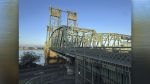 Joe Cortright argues that Interstate Bridge Replacement officials are deliberately delaying the release of an updated cost estimate that he says could push the project toward $10 billion.
 - Letter: A call for competent Interstate Bridge project management
 Rick Vermeers argues that unchecked scope, rising costs, and missed timelines threaten the survival of the Interstate Bridge Replacement project unless light rail is removed.
 - Rep. John Ley introduces bill to balance representation on Washington transportation boards
 Legislation introduced by Rep. John Ley seeks to change how transportation board seats are allocated and prevent funding penalties tied to population-based representation rules.
 - Opinion: IBR administrator receives generous Christmas gift on his way out the door
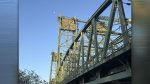 Ken Vance argues that IBR leadership avoided accountability on rising project costs as Administrator Greg Johnson announced his departure without providing updated estimates.
 wpDiscuz
