



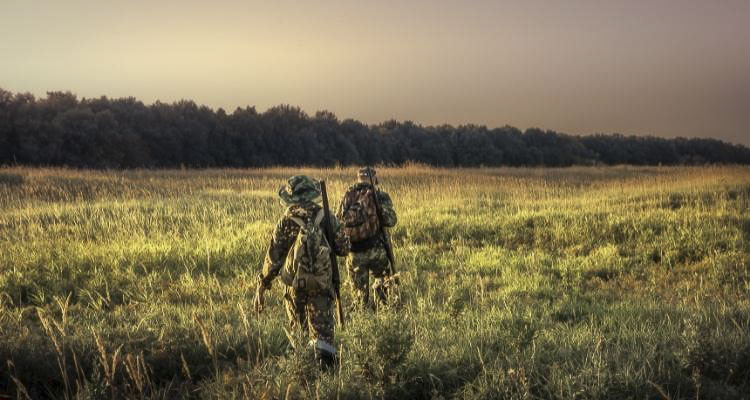
WDFW offers both traditional and online options to complete the hunter education requirement
OLYMPIA — Washington Department of Fish and Wildlife (WDFW) hunter education classes are available now.
WDFW schedules classes statewide, but due to instructor and facility availability, challenges may arise in locating a class.
“Summer is a great time to enroll in hunter education class because as fall hunting seasons draw near, seats in these courses fill quickly,” said David Whipple, WDFW hunter education section manager. “Beat the fall rush and sign up today, especially before school and related activities begin.”
WDFW offers both traditional and online options to complete the hunter education requirement. The traditional classroom experience includes direct person-to-person instruction from certified volunteer instructors. This format is especially beneficial to younger students, as well as those seeking more time with our highly qualified and passionate instructors.
The online course offers the same content and can be completed according to the student’s schedule. Students aged 17 and younger who take the online course are required to complete an in-person field skills evaluation led by certified instructors. As hunting season approaches, field skills evaluation classes can fill very quickly. Currently, students 18 years and older can complete the online course, which includes a virtual field day, to become certified.
However, those students 18 years and older who complete the online course will almost always benefit from attending an in-person field skills evaluation with certified instructors.
To learn about hunter education requirements or find a course, new hunters should visit the WDFW hunter education webpage.
Hunters born after Jan. 1, 1972 must show proof of completion of hunter education before buying their first Washington hunting license. Washington honors all 50 states hunter education certifications. Those who are unable to complete a hunter education course before the fall hunting seasons may qualify for a hunter education deferral. For more information on the deferral, visit wdfw.wa.gov/hunting/requirements/education/deferral-program.
The Washington Department of Fish and Wildlife works to preserve, protect, and perpetuate fish, wildlife and ecosystems while providing sustainable fish and wildlife recreational and commercial opportunities.
Information provided by Washington Department of Fish and Wildlife.
Also read:
- Dollars flowing into a pair of hotly contested WA congressional races
 Amanda McKinney leads 4th District GOP field with $523,892 raised, while Braun trails significantly behind incumbent.
 - Final Supplemental Environmental Impact Statement published for Interstate Bridge Replacement Program
 Federal agencies published the final environmental impact statement for the Interstate Bridge replacement project.
 - Belkot appeals judge’s decision to dismiss her case against Clark County
 Belkot’s attorney says the federal appeals court will hear the case in several months after judge dismissed all five claims.
 - Union baseball, softball teams honor military, veterans, and first responders
 Baseball and softball teams combined efforts to recognize military heroes and first responders with ceremonial pitches.
 - Union baseball, softball teams honor military, veterans, and first responders
 Baseball and softball teams combined efforts to recognize military heroes and first responders with ceremonial pitches.
 - Speed cameras designed to bring added safety to work zones
 WSP issued 65,000 infractions in first year, with 59,000 being penalty-free first offenses as program expands statewide.
 - Cathy Doriot retiring as the Ridgefield Chief of Police
 Chief Cathy Doriot expanded Ridgefield PD with detective, sergeants, officers and drone program during her tenure.
