



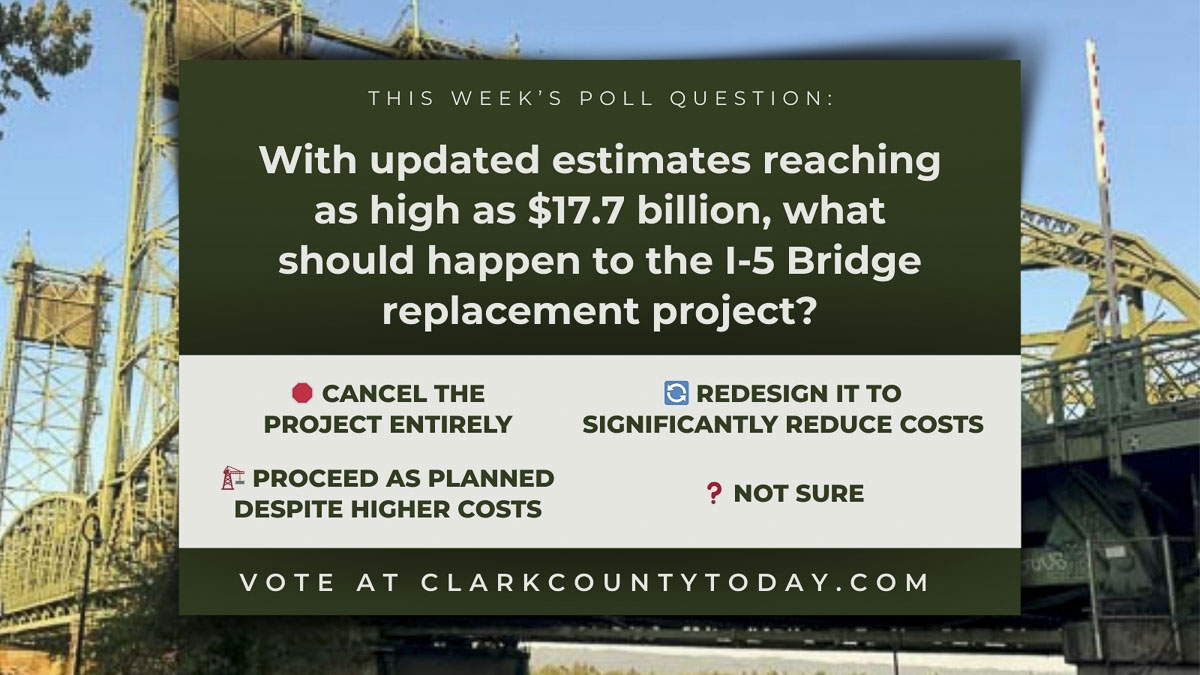
New cost estimates and withheld information have raised fresh questions about transparency inside the Interstate Bridge Replacement Program
A recent report by Oregon Journalism Project reporter Nigel Jaquiss details internal documents showing IBR consultants completed updated cost estimates months before legislators were told no new figures were available. Those estimates put the I-5 Bridge replacement project as high as $13.6 billion, far above earlier public numbers. In response, some lawmakers say they were misled, while IBR officials maintain the figures were only draft estimates. This poll asks whether the public believes IBR staff were truthful with lawmakers about the project’s true cost.
More info:
Opinion: ‘The IBR team has been lying to us and thanks to a veteran Oregon journalist, we have the smoking gun’
Ken Vance argues newly obtained documents show Interstate Bridge Replacement staff withheld updated cost estimates from lawmakers and the public.
Read more
Also read:
- Final Supplemental Environmental Impact Statement published for Interstate Bridge Replacement Program
 Federal agencies published the final environmental impact statement for the Interstate Bridge replacement project.
 - Speed cameras designed to bring added safety to work zones
 WSP issued 65,000 infractions in first year, with 59,000 being penalty-free first offenses as program expands statewide.
 - Marie Gluesenkamp Perez seeks federal assistance in combating sea lion predation of salmon & steelhead fishing stock
 Congresswoman pushes for expanded lethal removal authority as sea lions devour Columbia River fish stocks.
 - Opinion: The high cost of hiding – Why IBR’s delayed revenue study is a $15 billion warning sign
 IBR delays critical toll revenue analysis until June 2027, hiding financial details until after project approval.
 - Opinion: The high cost of hiding – Why IBR’s delayed revenue study is a $15 billion warning sign
 IBR delays critical toll revenue analysis until June 2027, hiding financial details until after project approval.
 wpDiscuz
