




Mark Harmsworth says that without bold action, Washington risks losing more residents to states offering what it no longer can: a chance at the American dream
Mark Harmsworth
Washington Policy Center
The 2025 PODS Moving Trends Report paints a stark picture of Washington state’s affordability crisis, with Seattle and its surrounding areas ranking among the top regions Americans are fleeing in 2025. Based on PODS’ long-distance move data from January 2024 to March 2025, the report highlights a troubling trend: high costs are driving residents out of Washington to more affordable regions like the Carolinas and Tennessee. This out-migration signals a failure of state policies to address the escalating costs of living, particularly in housing, taxes, and everyday expenses.
Seattle is ranked 12th in the nation for cities that people are leaving in 2025.
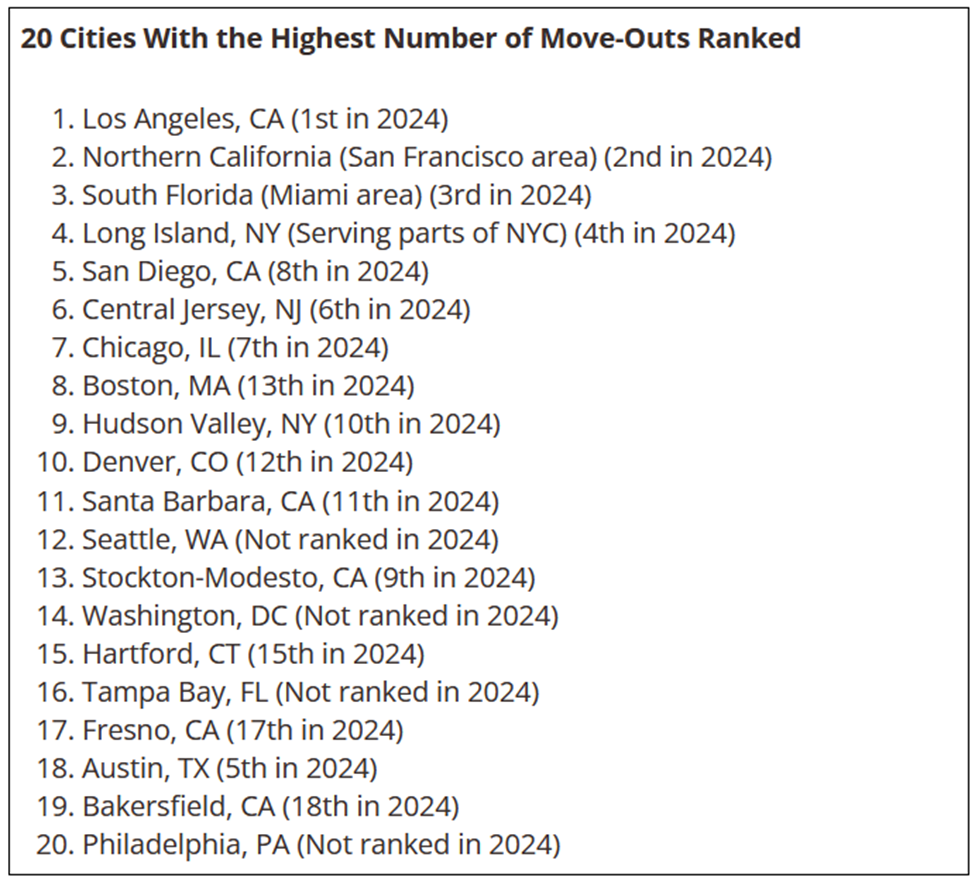

Washington’s housing market remains one of the least affordable in the nation. Zillow data shows median home prices in Seattle hovering around $750,000, far outpacing wage growth. RentCafe reports average rents in the city exceeding $2,200 per month, burdening families and young professionals. Governor Bob Ferguson recently signed a $9.4 billion tax increase, exacerbating the crisis. The new taxes, including a 6-cent-per-gallon gas (12-cents for diesel) tax hike and increased business and occupation taxes (B&O and sales taxes, add up to an estimated $2,000 annually for the average household, further straining budgets.
The PODS report underscores that affordability, not just lifestyle or climate, is the primary driver of relocation. Southeastern states offer lower taxes, cheaper housing (with median home prices often under $400,000), and business-friendly environments. Washington, by contrast, ranks 46th in business tax climate, deterring job creation and economic growth. The state’s high regulatory burden and rising costs for essentials like groceries and utilities make it harder for families to stay. For example, Washington’s energy prices, driven by restrictive policies, are among the highest on the west coast, squeezing household budgets further.
This out-migration has ripple effects. As residents leave, local businesses lose customers, and communities face declining tax revenues, straining public services. Yet, state leaders seem focused on expanding government spending. The state’s $77.8 billion budget reflects an 8% increase over the prior cycle, far above inflation, rather than addressing root causes like overregulation and tax hikes.
To reverse this trend, Washington must prioritize affordability. Streamlining permitting processes, reducing regulatory barriers to housing construction, and roll back punitive taxes.
Without bold action, Washington risks losing more residents to states offering what it no longer can: a chance at the American dream.
Mark Harmsworth is the director of the Small Business Center at the Washington Policy Center.

Also read:
- Opinion: Someone explain the Democrat Party to me please
 Lars Larson criticizes Democrat politicians for shutdown threats, Homeland Security funding refusals, and positions on election laws, housing, and gun rights.
 - POLL: Do you agree with requiring board members to follow council direction?
 Disagreement among county councilors centers on whether C-TRAN board members should reflect the council’s collective wishes or act independently, highlighting ongoing concerns about public accountability.
 - Opinion: In plain sight – yielding to pedestrians
 Drivers often fail to see pedestrians due to inattentional blindness, which highlights the need for more focused awareness at intersections and stronger safety practices.
 - Opinion: The legislature has committed $2.4 billion to recurring pension increases since 2018
 Six legislative COLAs have raised public employer costs by $2.38 billion since 2018, driving up unfunded pension liabilities and increasing burdens on county and city budgets.
 - Opinion: ‘Just because they got away with it doesn’t mean they weren’t wrong’
 A Skamania County deputy’s report found violations of county rules and the Open Public Meetings Act, but no prosecutor acted on the findings.
 wpDiscuz
