



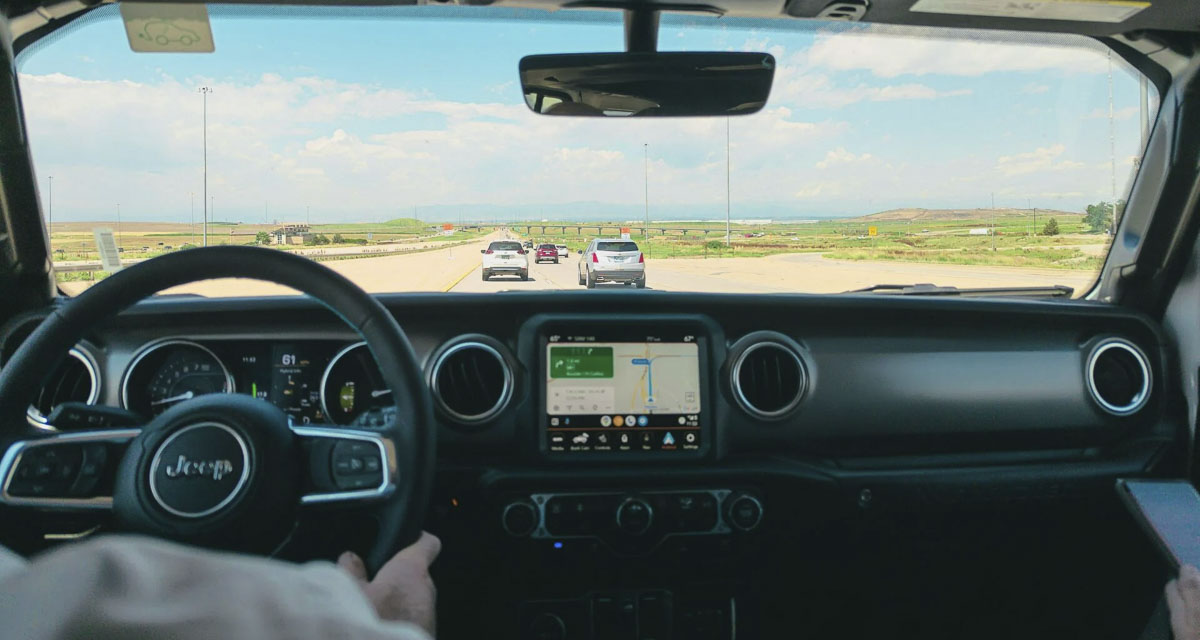
They argue the new taxes are needed to maintain highway and ferry infrastructure, yet politicians furthered their efforts to tax drivers and divert a large share of those taxes to other purposes
Bob Pishue
Mountain States Policy Center
Washington state lawmakers this year increased the cost to both buy a vehicle and fill the gas tank, adding an additional 0.2% sales tax to car purchases and a $0.06 per gallon tax increase on fuel. They argue the new taxes are needed to maintain highway and ferry infrastructure, yet politicians furthered their efforts to tax drivers and divert a large share of those taxes to other purposes.
While an attempt was also made again to tax drivers by the mile to divert money, lawmakers “[waved] the white flag” on the issue this legislative session. This mileage tax will likely resurface again. The transportation tax bill currently sits on Gov. Bob Ferguson’s desk for signature.
The new transportation spending can be found in Senate Bill 5161, a nearly $16 billion tax package based on increases in the fuel tax, license fees, and other taxes. The most notable, and controversial, project is funding the I-5 Bridge replacement, an estimated $5.4 billion bridge connecting Vancouver, Wash. to Portland, Ore. Light rail has been a controversy on the proposal, comprising nearly 40% of the project cost, yet it is estimated to carry just 2.4% of trip demand across the bridge. The Seattle area is facing a similar position, as many officials there support an expensive West Seattle connection that would only increase transit mode share across the bridge by 1 percent.
At a time when DOGE (the Department of Government Efficiency) is in full swing at the federal level, state and local lawmakers are still eyeing big projects that promise to do little.
Should the governor sign the bill, Washington state will continue to be less business and family-friendly than its Mountain States neighbors. Since 1980, Washington state has raised the gas tax in 13 of 44 years, and the state tax on gasoline will now reach 55.4 cents per gallon, keeping it among the highest in the country, even without the added cap and trade tax. This higher gas tax will also be indexed to inflation, ensuring year-over-year increases in taxes are built into the price of gas. For comparison, Idaho’s gas tax is 32 cents and Montana’s is 33 cents per gallon.
Lawmakers also raised the sales tax on cars and recreational vehicles. Even though the state sales tax is currently 6.5% on retail sales, the state also imposes a special 0.3% sales tax rate on car sales for non-highway purposes. Lawmakers increased that special sales tax to 0.5%. Heavier vehicles will also see increases in annual registration fees – for cars 4,000-6,000 pounds, for example, annual fees will increase 36%, from $55 per year to $75.
Even if you don’t own a vehicle and use ridesharing services or rent a car, expect your trip to get more expensive. Lawmakers increased the rideshare tax to 11.9%. Other fees, like tire disposal fees, driver’s license fees, title and registration fees, and filing fees, also increased.
In sum, expect driving to cost even more time and money in the Evergreen State. While Washington does have immense transportation needs, diverting driver fees to other modes or to subsidize light rail across the Columbia River opens the opportunity for road projects to continue to languish.
A recent Reason Foundation report showed Washington state highways ranked 47th in cost-effectiveness and performance in the country, receiving poor ranks in spending per mile and pavement condition in urban and rural areas. Traffic congestion also continues to build across the state, with Seattle ranking 10th in the country in time lost due to traffic in 2024.
Bob Pishue is a policy analyst at Mountain States Policy Center, an independent research organization based in Idaho, Montana, Eastern Washington and Wyoming. Online at mountainstatespolicy.org.
Also read:
- VIDEO: WA diesel hits record $6.53, crushing truckers and school budgets
 With diesel nearing $6.53 per gallon in Washington, trucking businesses and school districts now confront sharply higher fuel expenses affecting budgets and workers.
 - Opinion: In plain sight – yielding to pedestrians
 Drivers often fail to see pedestrians due to inattentional blindness, which highlights the need for more focused awareness at intersections and stronger safety practices.
 - Expect delays on SR 14 in Vancouver for guardrail repairs Wednesday
 State Route 14 travelers in Vancouver should plan for morning delays as WSDOT will close two eastbound lanes for guardrail repairs, affecting mileposts 6.0 to 7.0.
 - Overnight closure planned on westbound SR 14 Camas Slough Bridge Tuesday
 WSDOT crews will close westbound SR 14 at Exit 14 in Camas to collect bridge deck samples and plan future repairs; detours will be in effect.
 - Opinion: Stay in your lane – seriously, it’s the law
 Drivers must choose the nearest lane when turning in Washington, and left turns bring added risk. Even with signals, every driver must help prevent crashes by following law.
