


Target Zero Manager Doug Dahl answers the question of how can an officer know when someone is too high to drive?
Doug Dahl
The Wise Drive
Q: We have a limit for driving with alcohol in your system, and we have a limit for cannabis, but what about all the other drugs? Why don’t we have limits for them? How can an officer know when someone is too high to drive?
A: Right up front, I want to make something clear. Washington does not have a legal limit on how much alcohol you can drink and then drive. Yes, we have a 0.08 blood alcohol content (BAC) per se limit. But that doesn’t mean anyone below that number is sober. Per se is Latin for “by itself” and, in the context of impaired driving, means that driving with a BAC level of 0.08 or greater is sufficient, without any other evidence, to be guilty of “Driving while under the influence.”

You can be impaired below the per se limit; quite a bit below it. The effects of alcohol are apparent at 0.02 BAC, and at 0.05 BAC a driver more than doubles their risk of a crash. That’s why most industrial nations (and Utah) have per se limits of 0.05 or lower.
I point all this out because in a recent survey nearly a quarter of Washington drivers believed (incorrectly) that they couldn’t be impaired below a 0.08 BAC. That’s also why an appropriate per se law matters. When people don’t understand the law they’ll misinterpret a per se limit as a legal limit and may make risky driving decisions based on flawed information.
Regardless of a driver’s BAC limit, the law says a person is guilty of DUI if they drive “under the influence of or affected by intoxicating liquor, cannabis, or any drug,” or a combination of drugs and/or alcohol. Here’s a minimalist summary of our DUI law: If you consume a substance that affects your ability to drive, don’t drive. This includes alcohol, cannabis, illegal drugs, and prescription medications. That also gets us to your actual question.
If the standard for DUI is being “under the influence or affected” by a drug, it’s important for an officer to be able to recognize what drug impairment looks like. They can’t just tell the judge, “He looked high to me,” and expect it to fly in court. Instead, they need to rely on their training and experience to identify specific characteristics of impairment, depending on the category of drug that a person has used.
For many officers in Washington that training is a class called Advanced Roadside Impaired Driver Enforcement (ARIDE). To condense 16 hours of training to a short (and incomplete) description, ARIDE trains officers on the seven categories of drugs, how each category affects the systems in the human body, and how to recognize indicators of impairment associated with each category.
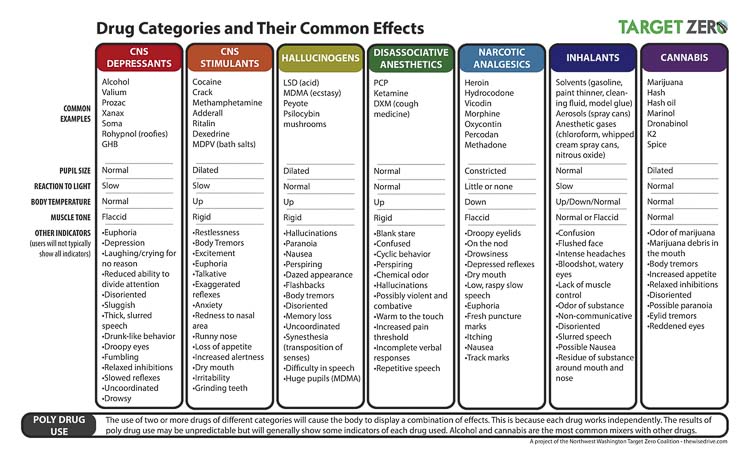
For example, the category of central nervous system (CNS) stimulants includes cocaine and methamphetamine (illegal) as well as Adderall and Ritalin (legal when used as prescribed.) Common indicators of use (from a list of nearly 20 indicators) include dilated pupils, slow reaction to light, elevated body temperature, tense muscles, euphoria, and exaggerated reflexes. If you’re curious about the effects of different categories of drugs, you can find a chart at thewisedrive.com by searching on the site for “drug categories and their effects.”
We also have officers with more advanced training, called Drug Recognition Experts (DREs). They’re able to administer in-depth evaluations to drivers impaired by drugs. When an ARIDE-trained officer recognizes a drug-impaired driver, they may call for a DRE to assist with the investigation. Bottom line: a trained officer can spot the indicators that someone is “too high to drive.”

Also read:
- Opinion: Fatal flaws of Socialism – The knowledge problem
 Cargill argues no government, committee, or computer can possess the dispersed knowledge that markets coordinate through prices.
 - Opinion: ‘It may be time for McCleary 2.0’
 Dick Rylander examines the Battle Ground School District’s proposed $116,830,000 three-year EP&O levy heading to the November 2026 ballot.
 - Opinion: Were Republican voters just sleeping during the August primary election?
 CCRP Chairman Matt Bumala says 60% of primary no-shows in the 17th and 18th districts were Republicans.
 - Opinion: WA Cares’ launch showcased care WA Cares did not provide
 Gov. Ferguson showcased a caregiving arrangement at the WA Cares launch that the program had not paid for a single day of.
 - Opinion: Portland’s War on Cars Part 4 – A smarter automobile strategy to end gridlock
 O’Toole argues fuel wasted in Portland-area congestion has sextupled since 1982, generating 250,000 tons of extra greenhouse gases annually.