



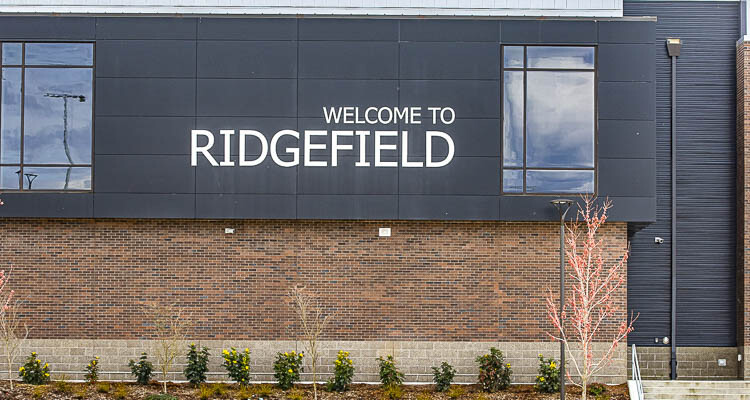
Ridgefield School District has partially created its own capacity and overcrowding issues, according to Ridgefield resident Heidi Pozzo
Heidi Pozzo
for Clark County Today
Ridgefield School District has partially created its own capacity and overcrowding issues. In a prior article, I walked through a series of decisions the District made that impacted capacity related to the last bond.

Since then, the district has made more decisions that impact overcrowding. We need to understand those decisions so they are not repeated in the future.
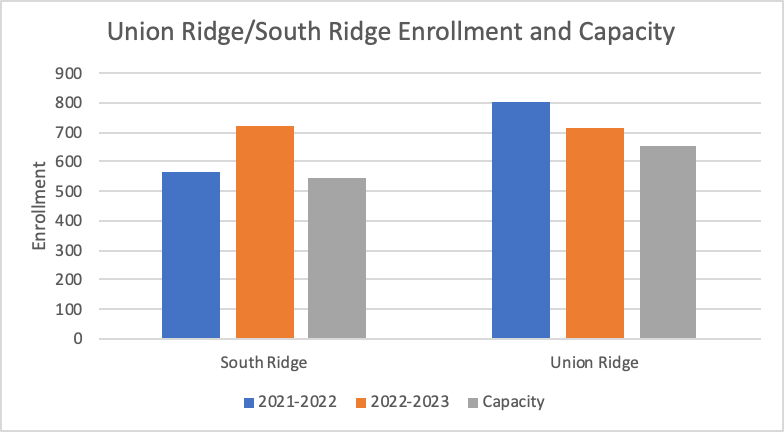
In 2021-2022, Union Ridge Elementary School was 22 percent overcapacity and South Ridge Elementary School was 5 percent over. So the district understandably wanted to address the issue and rebalanced enrollment so the students were spread equally across schools. But the schools don’t have the same capacity.
Rebalancing put South Ridge 33 percent over capacity while Union Ridge dropped to 9 percent over capacity. The numbers don’t tell the whole story though. Union Ridge has an elementary school-sized gym and a middle school-sized gym, as well as two play areas. South Ridge has one elementary school-sized gym and one play area.
It is much more difficult for South Ridge to handle having its enrollment pushed so far over capacity than Union Ridge because it is a significantly smaller overall facility.
As the district contemplates rebalancing enrollment for a third elementary school, the plan is to spread students evenly across schools once again. Only this time, the rebalancing will create a significantly higher strain on South Ridge than the other schools.
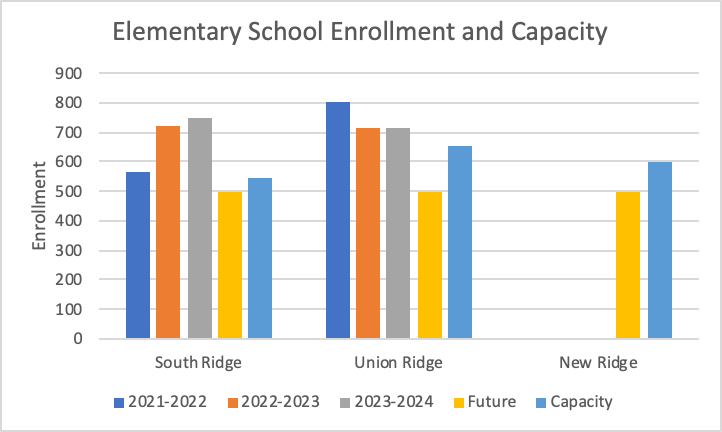
By spreading students evenly across schools, Union Ridge and the new elementary will have significant room for growth. South Ridge, however, will only have room for 42 more students before reaching capacity. And South Ridge is the school that has been growing the fastest.
By not looking at growth rates and capacity for each school, the district has been driving overcrowding at South Ridge.
To be clear, as I’ve stated in the past, there is a need for another elementary school. The existing elementary schools have reached the point where it is difficult to manage the populations. However, there are a number of issues with the proposed school and the propositions that are up for a vote.
Whichever path the voters choose, the district should keep growth rates, school design and capacity in mind to not unfairly burden any one school.
Heidi Pozzo has been a Ridgefield resident for 16 years. She is a concerned citizen who would like students to get a good education and thinks we can do it in a more cost-effective way.

Also read:
- Opinion: Someone explain the Democrat Party to me please
 Lars Larson criticizes Democrat politicians for shutdown threats, Homeland Security funding refusals, and positions on election laws, housing, and gun rights.
 - POLL: Do you agree with requiring board members to follow council direction?
 Disagreement among county councilors centers on whether C-TRAN board members should reflect the council’s collective wishes or act independently, highlighting ongoing concerns about public accountability.
 - Opinion: In plain sight – yielding to pedestrians
 Drivers often fail to see pedestrians due to inattentional blindness, which highlights the need for more focused awareness at intersections and stronger safety practices.
 - Opinion: The legislature has committed $2.4 billion to recurring pension increases since 2018
 Six legislative COLAs have raised public employer costs by $2.38 billion since 2018, driving up unfunded pension liabilities and increasing burdens on county and city budgets.
 - Opinion: ‘Just because they got away with it doesn’t mean they weren’t wrong’
 A Skamania County deputy’s report found violations of county rules and the Open Public Meetings Act, but no prosecutor acted on the findings.
 wpDiscuz
