


Liv Finne of the Washington Policy Center hopes the new legislature can catch up and provide a real ‘System of Support’ that families can use to access high-quality education services
Liv Finne
Washington Policy Center
Last week I participated in a live online debate with Tim Garchow, executive director of the Washington State School Directors Association. We were asked to debate the question: “What does it mean to have local control over educational decisions in Washington state?”

Local control describes the current system of electing school board directors to govern the schools in each one of the 295 school districts in Washington state. Our discussion was ably moderated by Elizabeth Van Clark of the Columbia Basin Badger Club in Pasco, Washington, and is available here.
In my remarks I pointed out parents have little to no control under this monopoly system of local control. Mr. Garchow took the opposite position, describing ways parents can ask for help from the schools, citing Multiple Systems of Support (MSS). Sure, parents can ask for help, but they have little recourse if district officials ignore their concerns.
In addition, our discussion ranged from the damaging effects of closing school for nearly two years during COVID, The Seattle Times editorial asking why school officials have spent only 9% of federal COVID relief funds on individual tutoring, plummeting test scores and other negative effects of closing schools for so long.
I concluded that to increase parental control in Washington state, lawmakers should follow the example of 32 states, the District of Columbia and Puerto Rico and allow more learning choices. Arizona has just passed a law making $7,000 available to every family who wants it, for the purpose of hiring tutors, buying textbooks, homeschooling, or paying private school tuition. These learning-choice programs place control of education squarely at the kitchen table, with Mom and Dad making these crucial decisions, not with some distant unnamed government office.
Public education is filled with happy-sounding buzz words like “local control,” “community empowerment,” “parental involvement” and “Multiple Systems of Support.” Sure, government people love them, but these terms mean nothing to families faced with the hard problems involved in educating and raising children.
Earlier this year Washington was poised to join other states when HB 1633, a bill to provide $10,000 or so to families who request it, was introduced. Hardliners in the legislature killed it.
A new legislature is going to meet in January. Maybe with some fresh faces and fresh thinking our state can catch up and provide a real “System of Support” (i.e. cash) that families can use to access high-quality education services.
Liv Finne is the director of the Center for Education at the Washington Policy Center.

Also read:
- Opinion: Were Republican voters just sleeping during the August primary election?
 CCRP Chairman Matt Bumala says 60% of primary no-shows in the 17th and 18th districts were Republicans.
 - Opinion: WA Cares’ launch showcased care WA Cares did not provide
 Gov. Ferguson showcased a caregiving arrangement at the WA Cares launch that the program had not paid for a single day of.
 - Opinion: Portland’s War on Cars Part 4 – A smarter automobile strategy to end gridlock
 O’Toole argues fuel wasted in Portland-area congestion has sextupled since 1982, generating 250,000 tons of extra greenhouse gases annually.
 - Opinion: The Tooth Fairy’s secrets to making brushing & flossing magical
 Delta Dental of Washington’s Tooth Fairy Experience offers free resources to help children build lifelong brushing and flossing habits.
 - Opinion: Transit ridership trends are dismal but regional plans are oblivious
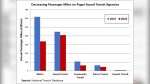 Puget Sound transit passenger-miles fell 31% from 2015 to 2024 despite a half-million-resident population increase.
 wpDiscuz