



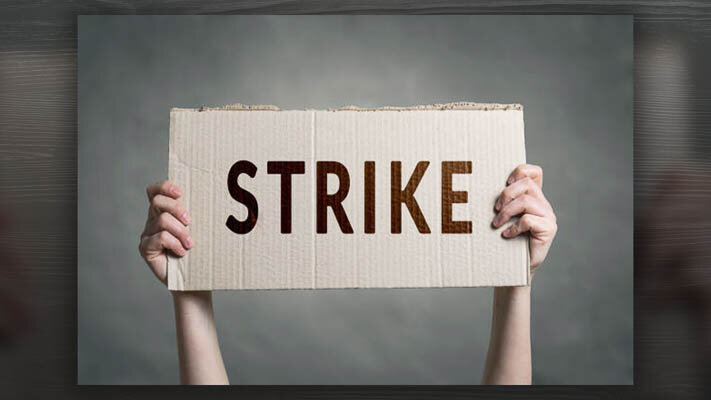
The House version of the bill is scheduled for an executive session on Jan. 19 to move the idea further along
Elizabeth Hovde
Washington Policy Center
A pair of bills moving in the Legislature would allow striking workers to receive unemployment benefits. House Bill 1893, and its companion bill Senate Bill 5777, would encourage more lengthy strikes and cost the unemployment insurance (UI) program. A fiscal note has been requested to estimate how much. Weakening this fund for employees it is set up for is harmful.

The unemployment insurance program in Washington state is socialized and funded by taxes on Washington state employers. It is set up to provide financial assistance to employees who lose work through no fault of their own, not people choosing not to work. Current law rightly says striking workers are disqualified from collecting unemployment UI benefits. The proposed legislation, however, would remove the disqualification. (There is an exemption for workers who choose not to participate in a strike.)
Even the background for this set of bills acknowledges that the UI program is set up to provide for workers who are separated from employment through no fault of their own and who are available to work and actively searching. As Bob Battles of the Association of Washington Business said in opposition to the bill at a House committee, “Strikes are not that.”
Those testifying in favor of the bill (led by usual labor leaders) say that workers, especially low-income ones, who choose to strike need a safety net. I say unions who push strikes should provide that safety net when it is needed with their members’ union dues, rather than punish all the state’s employers and workers who have nothing to do with a work negotiation that results in a work stoppage. Even the many employers in the state with happy workers will be penalized by a more costly UI system. In turn, their workers will be financially penalized for other workers’ decisions not to go to work.
As the president of the Washington State Labor Council, April Sims, said, “Strikes are a powerful tool.” Powerful tools cost money. It is not appropriate for the state to sharpen a tool for one side — labor — and contribute to an unfair playing field.
Hundreds signed in to testify on this controversial idea that could impact all workers in the state. The House version of the bill is scheduled for an executive session on Jan. 19 to move the idea further along.
Elizabeth Hovde is a policy analyst and the director of the Centers for Health Care and Workers Rights at the Washington Policy Center. She is a Clark County resident.

Also read:
- Opinion: Defend bail now or face more chaos on our streets
 A proposed Washington court rule would cap bail for most misdemeanors and allow defendants to bypass bondsmen, raising concerns about accountability and public safety.
 - Opinion: Some worker rights get a poster, others get fine print
 Elizabeth New questions why Washington state highlights some workplace protections while Janus First Amendment rights for public employees remain hidden in official materials.
 - Opinion: Someone explain the Democrat Party to me please
 Lars Larson criticizes Democrat politicians for shutdown threats, Homeland Security funding refusals, and positions on election laws, housing, and gun rights.
 - POLL: Do you agree with requiring board members to follow council direction?
 Disagreement among county councilors centers on whether C-TRAN board members should reflect the council’s collective wishes or act independently, highlighting ongoing concerns about public accountability.
 - Opinion: In plain sight – yielding to pedestrians
 Drivers often fail to see pedestrians due to inattentional blindness, which highlights the need for more focused awareness at intersections and stronger safety practices.
