



Mark Harmsworth says policymakers must recognize that Washington’s no-income-tax edge built our prosperity
Mark Harmsworth
Washington Policy Center
Recent articles from the Seattle Times, one on the wealth tax, the other on the Seattle head tax, underscore a growing reckoning in Washington state.

Now it seems even the most ardent tax politicians are taking a pause by rolling back the death tax which was increased just last year. Aggressive tax policies are driving away the wealth creators who fuel our economy, and the exact impact is yet to be fully felt.
Washington Policy Center (WPC) critiques Mayor Katie Wilson’s glib “filthy rich” label for Seattle residents, highlighting flaws in celebratory coverage of overperforming high-earner taxes.
At first glance, the two taxes seem disparate, one focuses on state-level estate tax rollback via Senate Bill 6347, reducing the death tax from 10%-35% to 10%-20% (estate value dependant), the other dissects Seattle’s 5% excess compensation tax yielding $115 million, far above projections.
Yet both reveal the same truth. Cumulative tax burdens are pushing high-net-worth individuals and businesses toward the exits.
Senate Majority Leader Jamie Pedersen admits “a lot of people [are] looking at redomiciling themselves,” warning that Washington’s outlier status risks broader economic damage. Pederson’s reaction also explains his punitive language for domicile ‘avoiders’ in the income tax bill (Senate Bill 6346). Just 30 days in the state and you are subject to some portion of the income tax.
Former Senator Reuven Carlyle echoes the exodus fear, describing a “tipping-point scenario” where families and businesses flee due to stacked taxes.
The exodus is real but delayed.
Relocation isn’t instantaneous, it involves uprooting families, careers, and legal ties. Driven by the new income tax in the legislature, hedge fund manager Brian Heywood reports dozens of couples eyeing moves, and data shows net losses of households earning over $200,000 to places like Florida, Texas, and Nevada.
Las Vegas, for instance, is booming with Seattle transplants snapping up luxury homes.
These ex-Washington residents aren’t just “the rich”, they’re entrepreneurs, tech innovators, and small business owners whose stock-based pay amplifies tax hits from Seattle’s JumpStart payroll tax, the state capital gains levy, and now the estate tax spike.
Add the proposed 9.9% “millionaires’ tax” on earnings over $1 million, and combined rates could top 18%, eroding incentives for investment and job creation.
The Times article demonstrates even progressives are blinking, with minimal opposition to the estate tax rollback as they pivot to the millionaire’s tax for “stable” revenue.
Policymakers must recognize that Washington’s no-income-tax edge built our prosperity. Conflating business burdens with individual wealth, as critiqued in my piece, and dismissing delayed migrations only accelerate the outflow.
Retreating on one tax is a start, but true reform means prioritizing growth over punitive levies. Otherwise, we’ll turn “filthy rich” into “formerly here.”
Mark Harmsworth is the director of the Small Business Center at the Washington Policy Center.

Also read:
- Opinion: Were Republican voters just sleeping during the August primary election?
 CCRP Chairman Matt Bumala says 60% of primary no-shows in the 17th and 18th districts were Republicans.
 - Opinion: WA Cares’ launch showcased care WA Cares did not provide
 Gov. Ferguson showcased a caregiving arrangement at the WA Cares launch that the program had not paid for a single day of.
 - Opinion: Portland’s War on Cars Part 4 – A smarter automobile strategy to end gridlock
 O’Toole argues fuel wasted in Portland-area congestion has sextupled since 1982, generating 250,000 tons of extra greenhouse gases annually.
 - Opinion: The Tooth Fairy’s secrets to making brushing & flossing magical
 Delta Dental of Washington’s Tooth Fairy Experience offers free resources to help children build lifelong brushing and flossing habits.
 - Opinion: Transit ridership trends are dismal but regional plans are oblivious
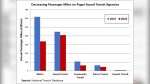 Puget Sound transit passenger-miles fell 31% from 2015 to 2024 despite a half-million-resident population increase.