

Bob Ortblad offers further analysis of I-5 Bridge replacement costs
Editor’s note: Opinions expressed in this letter to the editor are those of the author alone and do not reflect the editorial position of ClarkCountyToday.com
Washington Representative John Ley’s recent article, “Can $10 tolls be coming to the Interstate Bridge?” significantly underestimates potential toll costs, which could be closer to $20.

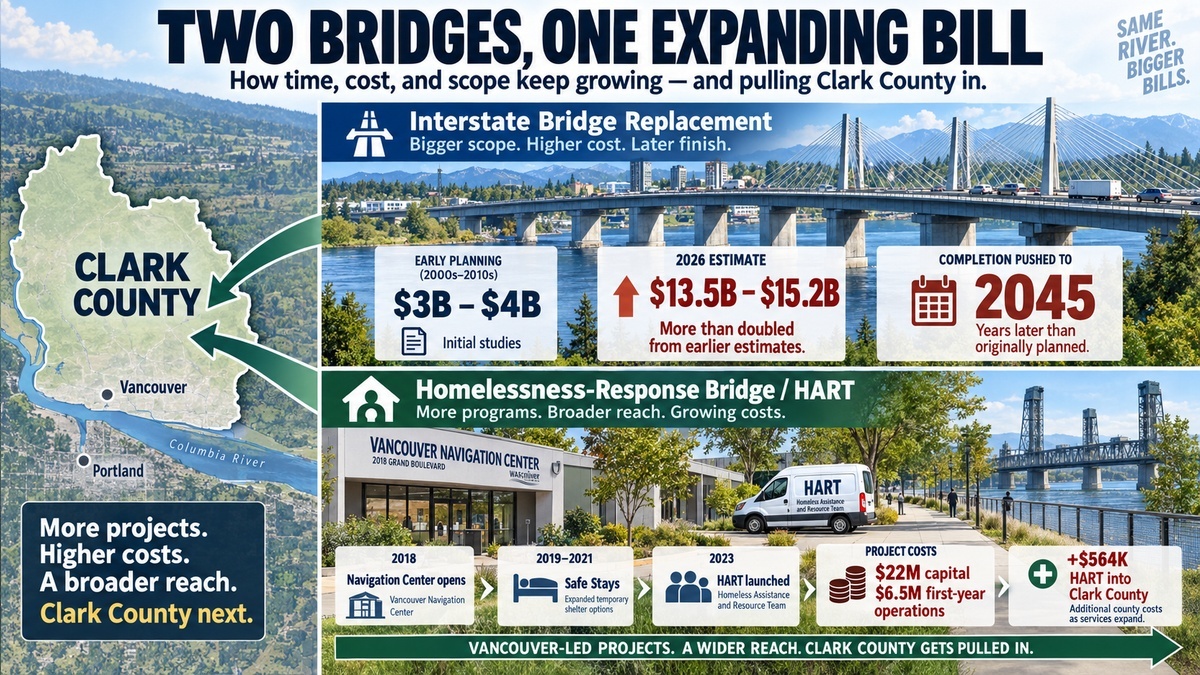
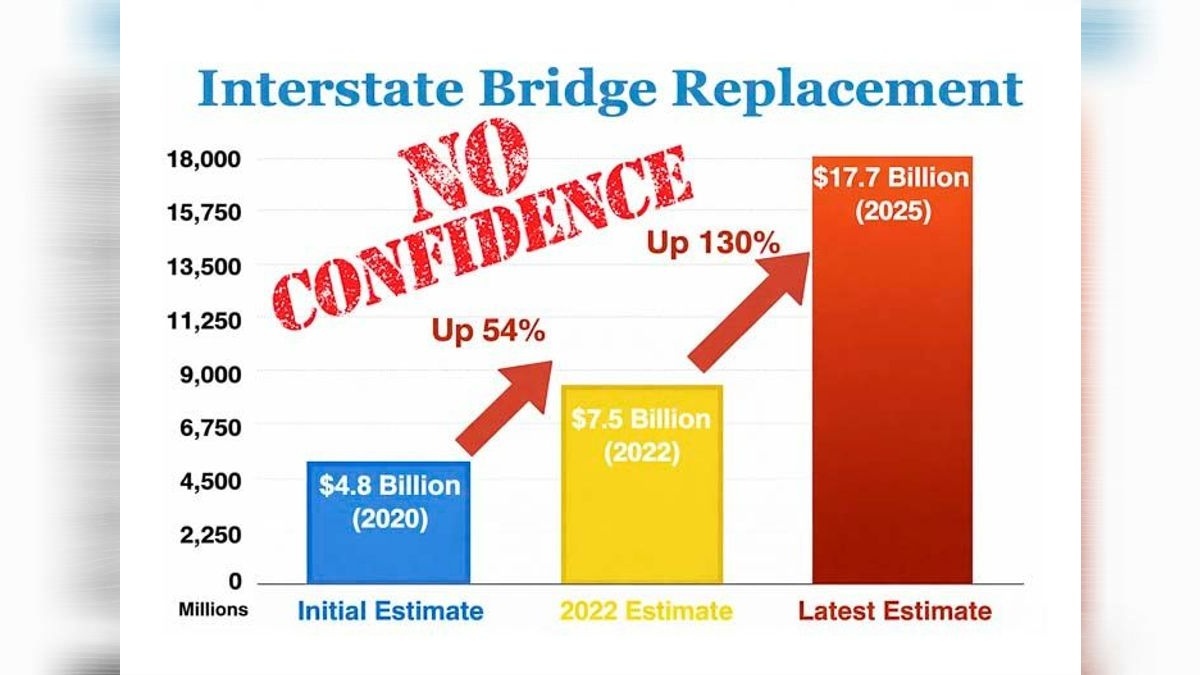
The Interstate Bridge Replacement Program’s (IBR) “2023 Financial Plan” appears overly optimistic, starting with a $1 billion shortfall: $6.5 billion in funds minus an estimated $7.5 billion in costs equals a $1.0 billion deficit. Furthermore, a $1 billion grant from the Federal Transit Administration faces a low chance of success due to low ridership numbers, impractical elevated stations, and park-and-ride garages situated near the freeway, which promote additional vehicle miles traveled (VMT) and contribute to urban sprawl. To compensate for the expected shortfall from the loss of a Federal Transit Administration grant, the Washington Legislature is proposing $2.5 billion in toll bonds, which is a $1.3 billion increase over the IBR’s original plan.
The IBR’s last cost estimate was issued in 2022, with a new estimate slated for release in July 2025, after the sessions of both Washington and Oregon legislatures conclude. Recent tariffs and cost escalations are likely to raise the total by a conservative 25%, pushing the estimated cost to around $9.4 billion. Both Washington and Oregon are facing transportation budget crises, with little hope for additional federal funding. Thus, the only remaining source of funds appears to be $5 billion in tolls, potentially driving tolls up to an exorbitant $20 per crossing.
The IBR needs a more cost-effective design. It should cancel plans to widen five miles of freeway and reconstruct five interchanges, two massive bridge approaches, and an oversized bridge. A more viable solution would involve preserving the current bridges, which have six lanes, and constructing an immersed tunnel with four or six additional lanes. This alternative would be more cost-effective and offer many environmental and safety benefits.
Bob Ortblad MSCE, MBA
Seattle
Comments
Loading comments…