


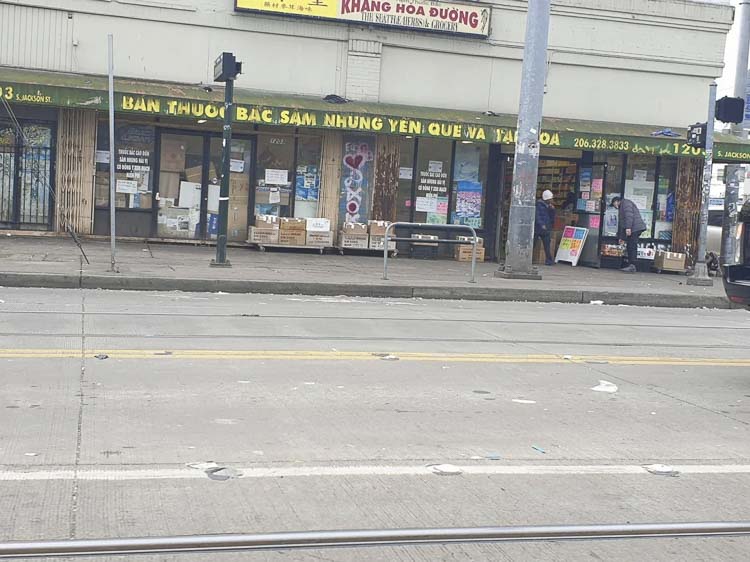
Bob Ortblad suggests elected officials and community leaders should take a field trip to Seattle’s Chinatown
Editor’s note: Opinions expressed in this letter to the editor are those of the author alone and do not reflect the editorial position of ClarkCountyToday.com
The Interstate Bridge Replacement Program (IBR) has intentionally concealed the impact of its bridge approaches by providing misleading graphics. The 16 legislators on the Joint Committee on the I-5 Bridge, the Vancouver City Council, and the Hayden Island Neighborhood Network should take a joint field trip to Seattle’s Chinatown. This will help them visualize the IBR’s devastating plans for Vancouver and Hayden Island.
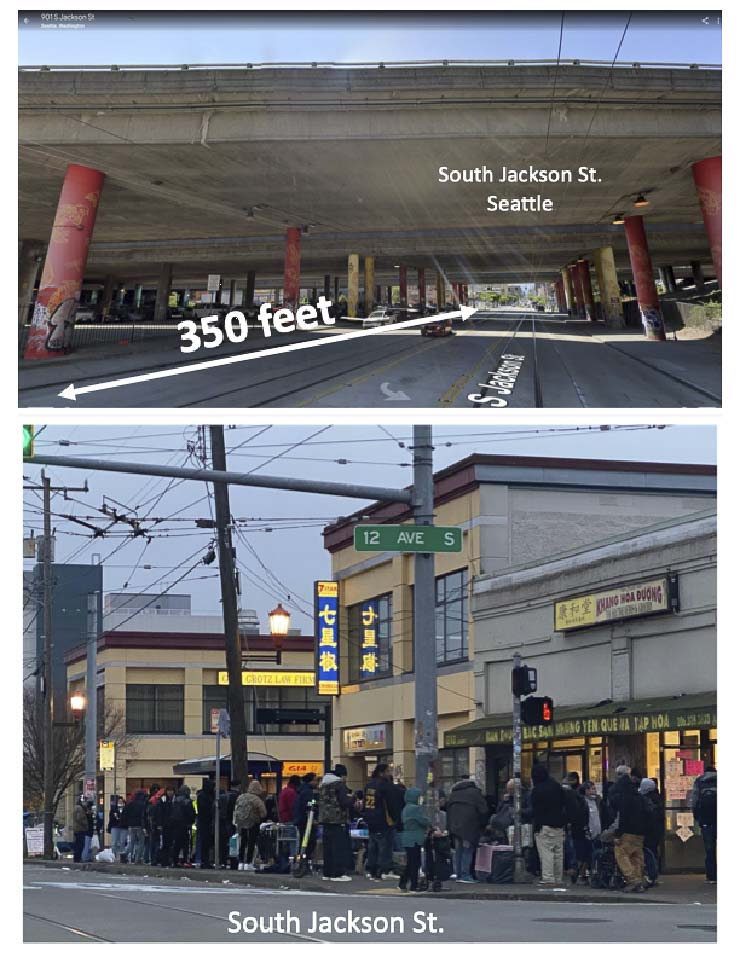
They should take Amtrak to Seattle’s Union Station and walk five blocks up South Jackson St., then walk another 100 yards under an elevated I-5 freeway. Walk one more block to 12th Avenue South to visit Seattle’s largest drug market.
In 1968, WSDOT cut I-5 through Seattle’s historic Chinatown. For six decades the impacts of this concrete nightmare have been inflicted on Chinatown with no relief in sight.
The South Jackson St. underpass is about 100 yards long. The IBR plans a Columbia Way 130-yard underpass. Vancouver’s $21 million “Main Street Promise” will end at an ugly underpass, and it will be a dark 200-yard walk under the freeway to get to the riverfront. The IBR plans three separate 100-yard underpasses for Hayden Island covering a dozen acres with a forest of concrete pillars.
The IBR fraudulently disqualified an immersed tunnel alternative design with no underpasses and that would enhance both riverbanks with waterfront parks.
Bob Ortblad MSCE, MBA
Seattle, WA

Also read:
- Opinion: Were Republican voters just sleeping during the August primary election?
 CCRP Chairman Matt Bumala says 60% of primary no-shows in the 17th and 18th districts were Republicans.
 - Opinion: WA Cares’ launch showcased care WA Cares did not provide
 Gov. Ferguson showcased a caregiving arrangement at the WA Cares launch that the program had not paid for a single day of.
 - Opinion: Portland’s War on Cars Part 4 – A smarter automobile strategy to end gridlock
 O’Toole argues fuel wasted in Portland-area congestion has sextupled since 1982, generating 250,000 tons of extra greenhouse gases annually.
 - Opinion: The Tooth Fairy’s secrets to making brushing & flossing magical
 Delta Dental of Washington’s Tooth Fairy Experience offers free resources to help children build lifelong brushing and flossing habits.
 - Opinion: Transit ridership trends are dismal but regional plans are oblivious
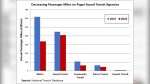 Puget Sound transit passenger-miles fell 31% from 2015 to 2024 despite a half-million-resident population increase.