


Rob Anderson shares the latest on ‘the story that keeps on going’
Editor’s note: Opinions expressed in this letter to the editor are those of the author alone and may not reflect the editorial position of ClarkCountyToday.com
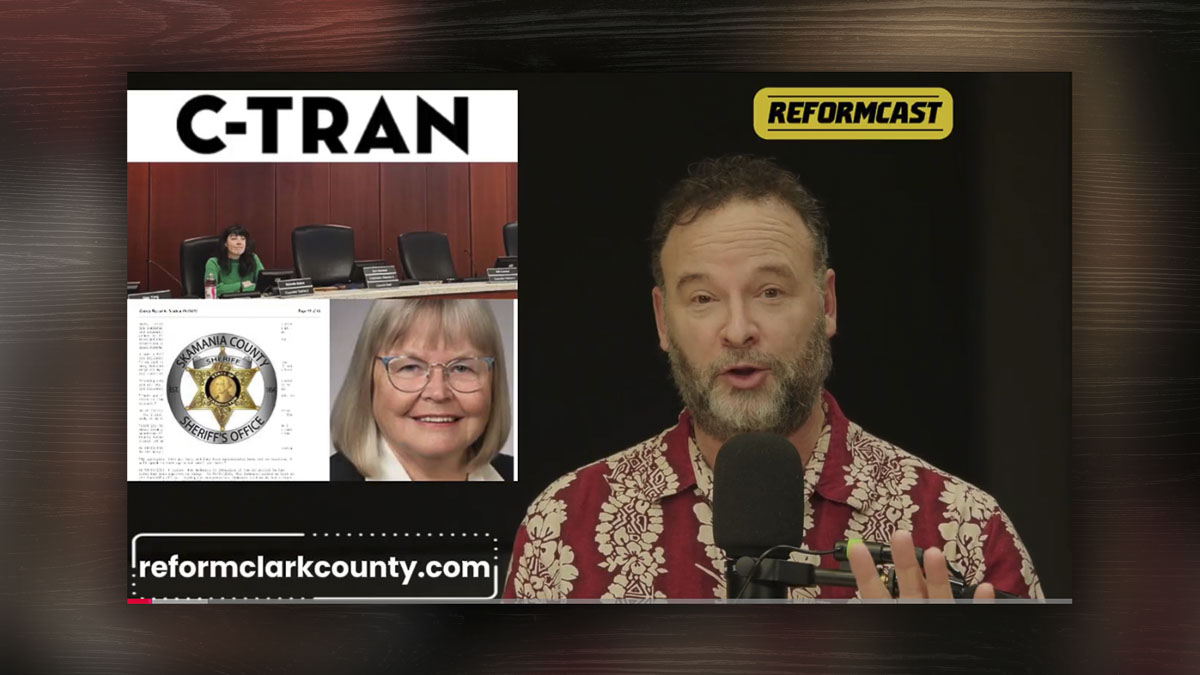
One year ago this week, Clark County watched as the C-TRAN Board prepared to vote on a proposal that would have effectively killed light rail in Clark County, a move that would no doubt save taxpayers millions, maybe billions. Instead, the vote was abruptly halted by a motion to table from Sue Marshall, and the outcome reversed when Councilor Michelle Belkot — who was expected to cast the deciding vote — was removed from her appointed place on the C-TRAN Board within 24 hours.

As you probably know, with great reporting by Clark County Today, what followed were lawsuits, a criminal investigation, the Skamania Report, and months of stonewalling by county officials. But one of the most significant pieces of evidence has remained hidden until now.
In this week’s Reformcast Episode 9, I began revealing what was happening behind the scenes. One detail is a text message, never released to the public before now, sent by Council Chair Sue Marshall to Councilor Matt Little at 11:11 p.m. on March 11, 2025 — just hours after the C-TRAN meeting where Marshall had already moved to table the vote, effectively saving light rail.
That night, with the next day’s council meeting looming, Marshall texted Little: “Can we check in before council time? Thanks.”
That single text is explosive because Marshall, the following month, signed a sworn affidavit under penalty of perjury declaring she had turned over every text message from her personal devices pertaining to the March 12 meeting. She didn’t. This message was withheld.
The only reason it surfaced is because Matt Little produced it nearly five months later — after I informed the county’s attorney, Paul Lawerence from Pacifica Law Group, that I had reason to believe councilors were withholding communications from their personal devices. Even after being warned that missing records would be a serious problem, Marshall never produced the message herself, but Matt Little did.
This is not a minor oversight. Signing under oath that all records were produced while withholding a communication tied to a major government decision raises serious questions. Combined with additional emails sent the following morning and the rapid, apparently pre-prepared motion to remove Belkot, the evidence suggests the decision was coordinated outside a public meeting in violation of the Open Public Meetings Act.
Now, nearly a year later, the council is still haunted by that decision, for they are currently considering rewriting county rules to give itself removal powers the charter never granted in the first place — while the Skamania Report and its findings remain unresolved.
The full story — including the withheld text, the sworn declarations that conflict with the evidence, and the public records documenting it — is detailed in Reformcast Episode 9.
Next week, I’ll be laying out more evidence that indicates Sue Marshall isn’t the only councilor who may have committed perjury … it’s the story that keeps on going.
For more details, watch the full episode here: https://youtu.be/OjZTCXWLjzs
Rob Anderson
Clark County

Also read:
- Opinion: Were Republican voters just sleeping during the August primary election?
 CCRP Chairman Matt Bumala says 60% of primary no-shows in the 17th and 18th districts were Republicans.
 - Opinion: WA Cares’ launch showcased care WA Cares did not provide
 Gov. Ferguson showcased a caregiving arrangement at the WA Cares launch that the program had not paid for a single day of.
 - Opinion: Portland’s War on Cars Part 4 – A smarter automobile strategy to end gridlock
 O’Toole argues fuel wasted in Portland-area congestion has sextupled since 1982, generating 250,000 tons of extra greenhouse gases annually.
 - Opinion: The Tooth Fairy’s secrets to making brushing & flossing magical
 Delta Dental of Washington’s Tooth Fairy Experience offers free resources to help children build lifelong brushing and flossing habits.
 - Opinion: Transit ridership trends are dismal but regional plans are oblivious
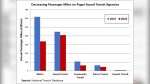 Puget Sound transit passenger-miles fell 31% from 2015 to 2024 despite a half-million-resident population increase.