



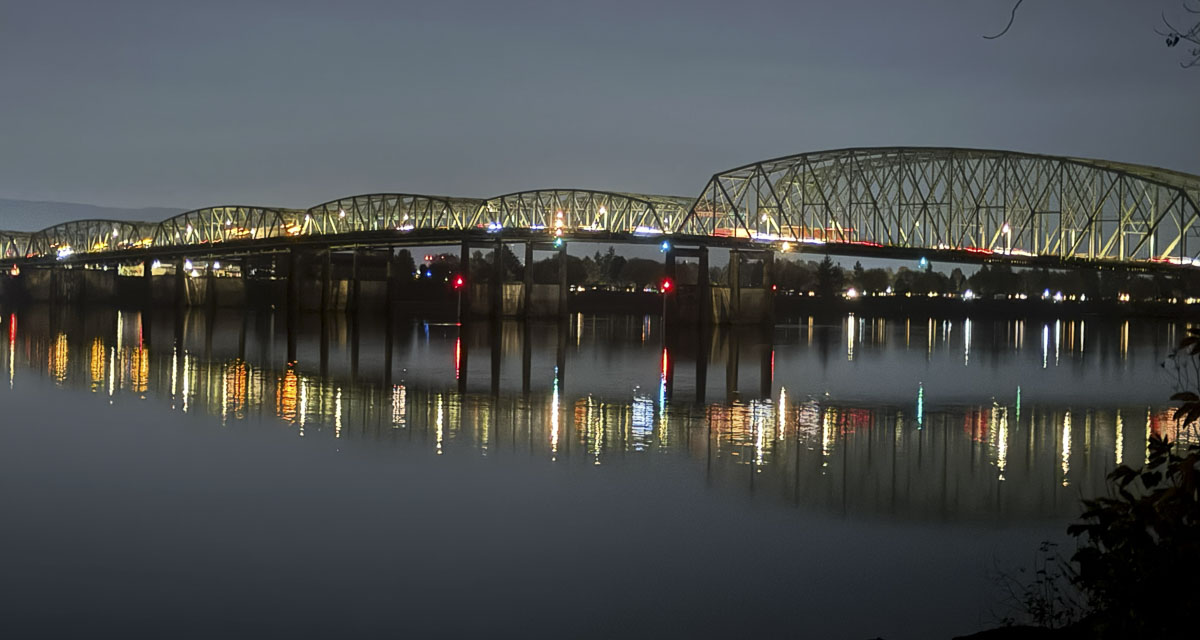
Bob Ortblad says the IBR shows its incompetence and possible corruption by exaggerating timber pile risk on the current bridges
Editor’s note: Opinions expressed in this letter to the editor are those of the author alone and may not reflect the editorial position of ClarkCountyToday.com
Why is the Interstate Bridge Replacement Program (IBR) spending $1.9 million to dig holes in the solid and well-drained sand of Hayden Island?

The IBR has a $1,937,944 contract with Keller North America to test three different methods of ground improvement on Hayden Island. The IBR plans elevated bridge approaches and a transit station that will be 30 to 70 feet above the ground with foundations supported by drilled shafts or piling. There is no need for ground improvement that modifies weak soil to create a suitable foundation, whereas piling and drilled shafts transfer loads deeper into the ground to bypass weak soil.
The IBR’s website has a dishonest description of why ground improvement is needed:
“What are they testing?
The seismic vulnerability of the current Interstate 5 Bridge stems from its foundation: It is supported by timber piles in liquefiable soils. To identify the appropriate approach to addressing this, engineers are testing different ground stabilization methods to determine how they perform in preparation for construction of program investments. The ODOT site on Hayden Island was chosen because it has similar soil characteristics as the North Portland Harbor and the north shoreline of Hayden Island, which have loose soil.”
The IBR shows its incompetence and possible corruption by exaggerating timber pile risk on the current bridges, and that digging holes in sand on Hayden Island will conjure information about drilled shafts in the Columbia River. (see IBR links & letters below)
Hayden Island is a sandbar that has been raised with about 20 feet of dredged sand from the Columbia River. Testing solid well-drained sand on Hayden Island for liquefaction and ground improvement will not provide any useful information for the design or cost estimate of the 96 drilled shafts required to support a bridge in the Columbia River. Drilled shafts will have a 10-foot diameter and be up to 250 feet long.
The IBR has $13 million worth of studies on the Columbia River’s bottom. The Columbia River Crossing (CRC) spent $12 million on geotechnical studies, test piles, and drilled shafts including:
Shannon and Wilson $6,283,675 Geotechnical services
Max J. Kuney. $4,753,313 Drilled shaft & pile tests
American Construction $828,508 Temporary pile test
Foundation Engineering $507,153 Geotechnical support
The IBR Program has spent an additional $1,046,369 on Shannon and Wilson for the “Geotechnical Data Report, Columbia River & North Portland Harbor Bridges, May 2024.” This 209-page report documents many boulders and cobbles that will make constructing 96 drilled shafts difficult and costly. This report was never released by the IBR and was only obtained with a Public Disclosure Request.
The U.S. DOT funded half of the $1.9 million contract with a Bridge Investment Grant of $1 million. Will the U. S. DOT trust the IBR to spend $2 billion in Federal construction grants?
IBR – Hayden Island Ground Improvement: https://www.interstatebridge.org/notifications/hayden-island-ground-improvement
IBR program awarded $1 million federal Bridge Investment Program grant: https://www.interstatebridge.org/resources/program-news/ibr-program-awarded-1-million-federal-bridge-investment-program-grant
Letter: The Interstate Bridge Replacement Program is hiding its ‘Geotechnical Data Report’:
Letter: ‘IBR’s seismic lie’:
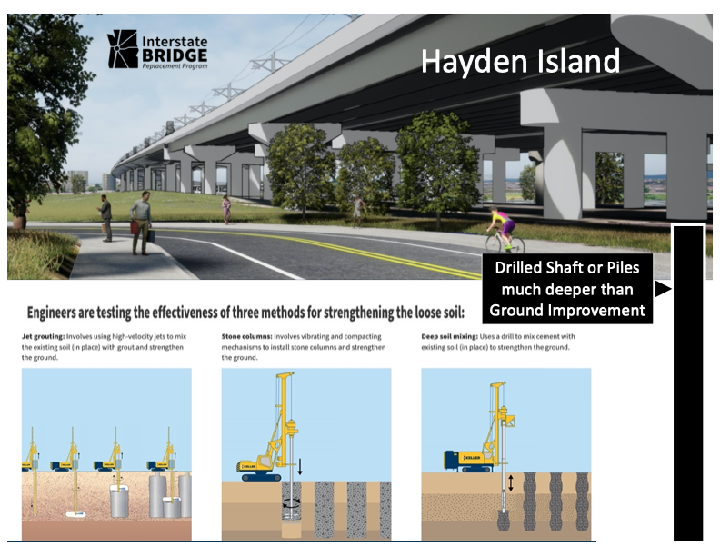
The sand of Hayden Island supported the Jantzen Beach Big Dipper for 41 years, which was demolished in 1969.
Bob Ortblad MSCE, MBA
Seattle
Also read:
- Letter: Vancouver Mayor Anne McEnerny-Ogle makes several serious and incorrect engineering statements
 Bob Ortblad critiques engineering claims by Vancouver Mayor Anne McEnerny-Ogle, highlighting cost and safety advantages of an immersed tunnel for the I-5 crossing.
 - Washington’s studded tire deadline is March 31
 Drivers must remove studded tires by March 31 or face a $137 fine, with WSDOT urging early action due to busy service centers and no planned deadline extension.
 - VIDEO: WA diesel hits record $6.53, crushing truckers and school budgets
 With diesel nearing $6.53 per gallon in Washington, trucking businesses and school districts now confront sharply higher fuel expenses affecting budgets and workers.
 - Opinion: In plain sight – yielding to pedestrians
 Drivers often fail to see pedestrians due to inattentional blindness, which highlights the need for more focused awareness at intersections and stronger safety practices.
 - Expect delays on SR 14 in Vancouver for guardrail repairs Wednesday
 State Route 14 travelers in Vancouver should plan for morning delays as WSDOT will close two eastbound lanes for guardrail repairs, affecting mileposts 6.0 to 7.0.
 wpDiscuz
