


Federal Highway Administration is funding a dangerous bridge
Editor’s note: Opinions expressed in this letter to the editor are those of the author alone and do not reflect the editorial position of ClarkCountyToday.com
The Federal Aviation Administration’s certification of Boeing’s 737 MAX resulted in two plane crashes and 346 deaths. The FAA issued a $2.5 billion face-saving fine.

In a grim coincidence, the Interstate Bridge Replacement Program (IBR) is asking for $2.5 billion in federal grants to build a dangerous bridge. During the 100-life of its bridge, there will be thousands of crashes and an untold number of injuries and deaths. A 737 software flaw was hidden in a million lines of code.
The IBR’s I-5 Bridge design flaws are obvious to anyone who has driven across the I-205 Bridge, just upstream. Its grade, curve, rain, wind, and ice make it a perilous crossing. The I-205 Bridge is ranked by Go Save Labs as the nation’s eighth most dangerous accident hotspot. The IBR I-5 Bridge design will be almost twice as steep (4%), have the same weather, antiquated cloverleafs, limited sight distance, a 7% off-ramp to SR-14, and I-205-style curve. Bridge crashes will be frequent and over time injuries and deaths will equal a plane crash.
The Federal Highway Administration recently awarded the IBR its first federal grant, $1 million to do a redundant study on liquefaction during an earthquake. Ten years ago the Columbia River Crossing spent $12 million on a dozen geotechnical consultants and $31 million on WSDOT management and geotechnical studies. Continued funding of the IBR by the FWHA should stop until the IBR has a safe design.
The IBR continues to ignore a safer and less costly immersed tunnel alternative.
Bob Ortblad MSCE, MBA
Seattle

Also read:
- Opinion: Were Republican voters just sleeping during the August primary election?
 CCRP Chairman Matt Bumala says 60% of primary no-shows in the 17th and 18th districts were Republicans.
 - Opinion: WA Cares’ launch showcased care WA Cares did not provide
 Gov. Ferguson showcased a caregiving arrangement at the WA Cares launch that the program had not paid for a single day of.
 - Opinion: Portland’s War on Cars Part 4 – A smarter automobile strategy to end gridlock
 O’Toole argues fuel wasted in Portland-area congestion has sextupled since 1982, generating 250,000 tons of extra greenhouse gases annually.
 - Opinion: The Tooth Fairy’s secrets to making brushing & flossing magical
 Delta Dental of Washington’s Tooth Fairy Experience offers free resources to help children build lifelong brushing and flossing habits.
 - Opinion: Transit ridership trends are dismal but regional plans are oblivious
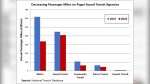 Puget Sound transit passenger-miles fell 31% from 2015 to 2024 despite a half-million-resident population increase.
 wpDiscuz