


Longview Mayor Erik Halvorson says we need state leaders to keep natural gas viable as a bridge until the new energy era actually arrives
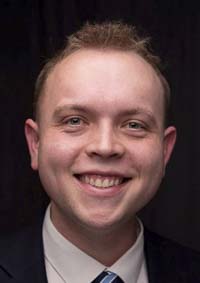
Erik Halvorson, mayor
City of Longview
Longview has always been a town that makes things. From our timber beginnings to our modern port, we are an industrial city built on honest work. And right now, politicians in Olympia are making it harder to grow that future.
The culprit is Washington’s Clean Energy Transformation Act. While it doesn’t get the headlines, it is quietly reshaping what kind of economy this region is allowed to build. The law restricts our utilities from accessing affordable energy on the open market and locks in a hard timeline that investors cannot ignore.
Washington already forced coal out of utility portfolios at the end of last year. By 2030, utilities must be greenhouse gas neutral. By 2045, every kilowatt sold in this state must come from a renewable or zero-carbon source. Those deadlines may sound reasonable in Olympia. They look very different to a company deciding where to build.
When a site selector is evaluating locations for a large manufacturing facility, energy ranks near the top of every checklist: can we get reliable, affordable power for the life of this investment? In Washington, the honest answer right now is uncertain. The 2045 deadline creates a hard ceiling that makes long-term energy planning difficult and expensive. Other states without those restrictions are making the pitch to those same companies, and they are winning business that could have come to Longview.
At least one major industrial project that seriously evaluated Longview ultimately chose a Gulf of America site instead. Predictable energy was a deciding factor. That’s one facility, hundreds of jobs, and years of tax revenue that went somewhere else.
At the same time, the grid cannot currently support a major surge in industrial demand. We are being told to electrify everything while the electricity is not there to back it up. That is not a plan. That is a promise with no delivery date.
The good news is that real help is coming. Small Modular Reactors are next-generation nuclear plants that are safe, and capable of producing massive amounts of carbon-free power. Federal regulators just issued the first construction permit for an advanced reactor in the West. That is the kind of energy future that actually works for a region like ours.
But those reactors will not be online until the 2030s.
That leaves us stranded in a gap Olympia created. We are being pushed away from the energy we have before the replacement is ready. It is like being told to jump from an airplane while the parachute is still being sewn.
The Port of Longview is one of our greatest assets. Our export economy moves real volume, keeps union workers employed, and connects this region to global markets. But when a manufacturing facility sets down roots here, it multiplies that benefit. It creates a tax base, builds careers, and sends more goods through that same port. We have the land, the river access, and the workforce to compete for that kind of investment. That future doesn’t wait. Every year energy uncertainty lingers, another company chooses somewhere else.
We need state leaders to keep natural gas viable as a bridge until the new energy era actually arrives. If we do not fix this timeline, we are not just cutting emissions. We are cutting off our own future. Let’s build a bridge we can actually afford to cross.
Erik Halvorson is the mayor of Longview, Washington, where he has been a vocal advocate for economic development and the region’s industrial future.

Also read:
- Opinion: Workers need their wages more than the state’s paid-leave program does
 Washington’s paid-leave payroll tax stands at 1.13% and is projected to hit its 1.2% cap by 2027, with some lawmakers eyeing a 2% rate.
 - Opinion: Fatal flaws of Socialism – The knowledge problem
 Cargill argues no government, committee, or computer can possess the dispersed knowledge that markets coordinate through prices.
 - Opinion: ‘It may be time for McCleary 2.0’
 Dick Rylander examines the Battle Ground School District’s proposed $116,830,000 three-year EP&O levy heading to the November 2026 ballot.
 - Opinion: Were Republican voters just sleeping during the August primary election?
 CCRP Chairman Matt Bumala says 60% of primary no-shows in the 17th and 18th districts were Republicans.
 - Opinion: WA Cares’ launch showcased care WA Cares did not provide
 Gov. Ferguson showcased a caregiving arrangement at the WA Cares launch that the program had not paid for a single day of.